
2026 Best Vent Relief Valve Types for Global Buyers?
Choosing the right Vent Relief Valve in 2026 requires more than comparing prices, sizes, or delivery dates. Global buyers face different pressures, temperatures, fluids, installation spaces, and maintenance capabilities. A valve proven in a European chemical plant may perform poorly in a dusty mining facility or a humid coastal terminal.
The practical choice begins with the vessel and its failure scenarios. Consider set pressure, relieving capacity, backpressure, discharge direction, corrosion resistance, and inspection access. Spring-loaded, pilot-operated, vacuum relief, and combination devices each solve different problems. Small details matter. A blocked vent line can turn a minor pressure rise into a serious equipment event.
Process-safety expert Trevor Kletz once said, “If you think safety is expensive, try ignorance.” His warning remains relevant when buyers select a Vent Relief Valve from a catalog without reviewing operating data. A lower purchase price may conceal higher cleaning costs, unstable operation, or difficult spare-parts support. That part is easy to underestimate.
This guide compares the best Vent Relief Valve types for global buyers in 2026. It examines operating principles, suitable industries, material options, certification expectations, and lifecycle value. The analysis also considers supplier documentation, testing records, local service, and emergency replacement availability. No single valve is best for every plant. That is the uncomfortable truth. A thoughtful decision may require revisiting an existing specification, especially when real operating conditions differ from the original design assumptions.
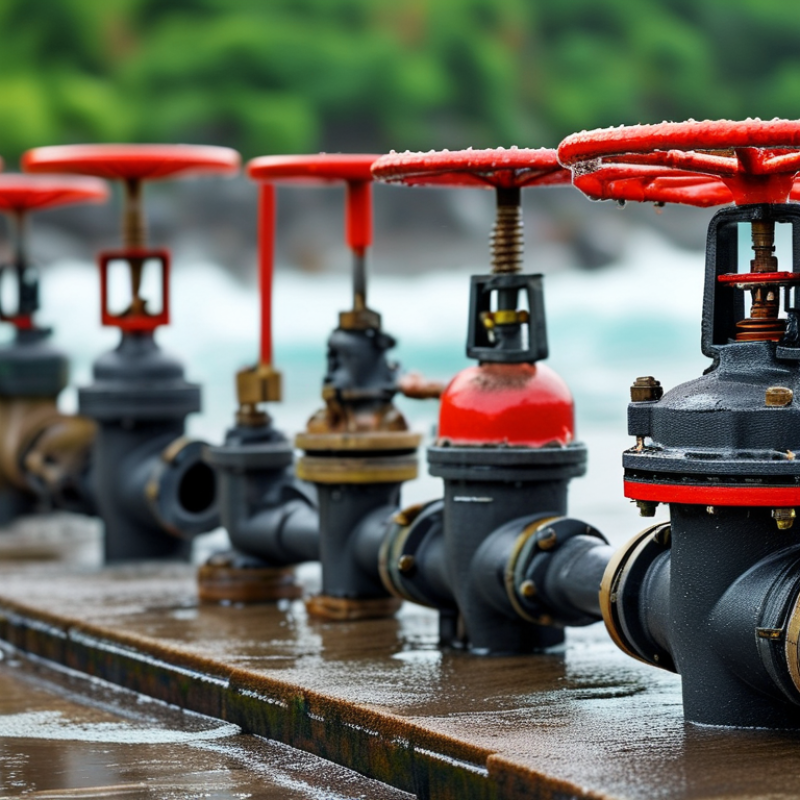
How Vent Relief Valves Work and Why Global Buyers Need Them
2026 Best Vent Relief Valve Types for Global Buyers?
Vent relief valves control pressure inside tanks, pipelines, and process vessels. They open when internal pressure exceeds a preset limit. The valve then releases gas or vapor safely. When pressure returns to an acceptable level, the valve reseats.
Some models protect against overpressure. Others admit air when a tank cools and creates vacuum conditions. Spring-loaded valves suit many general applications. Pilot-operated designs can provide tighter control for larger systems. Combination pressure-vacuum vents protect storage tanks during filling, emptying, heating, and cooling cycles.
Small details matter. A tank may fill during a hot afternoon, then contract overnight. Without proper venting, its shell can deform or collapse. Global buyers must check operating pressure, flow capacity, temperature range, and fluid compatibility. Seal materials should match the stored medium. Salt air, dust, and long shipping periods also affect performance.
Field inspections often find incorrect settings or blocked vent paths. That problem is easy to underestimate. Buyers should request test certificates, maintenance instructions, and clear pressure data. Local engineering rules may differ between installation countries. A valve approved for one site may need additional verification elsewhere. Selection is rarely perfect on the first review, so pressure calculations and specialist assessment remain necessary.
| Valve Type | How It Works | Typical Pressure or Vacuum Range | Common Applications | Main Advantages | Key Limitations | Typical Materials | Relevant Standards and Selection Considerations |
|---|---|---|---|---|---|---|---|
| Pressure-Vacuum Relief Valve (Breather Valve) | Opens to release excess tank pressure during filling, heating, or vapor generation, and opens inward to admit air or inert gas during emptying and cooling. | Common low-pressure settings are approximately +0.5 to +2.5 kPa and −0.2 to −0.5 kPa; the actual range depends on tank design and service conditions. | Atmospheric and low-pressure storage tanks, fuel tanks, solvent tanks, and process vessels. | Provides both pressure and vacuum protection in one compact device; reduces product vapor loss when properly sized. | Not intended for high-pressure applications; contaminated pallets, seats, or weights can affect tightness and response. | Carbon steel, stainless steel, aluminum, PTFE, elastomers, and corrosion-resistant coatings. | Check API 2000, ISO 28300, tank design code, vapor-control requirements, fire-risk assessment, and required flow capacity. |
| Spring-Loaded Pressure Relief Valve | A calibrated spring holds the disc closed until system pressure reaches the set pressure; the valve then lifts to discharge fluid and reseats when pressure falls. | Commonly used from approximately 0.1 MPa upward, with pressure ranges varying widely by design, size, temperature, and service. | Compressed air, steam, water, gas systems, process piping, boilers, and pressure vessels. | Simple construction, rapid response, broad availability, and suitability for many clean-fluid services. | Spring performance can be affected by temperature, corrosion, back pressure, and incorrect installation; periodic testing is required. | Carbon steel, stainless steel, alloy steel, bronze, PTFE, and high-temperature alloys. | Review ASME Section VIII, API 526, API 520, EN ISO 4126, PED requirements, set pressure, blowdown, back pressure, and discharge routing. |
| Pilot-Operated Pressure Relief Valve | A small pilot valve controls pressure in a larger main valve, allowing the main valve to open with high capacity and close tightly after the overpressure event. | Often selected for medium- to high-pressure systems, including applications above 10 MPa when permitted by the design and certification. | High-pressure gas pipelines, large process vessels, refineries, gas processing, and high-capacity vapor systems. | High flow capacity, improved seat tightness, and reduced spring-size limitations at high pressure. | More complex than spring-loaded designs; pilot lines may be affected by blockage, freezing, liquid carryover, or dirty service. | Carbon steel, stainless steel, alloy steel, nickel alloys, and engineered sealing materials. | Evaluate API 520, API 526, API 527, ISO 4126, pilot stability, minimum operating pressure, back pressure, and filtration requirements. |
| Vacuum Relief Valve | Opens when internal pressure falls below the set vacuum level, allowing air, nitrogen, or another approved gas to enter and preventing vessel collapse. | Typical settings range from approximately −0.2 to −5 kPa for atmospheric or low-pressure tanks. | Storage tanks, tank trucks, vacuum-sensitive vessels, cooling systems, and vessels exposed to rapid liquid withdrawal. | Protects tanks from implosion caused by pump-out, condensation, cooling, or blocked vents. | Provides vacuum protection only; the valve may require a separate pressure-relief function or emergency vent. | Stainless steel, aluminum, carbon steel, PTFE, fluoropolymer-lined components, and compatible elastomers. | Confirm tank vacuum rating, air-inflow capacity, filtration needs, icing risk, flame-arrestor compatibility, and API 2000 or ISO 28300 applicability. |
| Emergency Pressure Relief Vent | Remains closed during normal operation and opens at a higher emergency pressure to provide rapid vapor release during fire exposure or abnormal pressure rise. | Emergency settings are normally above the normal operating pressure and below the tank’s allowable emergency pressure; exact values are tank-specific. | Large atmospheric tanks storing flammable, combustible, or volatile liquids. | Offers additional pressure-relief capacity when normal vents cannot handle an emergency vapor load. | Does not replace normal operating vents; large discharge openings require safe vent routing and structural review. | Carbon steel, stainless steel, aluminum, and fire-resistant gasket materials. | Use API 2000, ISO 28300, NFPA guidance where applicable, tank fire-case calculations, and a verified emergency venting scenario. |
| Weighted-Pallet Pressure-Vacuum Valve | Pressure and vacuum pallets move against calibrated weights. The weight loading determines the opening pressure or vacuum set point. | Usually used for low-pressure tank protection, commonly around +0.5 to +2.5 kPa and −0.2 to −0.5 kPa. | Fixed-roof storage tanks, petroleum products, chemicals, edible oils, and low-pressure liquid storage. | Easy to understand, mechanically simple, and suitable for low-pressure applications with stable operating conditions. | Vibration, dirt, condensation, pallet sticking, and incorrect weight configuration can change the effective set point. | Carbon steel, stainless steel, aluminum, PTFE, and chemical-resistant elastomers. | Verify pallet orientation, tank nozzle size, allowable pressure, vapor density, maintenance access, and API 2000 or ISO 28300 requirements. |
| Flame-Arrestor-Integrated Vent Relief Valve | Combines pressure-vacuum relief with a flame-arresting element that quenches an incoming or outgoing flame front under specified conditions. | Commonly used at low tank pressures; pressure and vacuum settings are generally selected within the tank’s allowable operating range. | Flammable-liquid tanks, solvent storage, fuel storage, vapor spaces, and hazardous-area installations. | Combines two protective functions and can reduce the need for separate connection points. | Flame-arrestor elements add pressure drop and require inspection for fouling, corrosion, condensation, and blockage. | Stainless steel, carbon steel, aluminum, nickel alloys, and temperature-resistant sealing materials. | Check ISO 16852, API 2000, EN ISO 80079-36 where applicable, deflagration or detonation classification, pressure drop, and cleaning access. |
| Sanitary or Hygienic Relief Valve | Uses a polished, cleanable seat and spring or diaphragm mechanism to relieve pressure while minimizing product retention and contamination risk. | Typically selected for low- to medium-pressure hygienic systems; the permissible range depends on the process equipment and sanitary code. | Food and beverage processing, dairy systems, pharmaceutical equipment, biotechnology, and purified-water systems. | Cleanable design, low product retention, and compatibility with hygienic process requirements. | Usually has narrower material, surface-finish, cleaning, and elastomer requirements than general industrial valves. | 316L stainless steel, PTFE, EPDM, FKM, silicone, and other approved hygienic elastomers. | Review 3-A, EHEDG, ASME BPE, FDA or local food-contact requirements, surface finish, clean-in-place conditions, and sanitary connection type. |
| Thermal Relief Valve | Releases pressure caused by thermal expansion of trapped liquid in a blocked-in section of piping or equipment. | Set pressure is selected above normal operating pressure but below the protected component’s allowable pressure; small capacities are typical. | Blocked-in liquid lines, hydraulic systems, heat exchangers, pump discharge sections, and cryogenic or chemical piping. | Protects isolated liquid-filled sections from pressure rise caused by temperature increase. | Provides limited flow capacity and must not be used as the primary protection for major process overpressure events. | Brass, bronze, stainless steel, carbon steel, alloy steel, and service-compatible seals. | Consider API 521, ASME B31.3, local pressure-equipment rules, trapped-liquid volume, thermal expansion coefficient, and discharge safety. |