
Posts
2026 Top Dust Proof Mask Types for Global Buyers
Dust exposure varies from light workshop sanding to repeated handling of fine powders. In 2026, global buyers will find disposable filtering masks, reusable half-mask respirators, and powered air-purifying options designed for different tasks. Each has trade-offs. A disposable Dust Proof Mask may be convenient for brief jobs, while a reusable model can accept replaceable filters and offer a closer fit when properly selected. Powered units may suit longer shifts, but their batteries, maintenance, and operating costs need consideration.
The label “dust proof” can sound absolute. It isn’t. No mask is suitable for every particle, wearer, or work setting, and comfort alone cannot confirm protection. Buyers should compare filtration claims, face-seal design, breathing resistance, strap construction, and compatibility with other protective equipment. Fit testing and user training may also matter, depending on the workplace and local requirements.
Check the product’s test reports and certification details for the intended market, rather than relying on a listing title. Ask suppliers about filter replacement, shelf life, sizing, and quality-control records. A high filtration rating is only part of the decision. Fit matters too. A neat comparison chart can hide a poor seal or an unclear test basis. That deserves a second look. This guide introduces the main mask types and the questions buyers can use to compare them, while recognizing that product suitability depends on a documented assessment of the actual hazard.
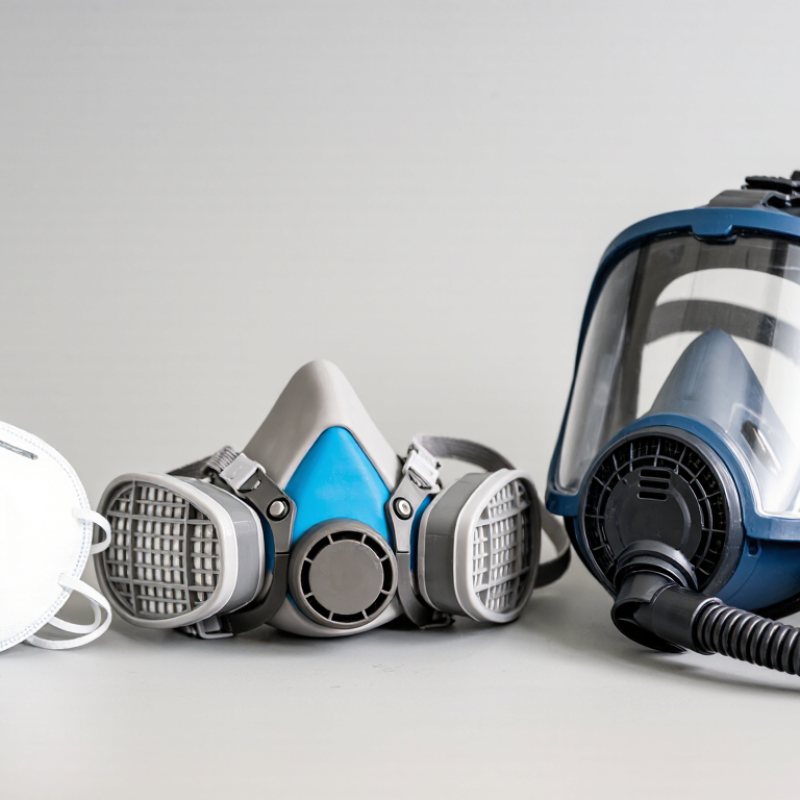
Dust-Proof Masks: Purpose, Design, and Protection Scope
“Dust-proof” describes a purpose, not a universal level of protection. Disposable filtering facepieces are light and convenient for short, dusty tasks. Reusable elastomeric masks use replaceable filters and can provide a closer seal when fitted correctly. Powered air-purifying respirators move filtered air across the face, but add weight, upkeep, and battery needs. Fit matters more.
Choose protection by the particles, task duration, and wearer. NIOSH’s 42 CFR Part 84 certification criteria require N95 filters to achieve at least 95% filtration efficiency in standardized laboratory testing. That figure does not guarantee the same protection on every face, or protection from gases and vapors. Gaps near the nose can let fine dust bypass the filter. A careful fit check is essential; it is easy to overlook when work gets busy.
Tips: Match the mask to the dust and exposure assessment. Check the model’s approval markings, inspect straps and seals, and replace damaged or clogged filters. Facial hair may interfere with the seal. Comfort matters too, but a comfortable mask is not automatically a protective one.
Major Dust-Proof Mask Types Available in 2026
Dust-proof masks generally fall into three groups: disposable filtering respirators, reusable half-mask respirators, and powered air-purifying respirators. Disposable models come in cup-shaped or flat-fold designs. They suit short tasks such as sanding wood or sweeping dry material, provided the mask is certified for the intended particles and seals closely. Check the nose bridge and cheek edges. Even a small gap can let dust bypass the filter.
Reusable half masks use replaceable particulate filters. They can be practical for repeated workshop tasks, but the facepiece needs cleaning and filters need timely replacement. Powered air-purifying respirators move filtered air to a hood or facepiece. This option may help during longer jobs or when a tight-fitting mask is difficult to wear. It also requires charging, maintenance, and the correct filter assembly.
The dust itself matters. Fine mineral dust, such as silica-containing material, calls for a properly selected and fitted respirator, not a basic nuisance-dust covering. Buyers should compare the task, exposure duration, comfort, and local certification requirements. Fit testing may be necessary for tight-fitting models. Selection is not always tidy; comfort can vary between workers, even with the same mask. Try suitable sizes and verify the fit before relying on one for routine work.
2026 Top Dust Proof Mask Types for Global Buyers - Major Dust-Proof Mask Types Available in 2026
| Mask Type | Typical Standard or Classification | Filtration Rating | Common Dust-Control Uses | Fit and Use Considerations | Buyer Checks |
|---|---|---|---|---|---|
| Disposable filtering facepiece — N95 | NIOSH approval under 42 CFR Part 84 (United States) | Filters at least 95% of test particles under the applicable NIOSH test conditions | Construction, maintenance, woodworking, and other tasks involving airborne particles | A close-fitting respirator; facial hair at the sealing surface can interfere with the seal. N-series filters are not approved for oil aerosols. | Confirm NIOSH approval and model details in official records; select the right size and conduct a user seal check each time it is worn. |
| Disposable filtering facepiece — N99 or N100 | NIOSH approval under 42 CFR Part 84 (United States) | N99 filters at least 99%; N100 filters at least 99.97% under applicable NIOSH test conditions | Tasks requiring a higher rated particulate filter, subject to a workplace risk assessment | Higher filter efficiency does not guarantee better real-world protection if the respirator does not fit or is used incorrectly. | Verify approval, fit, breathing resistance suitability, and the employer’s respiratory-protection requirements. |
| Disposable filtering facepiece — FFP1, FFP2, or FFP3 | EN 149:2001+A1:2009 (European classification; check the applicable market requirements) | Minimum filter efficiencies are 80% for FFP1, 94% for FFP2, and 99% for FFP3 under the standard’s test methods | Dust and other airborne particles in industrial, construction, and maintenance settings | Choose the class based on the hazard assessment. Fit, face seal, and correct wear remain essential. | Check that the product is certified for the intended market and that its markings and documentation match the applicable standard. |
| Disposable filtering facepiece — KN95 | GB 2626-2019 (China) | Rated to filter at least 95% of test particles under the standard’s test conditions | Particulate protection where the product is certified and permitted by local regulations | KN95 is a Chinese classification, not a NIOSH approval. A similar rating does not make respirators certified to different standards interchangeable. | Confirm the applicable certification, product labeling, fit, and local acceptance before purchase or use. |
| Reusable elastomeric half-mask with particulate filters | Certification and filter class depend on the jurisdiction and filter system | Depends on the compatible approved particulate filter selected for the respirator | Repeated dusty work where a reusable facepiece and replaceable filters suit the work program | Requires a compatible facepiece and filter, cleaning and inspection, and a suitable fit. A half-mask does not protect the eyes. | Buy the facepiece and filters as a compatible certified system; confirm filter-change, cleaning, and storage instructions. |
| Reusable elastomeric full-face respirator with particulate filters | Certification and filter class depend on the jurisdiction and complete respirator configuration | Depends on the compatible approved particulate filter selected | Dusty tasks where a full-face seal and eye protection are required by the hazard assessment | Must fit the wearer and be used with the approved filter configuration. Correct maintenance and a clear, serviceable visor are important. | Check the complete system’s approval, fit-testing requirements, lens condition, and filter compatibility. |
| Powered air-purifying respirator (PAPR) with particulate filter | Approval and configuration requirements vary by jurisdiction and system | Depends on the approved filter and complete PAPR configuration | Selected workplaces where a powered system is appropriate for the risk assessment and respiratory-protection program | Requires a compatible blower, filter, battery, and facepiece or hood; airflow and battery condition must be maintained. | Verify system approval, filter selection, airflow checks, battery arrangements, and local training requirements. |
Selection note: No mask type is suitable for every dust hazard. Identify the material and exposure level, follow local workplace regulations, and use a certified respirator within a respiratory-protection program where required. Loose-fitting nuisance dust masks are not a substitute for a certified respirator when respiratory protection is necessary.
How Filters Address Different Dust Particles and Hazards
Dust hazards differ in size and behavior. The U.S. Environmental Protection Agency defines PM10 as particles up to 10 micrometers wide and PM2.5 as particles up to 2.5 micrometers. Fine particles can travel deeper into the respiratory system. Larger particles may irritate the nose and throat, but visible dust is not the whole story. Some silica-containing dust is difficult to see.
Filter ratings help buyers compare protection. The U.S. National Institute for Occupational Safety and Health (NIOSH) certifies N95 filters to capture at least 95% of airborne particles under its test conditions. P100 filters capture at least 99.97% in those tests and offer strong resistance to oil. These figures do not guarantee a good seal on a worker’s face. A loose nose bridge can let dust bypass the filter. Small detail. Big difference.
For crystalline silica, the U.S. Occupational Safety and Health Administration sets an eight-hour permissible exposure limit of 50 micrograms per cubic meter. That workplace limit is a useful hazard reference, not a mask-selection shortcut. Buyers should match the filter to the particle and exposure, then check fit, breathing resistance, and compatibility with eyewear. Honestly, a higher rating alone may not solve a poor fit or an unsuitable respirator choice. Dust concentration and task duration matter, too.
Key Factors for Choosing Masks Across Global Markets
Global buyers should compare dust masks by particle type, exposure level, and work duration—not by appearance alone. Disposable filtering masks can suit short, low-dust tasks when they fit properly. Reusable models may be practical for repeated use, while powered systems can help during longer or more demanding work. Dust is not uniform. Fine mineral dust, wood particles, and nuisance dust may require different protection.
Fit matters most. A mask that gaps beside the nose can let particles bypass the filter. Buyers should check available sizes, nose-bridge design, strap tension, and compatibility with eyewear or helmets. A seal check before each use is useful, but it does not replace formal fit testing where required. The comparison is not always neat: a higher filter rating cannot compensate for poor fit or incorrect use.
Markets also differ in climate, language, supply conditions, and recognized certification systems. Confirm that product markings and performance documents match the destination market’s requirements. In hot, humid settings, breathing comfort and moisture management affect how consistently workers wear a mask. Clear instructions matter, especially when users need to replace filters or clean reusable parts. A recurring mistake is to focus on purchase price alone; replacement supplies and worker training also shape the real cost. Teams may still disagree about comfort, so a small wearer trial can reveal problems before a large order.
Fit, Standards, and Care for Reliable Protection
A reliable dust mask must match the task, the wearer, and the local certification system. Disposable filtering masks are light and convenient for brief dusty jobs. Reusable masks with replaceable filters may suit repeated work, but they need careful cleaning. Check the exact standard listed on the packaging. N95 and FFP2 belong to different regional systems; neither label alone guarantees a good fit. For tight-fitting models, follow workplace fit-testing requirements where applicable.
Fit matters at the edges. Place the mask over your nose and chin, then check for gaps around the cheeks. A nose clip should feel secure, not painful. Facial hair can interrupt the seal. If breathing becomes unusually difficult, leave the dusty area and reassess the mask and conditions. Comfort can be misleading; a mask that feels fine may still leak.
Tips: Store reusable masks in a clean, dry container. Clean the facepiece as directed, and replace filters on schedule or when damaged. Do not wash disposable masks. Discard them if they become wet, dirty, torn, or hard to breathe through. A small mistake is easy to miss, so check the fit again before each use.
