
7 Best ATEX Water Tanks for Global Buyers?
Choosing the right Atex Water Tank requires more than comparing capacity, price, and delivery time. Global buyers must examine certification, material quality, installation conditions, and supplier support.
A tank may store water safely but still include non-compliant pumps, sensors, valves, or control panels. That detail matters. Equipment installed in hazardous areas should match the required ATEX zone, gas or dust group, and temperature class. Buyers should request valid certificates, technical drawings, material specifications, and maintenance guidance before placing an order. Factory experience also matters. A manufacturer familiar with chemical plants, fuel facilities, and industrial sites can identify risks that a general water-tank supplier may miss. Still, no single model suits every project.
This guide reviews seven strong options for different global applications, including emergency water storage, process water, fire protection, and remote industrial sites. Each selection considers corrosion resistance, structural stability, inspection access, and compatibility with connected equipment. Practical details will be highlighted, such as tank-wall thickness, outlet placement, ladder design, and delivery limitations. A well-designed tank should remain stable under changing temperatures and uneven ground conditions. It should also allow technicians to inspect fittings without unnecessary exposure.
Some supplier claims may sound impressive but deserve closer review. “ATEX-ready” is not the same as complete system certification. Local regulations, site classification, and approval procedures can change the final choice. Treat this ranking as a practical starting point, not a universal answer. The best decision usually comes from verified documents, experienced engineering review, and honest site assessment.
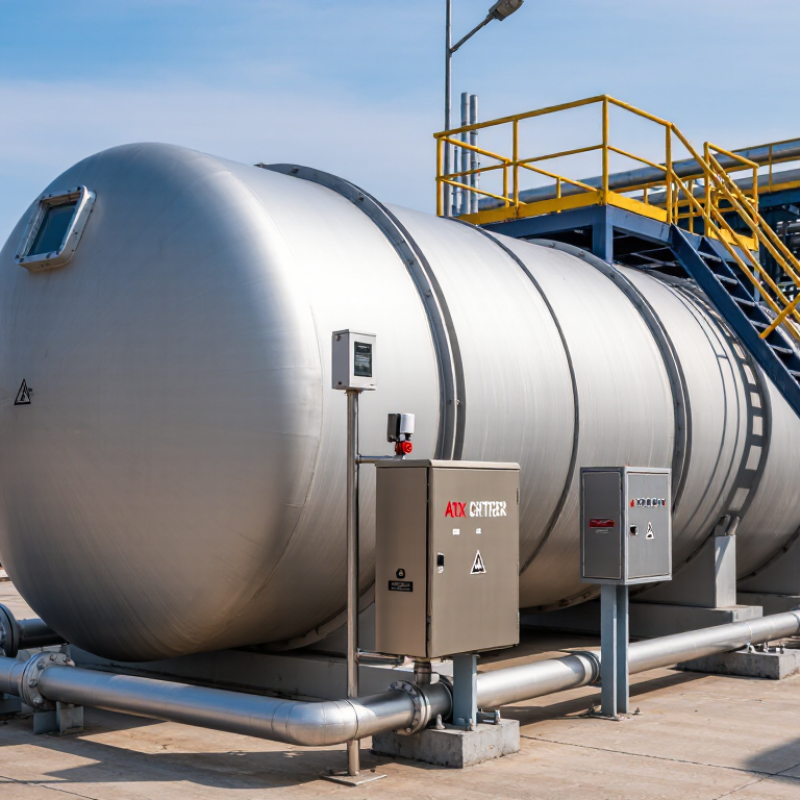
What Are ATEX Water Tanks and Where Are They Used?
7 Best ATEX Water Tanks for Global Buyers?
What Are ATEX Water Tanks and Where Are They Used?
ATEX water tanks are storage systems selected for areas with potentially explosive atmospheres. The stored water is not usually flammable. The surrounding equipment can still create ignition risks.
A suitable tank may use conductive materials, bonded fittings, and grounded metal components. Pumps, level sensors, mixers, and control panels also require careful review. A tank alone does not make an installation ATEX compliant. The complete system matters.
They are commonly used near chemical processing lines, fuel handling areas, wastewater treatment units, and industrial firewater systems. Grain and food-processing facilities may also need them where combustible dust is present. Outdoor tanks often support emergency cooling or firefighting networks.
Site classification comes first. Buyers should confirm the zone, temperature range, fluid quality, tank volume, and installation location. Vent design deserves attention, especially when pressure can change during filling or draining. Poor grounding is an avoidable weakness.
Experience shows that documentation can be as important as steel thickness. Ask for material certificates, inspection records, grounding details, and equipment certifications. Local engineers should verify the final design against regional requirements. ATEX rules guide many European projects, but global sites may follow additional standards.
Small details matter. A sensor cable can become the overlooked risk. Product descriptions also vary, and “ATEX-ready” may not mean fully certified. That wording deserves scrutiny before purchase.
7 Best ATEX Water Tanks for Global Buyers? - What Are ATEX Water Tanks and Where Are They Used?
| No. | Tank Configuration | Typical Material | Indicative Capacity | Installation Format | ATEX-Relevant Considerations | Typical Applications | Best Selection Criteria |
|---|---|---|---|---|---|---|---|
| 1 | Vertical Above-Ground Water Tank | Carbon steel with protective coating, stainless steel, or reinforced plastic | 1,000–100,000 L | Outdoor or indoor, installed on a concrete foundation | Use electrically suitable level sensors, pumps, mixers, and instrumentation for the designated hazardous zone. Bond and earth conductive components where required. | Process-water storage, fire-water reserve, utility water, and wash-water systems | Available footprint, required volume, corrosion resistance, access for inspection, and local climate |
| 2 | Horizontal Cylindrical Water Tank | Coated carbon steel, stainless steel, or rotationally molded polyethylene | 500–50,000 L | Skid-mounted, saddles, or transportable frame | Suitable for sites with limited overhead clearance. Any electrical accessories installed in a classified area require appropriate explosion-protection certification. | Remote sites, packaged water-treatment units, construction facilities, and mobile utility systems | Low headroom, transport requirements, structural support, and connection orientation |
| 3 | GRP/FRP Panel Water Tank | Glass-reinforced plastic panels with sealed joints and internal liner | 5,000–1,000,000 L | Modular, assembled on site | The tank body is generally non-electrical; verify static-control requirements, conductive bonding provisions, and the compliance of connected equipment. | Large process-water storage, industrial facilities, mining sites, and water-treatment plants | Large volume, restricted transport access, corrosion resistance, internal liner selection, and assembly space |
| 4 | Flexible Bladder Water Tank | Reinforced PVC, TPU, or coated fabric membrane | 1,000–500,000 L | Ground-supported and collapsible | Keep the membrane away from hot surfaces, sharp edges, and incompatible chemicals. Use non-sparking or suitably certified accessories when installed in a classified area. | Temporary water supply, emergency storage, agricultural operations, and disaster-response systems | Fast deployment, compact transport, temporary duration, ground condition, and liquid compatibility |
| 5 | Underground Water Storage Tank | Reinforced concrete, coated steel, or double-wall reinforced plastic | 10,000–500,000 L | Buried below grade with manholes and access chambers | Consider hazardous-area classification around manholes, vents, and pump chambers. Provide safe access, ventilation, gas monitoring, and certified electrical equipment where required. | Sites with limited surface space, fire-water storage, industrial utilities, and rainwater harvesting | Groundwater level, soil loading, buoyancy, inspection access, leak detection, and excavation cost |
| 6 | Double-Wall or Bunded Water Tank | Carbon steel, stainless steel, or reinforced plastic with secondary containment | 2,000–150,000 L | Above-ground, commonly installed on a contained base | Useful where spill control and separation from nearby process areas are important. Verify bonding, venting, instrumentation, and zone suitability for all accessories. | Chemical-processing utilities, fuel-site service water, laboratories, and environmentally sensitive facilities | Secondary containment volume, environmental rules, inspection needs, footprint, and material compatibility |
| 7 | Modular Skid-Mounted Water Tank System | Stainless steel, coated carbon steel, GRP, or polyethylene with integrated piping | 1,000–100,000 L | Factory-assembled skid or containerized package | Specify certified pumps, control panels, sensors, cable glands, and junction boxes for the applicable hazardous zone. The complete package should be assessed as an integrated installation. | Oil and gas support facilities, offshore utilities, food and beverage plants, and remote industrial projects | Short commissioning time, transport dimensions, pre-tested piping, automation requirements, and maintenance access |