
Posts

2026 Best Car Window Blackout Film for Privacy?

Choosing the 2026 best Car Window Blackout Film for privacy depends on where and how you plan to use it. A dark, opaque film can shield bags, equipment, or a sleeping area from outside view when a vehicle is parked. It can also make the cabin feel less exposed. But “blackout” describes a broad range of products, not one reliable standard. Some films are temporary covers; others use adhesive and may leave residue.

This guide compares practical details that matter: opacity, fit, installation, removal, durability, and care. We’ll also consider whether a product is designed for a specific window shape or requires trimming. Small gaps around the edges can defeat privacy. So can a loose corner after a hot afternoon. Check product instructions and vehicle-glass requirements before buying, and never let an opaque covering block a driver’s necessary view. Requirements vary by location. A film suitable for parked use may be unsuitable while driving. That distinction deserves more attention than a dramatic product photo usually gets.

There is no perfect option for every car. A removable cover may be easier to store, while an adhesive film may look neater but take more effort to remove. I would not assume that the darkest product is automatically the best. This overview focuses on realistic trade-offs, clear product claims, and safe, intended use, so you can compare options without treating privacy as the only consideration.
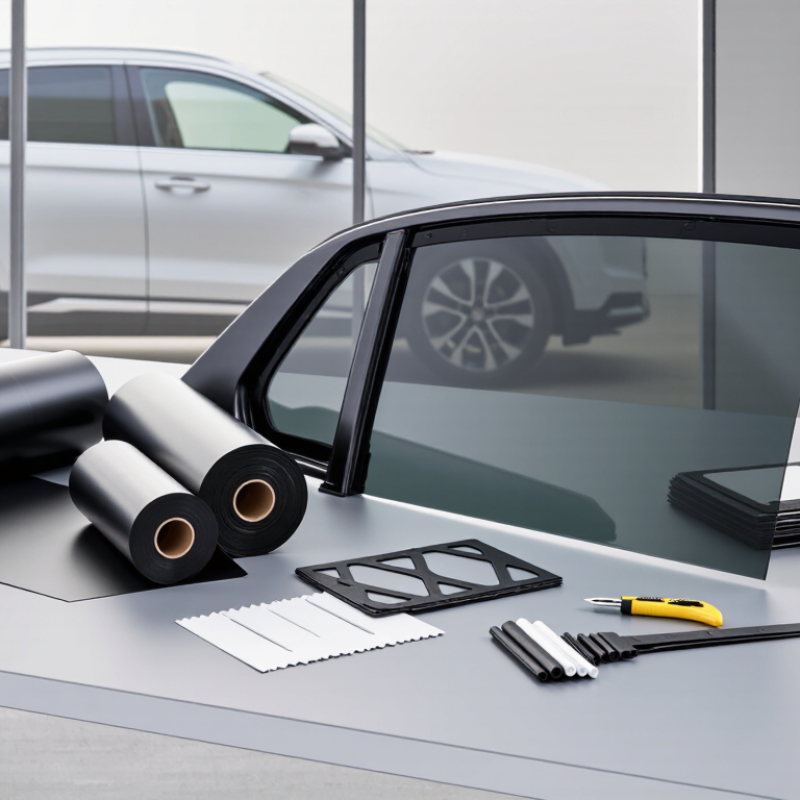
2026 Best Car Window Blackout Film for Privacy?

Define Privacy Film by VLT: Compare 5%, 20%, 35%, and 50% Grades

A window film’s VLT is the share of visible light it lets through. The National Fenestration Rating Council uses visible transmittance to compare how much daylight glazing admits; higher numbers mean brighter interiors. A 5% film passes roughly 5% of visible light, while 50% passes about half. Darker is not automatically better privacy.

At 5%, a parked car’s cabin is difficult to see into during daylight, but the view outward can feel dim, especially in a shaded garage. A 20% grade balances concealment with usable daylight. It may still reveal silhouettes when the cabin is brightly lit. That detail is easy to overlook.

A 35% film gives a lighter appearance and more interior visibility. A 50% grade is subtle, better for glare reduction than strong concealment.

The International Window Film Association’s guidance on reflective films also cautions that daytime privacy depends on lighting: the brighter side tends to see the darker side more clearly. At night, cabin lights can reverse the effect. VLT figures describe light transmission, not guaranteed privacy; check a sample against your actual seats, glass, and lighting before choosing.

Compare UV Rejection Claims of up to 99% and TSER Data

2026 Best Car Window Blackout Film for Privacy?

Compare UV Rejection Claims of up to 99% and TSER Data

A “up to 99% UV rejection” claim sounds decisive, but it needs context. The 2016 JAMA Ophthalmology study “Evaluation of UV-A Light Protection in Automobile Windshields and Side Windows” measured 29 vehicles. Windshields blocked a median 96% of UVA, while side windows blocked a median 71%. The difference matters: factory glass already provides protection, and a film’s result depends on the glass beneath it. Numbers need context. Ask whether the quoted UV figure covers UVA and UVB, and whether it describes the film alone or the finished glass-and-film combination.

TSER, or Total Solar Energy Rejected, helps compare how much incoming solar energy a glazing system rejects. It is not the same as UV rejection: solar energy also includes visible light and infrared. A higher TSER may mean less heat entering the cabin, but it can also change how dark the windows look. Picture a parked car with a sunlit dashboard; that scene is affected by more than UV alone. Compare test conditions and the glass type, not just a large percentage on a product sheet. I would be cautious about treating any single figure as a guarantee of comfort. Real results vary with the vehicle, installation, and sunlight angle. That caveat is easy to overlook.

Assess Night Visibility and Glare Alongside Film VLT Ratings

Visible light transmission, or VLT, describes how much visible light passes through a window and its film. A lower rating means a darker cabin, but it can also make pedestrians, curbs, and unlit driveways harder to see after sunset. The International Window Film Association’s consumer guidance treats VLT as a key film specification, not a complete measure of driving visibility. That distinction matters. A rating cannot show how your eyes will adjust when you move from bright streetlights into a dim parking lot.

Glare deserves separate attention. The AAA Foundation for Traffic Safety’s 2019 report on headlight glare found that 87% of surveyed drivers reported being bothered by glare from oncoming headlights. Darker glass does not remove that glare; it may make the road around bright lights harder to see. Before choosing a film, compare its VLT rating with clear glass, then inspect a sample from the driver’s seat in a safely parked car at dusk and after dark. Look for detail through side and rear windows, not just a darker appearance. Check again in rain. Reflections and wet pavement can change the view. I would treat any single VLT number as a starting point, not a night-visibility guarantee.

Check FMVSS No. 205 Requirements and Local Window-Tint Limits

Blackout film can create a darker cabin, but “privacy” does not mean the same thing as legal compliance. NHTSA’s FMVSS No. 205 regulates glazing materials and incorporates ANSI/SAE Z26.1-1996 performance requirements. It does not establish one nationwide percentage for aftermarket window tint. Local rules set those limits, and requirements can differ by window, vehicle type, and location.

California offers one concrete example: DMV guidance requires front side windows to allow at least 70% light transmittance through the glass-and-film combination. Check your own jurisdiction before buying or installing film. Ask for the measured visible light transmission, or VLT, of the finished window—not just the film’s advertised figure. A film marked “30% VLT” does not necessarily leave the assembled window at 30%, because factory glass already reduces light. Small detail, big difference. Keep the product documentation, and check any rules for windshield strips, reflectivity, and medical exemptions. A label can be reassuring, but it is not proof that your specific installation complies. Sources: NHTSA, 49 CFR § 571.205; California DMV, Window Tinting.

2026 Best Car Window Blackout Film for Privacy? - Check FMVSS No. 205 Requirements and Local Window-Tint Limits

“Blackout” describes a very dark appearance, not a universal legal category. Before choosing a film, check the vehicle’s original glass, the combined installed-window light transmission, and the rules where the vehicle is registered and driven. The state examples below are general guidance, not legal advice.

Topic / location Requirement or general limit What it means when choosing film Official source
United States — FMVSS No. 205 Federal Motor Vehicle Safety Standard No. 205 regulates motor-vehicle glazing materials and incorporates specified glazing requirements. It is not a single nationwide aftermarket-tint percentage for every window. Do not assume a film is lawful just because it is sold for automotive use. The glazing and installation must not conflict with applicable federal requirements, and state or local tint rules may be stricter. 49 CFR § 571.205
Visible light transmission (VLT) VLT is the percentage of visible light that passes through the glass-and-film combination. A higher VLT percentage means a lighter window; a lower percentage means a darker window. Legal limits generally concern the finished window, not just the film’s advertised VLT. Factory-tinted glass can reduce the final measured percentage. Check your state vehicle code and any applicable inspection guidance.
California — front side windows California law generally requires material applied to front side windows to have at least 70% luminous transmittance and no more than 35% luminous reflectance, subject to statutory conditions and exceptions. A very dark blackout film on the front side windows is generally not consistent with this transmittance requirement. Confirm the rules for the windshield and other windows separately. California Vehicle Code § 26708
Texas — driver-adjacent side windows Texas generally requires at least 25% light transmission and limits luminous reflectance to 25% for side windows adjacent to the driver. Windshield tint is subject to separate placement and visibility rules. A film labeled below 25% VLT may result in a noncompliant finished window. Check vehicle type, exceptions, and the separate windshield provisions before installation. Texas Transportation Code § 547.613
Florida — side windows Florida generally sets a 28% minimum light transmission for side windows to the right and left of the driver. For windows behind the driver, the general minimum is 15% for a passenger vehicle and 6% for a multipurpose passenger vehicle. The permitted darkness can depend on window position and vehicle classification. Verify the vehicle category and any statutory exceptions before selecting a film. Florida Statutes § 316.2953 and § 316.2954
Windshield and reflective films Windshield tint placement, permitted shaded areas, reflectance, and restrictions on reflective or colored materials vary by jurisdiction. Requirements can differ from side- and rear-window limits. Do not apply a full windshield blackout film based only on side-window rules. Check the exact windshield provisions, including any permitted upper strip and required clear areas. Consult the current vehicle code and inspection rules for the vehicle’s jurisdiction.
Practical pre-installation check Confirm window-by-window VLT limits, vehicle classification, medical or other exemptions, reflectance rules, and whether testing measures the finished glass-and-film combination. Ask the installer for a measured post-installation VLT reading and keep documentation. Recheck current local rules before ordering, since requirements and enforcement practices can change. State statute, vehicle inspection authority, or local law-enforcement guidance.

Note: The state figures are general examples, not a complete 50-state survey. Vehicle type, window position, medical exemptions, and other statutory details may change what is allowed. Verify the current rules for your location before installation.

Choose a 2026 Film by Privacy, Durability, Installation, and Warranty

2026 Best Car Window Blackout Film for Privacy?

Choose a 2026 film by matching its privacy level to how you use your car. A darker film may conceal bags and seats when parked, but it can also make it harder to see outside. Keep clear visibility through the windshield and driver’s sightlines. Check local vehicle requirements before buying, since permitted tint levels vary by location. Small details matter.

Durability depends on more than the shade. Look for clear information about fading, bubbling, peeling, and scratch resistance. A warranty should explain what is covered, how long coverage lasts, and whether professional installation is required. Read the exclusions, too. That part is easy to miss. A film with a long warranty may still exclude damage caused by poor cleaning or installation.

Installation quality affects the finished look. Dust trapped beneath the film can leave tiny specks, especially in bright sunlight. Clean glass carefully, work in a sheltered space, and follow the film’s curing instructions. If you are unsure, compare the cost of professional fitting with the time and tools needed for a DIY job. A minor flaw can be surprisingly noticeable. Don’t choose by darkness alone.

2026 Car Window Blackout Film: A Practical Comparison

Compare common film types across privacy, durability, DIY installation ease, and the typical availability of written warranty coverage.

How to read this: Scores are indicative editorial ratings on a 1–5 scale, not laboratory test results or guarantees for every product. Film construction, installation quality, and warranty terms vary; check the product’s written specifications before buying. Opaque film can severely reduce visibility, so check local laws and avoid covering windows needed for safe driving.