
What Is the Best Food Sealing Machine in 2026?
Choosing the best Food Sealing Machine in 2026 depends on what you package, how quickly you work, and the seal each product needs. A compact tabletop unit may suit a small bakery, while a busy production line needs higher speed and repeatable sealing. The right choice protects product quality without adding unnecessary cost or complexity.
The need is practical. FAO’s 2023 food-loss report estimates that 13.2% of food was lost between harvest and retail in 2021. UNEP’s Food Waste Index Report 2024 estimates 1.05 billion tonnes of food waste in 2022, about 19% of food available to consumers. These figures cover much more than packaging, but they underline why careful handling and suitable packaging matter. A well-matched sealer can help create consistent closures; it cannot solve every cause of food loss. There is no perfect seal.
This guide compares sealing methods, throughput, package compatibility, temperature control, ease of cleaning, and operating costs. It also considers details buyers can miss, like seal width, film thickness, and the time needed to change settings. Data sheets help, but they do not replace testing with your actual product and packaging. A short test run can reveal wrinkles, weak edges, or heat damage. The best machine is the one that makes reliable seals for your daily workload, not simply the fastest model on a product page.
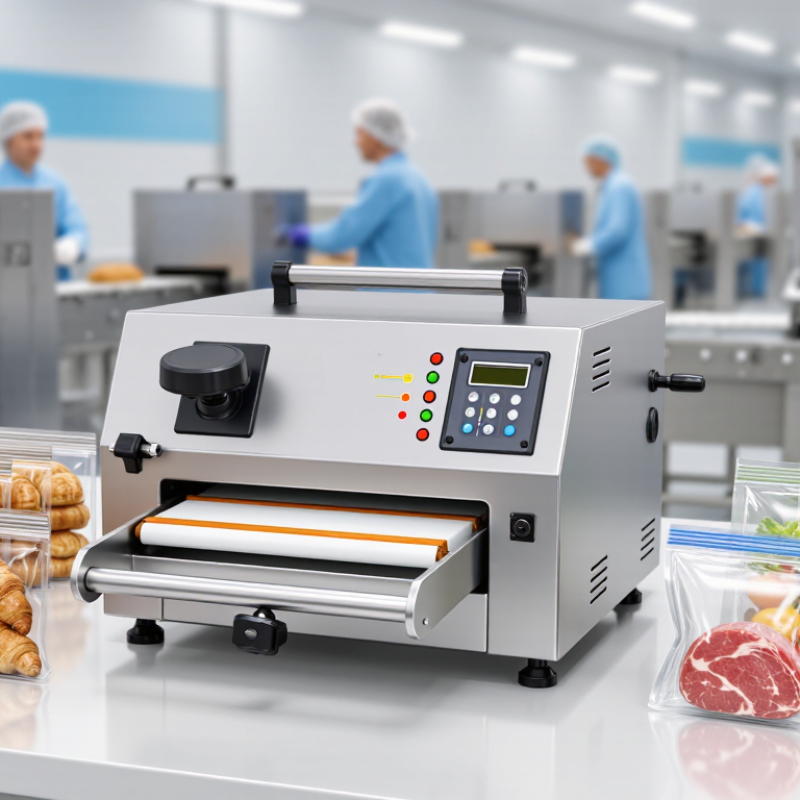
What a Food Sealing Machine Is and How It Works
A food sealing machine closes a package by joining its open edges, helping protect food from air, moisture, dust, and handling. Depending on the model, it may use heat, pressure, or both. A tabletop heat sealer, for example, presses a warm bar across a plastic pouch, melting its inner layers together. Vacuum models remove air before sealing; they do not sterilize food or replace safe storage practices. Small detail, big difference.
In practice, operators load a compatible bag, position its opening, and set the sealing time or temperature. The machine applies heat and pressure, then allows the seam to cool. A clean, even seal should show no gaps, wrinkles, or scorched spots. FAO’s Food Waste Index Report 2024 estimates that 1.05 billion tonnes of food were wasted globally in 2022 across households, food service, and retail. Better packaging can support storage, but sealing alone cannot prevent waste caused by poor planning or improper temperatures.
Tips: Test the seal on a spare pouch before packing a full batch. Keep the sealing strip free of crumbs and oil. Match the machine to the package material and daily volume; the fastest unit is not always the best fit. I would still inspect every seam, because settings can drift and a neat-looking seal may leak.
What Is the Best Food Sealing Machine in 2026? - What a Food Sealing Machine Is and How It Works
A food sealing machine closes packaging to help protect food from leaks, moisture, air, and contamination. The best choice depends on the package material, production volume, food type, and whether air removal or modified-atmosphere packaging is required. Figures below are typical guidelines; actual performance varies by machine and packaging.
| Machine type | How it works | Typical packaging | Typical output | Best suited for | Main considerations |
|---|---|---|---|---|---|
| Impulse heat sealer | A heated element briefly presses the open film layers together. Heat is applied during the sealing cycle rather than continuously. | Compatible thermoplastic bags, such as polyethylene or polypropylene films; compatibility depends on film construction. | Manual and operator-dependent; usually suitable for intermittent, low-volume work. | Small kitchens, bakeries, farm shops, and occasional bag sealing. | Does not remove air. Seal strength depends on correct temperature, pressure, dwell time, and clean film surfaces. |
| Continuous band sealer | Conveyor belts move filled bags past heated sealing blocks, which fuse the film edges continuously. | Heat-sealable thermoplastic bags, including suitable laminated films. | Continuous operation; line speed varies with bag size, film, and settings. | Small-to-medium production lines handling dry foods, snacks, powders, or bagged ingredients. | Speeds up repeated bag sealing but does not vacuum-pack. Filled bags must be presented consistently. |
| Chamber vacuum sealer | The package is placed inside a chamber. Air is evacuated from the chamber and bag; the bag is then heat-sealed before the chamber returns to normal pressure. | Vacuum pouches designed for chamber sealing; pouch material and thickness should match the application. | Batch operation; multiple pouches may be sealed per cycle depending on chamber size. | Meat, cheese, liquids, marinades, and foods that benefit from reduced air in the package. | Often handles moist foods and liquids better than external-suction units. Requires chamber space and routine cleaning. |
| External-suction vacuum sealer | A nozzle or channel draws air from the open end of a bag, then a heat bar seals it. | Embossed or channelled vacuum bags, depending on the machine design. | Usually one bag per cycle; commonly suited to intermittent use. | Households and small food businesses packaging solid, relatively dry foods. | Liquids and very moist foods can be difficult to seal without special settings or preparation. Bag costs and compatibility matter. |
| Tray sealer | A film lid is heat-sealed to a tray rim. Some systems evacuate air and introduce a selected gas mixture before sealing. | Compatible trays and lidding films, matched to the tray material and sealing process. | Manual, semi-automatic, or automated; output depends on tooling, cavities, and line speed. | Prepared meals, fresh produce, meat, seafood, and portioned foods sold in rigid trays. | Requires suitable trays, film, and often dedicated tooling. Modified-atmosphere packaging needs process control and food-safety validation. |
Practical takeaway: For occasional bag sealing, consider an impulse sealer; for repeated bag production, a band sealer; for air removal, a vacuum sealer matched to the food; and for tray-based retail packs, a tray sealer. Vacuum sealing does not make perishable food shelf-stable: follow safe temperature control, storage times, and validated food-handling procedures.