
Posts
How to Find the Best Plastic Sheets Supplier in China?
Choosing a plastic sheets supplier in China is not simply a price comparison. The right partner must deliver consistent dimensions, clear material specifications, and reliable production updates. A low quotation can look attractive. Yet a small thickness variation may affect cutting, forming, or assembly. Details matter.
Industry data shows why material sourcing deserves careful attention. The OECD’s 2022 Global Plastics Outlook estimates that global plastics production reached 460 million tonnes in 2019. It also reports 353 million tonnes of plastic waste that year, with only 9% ultimately recycled after losses. These figures describe plastics broadly, not the plastic sheets market specifically. Still, they underline the value of asking precise questions about resin types, recycled content, and product documentation. A credible supplier should be able to explain its specifications and provide relevant test reports or certificates for the material offered. Not just price.
When comparing Chinese manufacturers, request samples and check thickness, surface finish, packaging, and stated tolerances against your needs. Ask how batches are identified and how production issues are handled. Review export experience, response times, and the clarity of quotations. A polished website is not proof of consistent quality. Nor is one successful sample. That is harder to judge from a distance. This guide outlines practical ways to assess suppliers, verify claims, and reduce avoidable surprises before placing an order. Even careful checks cannot remove every risk, so leave room to reassess.
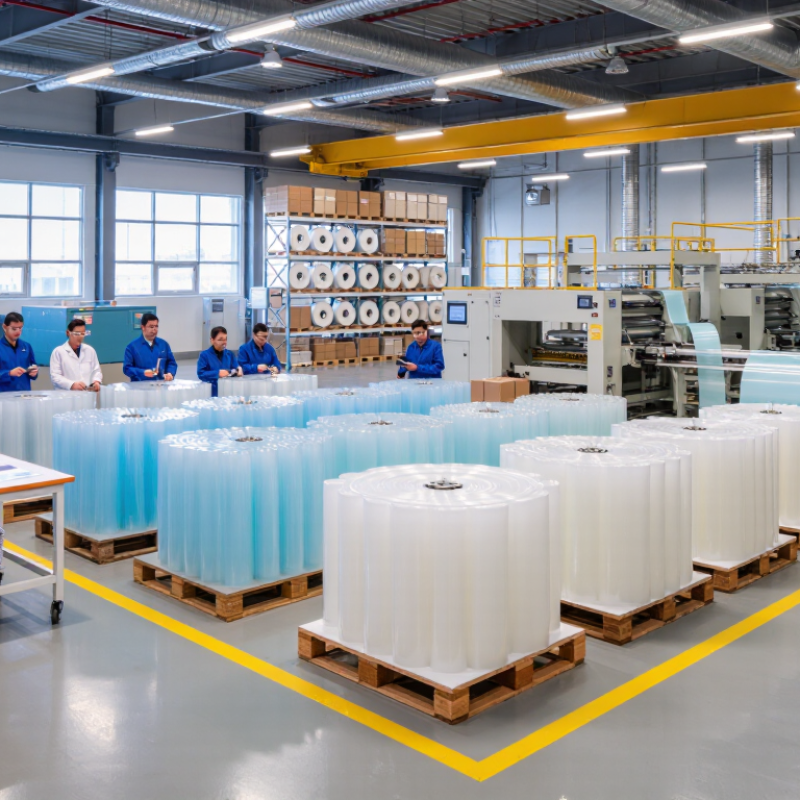
Define Your Plastic Sheet Requirements and Technical Specifications
Finding the right plastic sheet supplier starts with a precise application brief. The OECD’s Global Plastics Outlook (2022) reports that global plastics production reached 460 million tonnes in 2019. That scale reflects a wide range of polymers and performance grades, not interchangeable sheets. Describe the part’s job: indoor or outdoor use, expected load, operating temperature, chemical exposure, and required service life. Then specify resin type, sheet dimensions, thickness, thickness tolerance, color, surface finish, and whether one or both sides need protection. Small details matter. A 3 mm sheet with a loose thickness tolerance may not fit a machined assembly.
Ask suppliers for a technical data sheet and test evidence for the properties that matter. For impact resistance, request the test method and specimen conditions, not just a headline value. ASTM D256 is one commonly used method; confirm that the supplier’s reported result is comparable to your requirement. Include acceptable tolerances and inspection criteria in the quotation request. A sample can reveal warping, surface marks, or cutting issues that paperwork misses. It is tempting to finalize a specification after comparing prices, but that can leave gaps. Review the first sample against your actual use, record any mismatch, and revise the brief before placing a larger order.
Identify Qualified Plastic Sheet Suppliers in China
Identify qualified plastic sheet suppliers in China by checking evidence, not polished sales language. Plastics Europe’s Plastics – the Fast Facts 2023 report estimates global plastics production at 400.3 million tonnes in 2022. That scale makes clear why buyers should verify a supplier’s specific materials and production controls, rather than assume every factory has the same capabilities. Ask for resin grades, technical data sheets, tolerances, and batch traceability. Details matter.
Request samples cut to your intended thickness and size. Measure them with a micrometer, then check flatness, surface marks, and consistency across several sheets. Ask how the supplier controls thickness variation and handles rejected batches. A certificate can be useful, but it does not prove that every shipment matches your specification. Ask for proof, and compare the sample with the written quotation.
Review recent inspection records and confirm who performs testing, how often, and with what equipment. If possible, arrange a factory audit or a third-party inspection before a large order. Check production capacity against your expected volume and lead time, including packaging that protects sheet edges during transit. One limitation: a short visit may show only a snapshot of operations. Keep the evaluation practical, document agreed specifications, and test an initial order before scaling up.
How to Find the Best Plastic Sheets Supplier in China? - Identify Qualified Plastic Sheet Suppliers in China
| Qualification Area | What to Check | Evidence to Request | Practical Evaluation |
|---|---|---|---|
| Product range and material knowledge | Confirm the supplier works with the required sheet materials, such as acrylic (PMMA), polycarbonate (PC), PVC, PET, or HDPE, and can explain relevant grades and limitations. | Product datasheets, material grade details, thickness and size options, and application guidance. | Check that specifications match the intended use; do not treat different polymers as interchangeable. |
| Manufacturing capability | Determine whether the supplier manufactures the sheets or sources them, and whether its processes can meet the requested dimensions, finish, and order volume. | Factory or production information, process descriptions, equipment list, and a clear explanation of any subcontracted work. | Compare the stated process and production capacity with the requirements in your inquiry. |
| Quality management | Review how incoming materials, production, inspection, and nonconforming products are controlled. | Quality procedures, inspection records, corrective-action examples, and any relevant, current certification that can be independently verified. | Verify certificate scope, issuing body, and validity; certification alone does not confirm product suitability. |
| Product testing and compliance | Identify which performance or regulatory requirements apply to the product and destination market. | Recent test reports or declarations that identify the material, tested properties, test method, and report issuer. | Match reports to the exact grade and application. Where relevant, specify recognized methods such as ASTM or ISO in the purchase requirements. |
| Dimensional and appearance control | Agree on thickness, length, width, tolerances, flatness, color, surface finish, and acceptable cosmetic variation. | Written specification, sample measurements, inspection method, and agreed defect criteria. | Define tolerances in writing before production; avoid relying on terms such as “standard thickness” without a stated value. |
| Sample evaluation | Assess a sample for the properties that matter to your use, including processing behavior and compatibility with your equipment where applicable. | Clearly identified samples, sample datasheet, and a record of the sample’s material grade and production details. | Approve a representative sample before placing a production order, and retain a reference sample where practical. |
| Traceability | Check whether batches can be linked to production dates, material inputs, and inspection records. | Batch or lot identification on labels and matching production or inspection documentation. | Request a sample traceability record and confirm the same approach will be used for your order. |
| Packaging and shipment readiness | Review protection against scratches, breakage, moisture, and movement during handling and transit. | Packaging specification, loading plan where applicable, package dimensions and weight, and shipping document examples. | Agree on packing requirements and responsibility for damage claims before shipment. |
| Commercial terms and communication | Compare quotation detail, minimum order quantity, lead time, payment terms, quote validity, and response clarity. | Itemized quotation, written order terms, production schedule, and a named contact for order coordination. | Compare like-for-like specifications and delivery terms rather than selecting on unit price alone. |
| Supplier verification | Confirm the legal business details and the relationship between the contracting party, production site, and payment beneficiary. | Business registration information, matching contract and invoice details, and a live factory or business verification when appropriate. | Resolve discrepancies before payment; use a qualified third-party inspection service when the order risk or value warrants it. |
Evaluation note: Requirements vary by polymer, application, and destination market. Put the agreed material grade, dimensions, tolerances, testing, packaging, and acceptance criteria in the purchase specification.
Evaluate Materials, Manufacturing Capabilities, and Customization Options
How to Find the Best Plastic Sheets Supplier in China?
Evaluate Materials, Manufacturing Capabilities, and Customization Options
A reliable supplier should explain exactly what each sheet is made from. Ask for the resin type, thickness tolerance, UV resistance, and a current technical data sheet. For example, a clear acrylic panel and a polycarbonate panel may look similar, but respond differently to impact and heat. The OECD’s Global Plastics Outlook reported 460 million tonnes of plastics production worldwide in 2019. That scale makes material traceability and consistent specifications important—not optional paperwork.
Check manufacturing capability against your actual application. Ask how the supplier measures thickness, controls color variation, and inspects edges after cutting. Request a sample with the same finish and dimensions as your intended order. A small sample can still mislead; production batches may vary. Review quality records and ask how defects are documented and handled. Plastics Europe reported global plastics production of 400.3 million tonnes in 2022, but market size alone says nothing about an individual factory’s quality.
Customization should be specific, not just a promise. Confirm available sheet sizes, colors, surface finishes, drilling, and packaging. Share a drawing with tolerances, then ask the supplier to flag dimensions that may raise cost or cause waste. Compare the final specification, sample, and quotation line by line. One imperfect detail matters: buyers sometimes approve a sample without checking how it was measured. Ask for the measurement method, and keep the answer on record.
Verify Quality Systems, Certifications, and Product Compliance
When choosing a plastic sheets supplier in China, verify how its quality system works in practice. Ask for the current quality-management certificate and confirm its scope, expiry date, and issuing body. A certificate alone does not prove that every sheet meets your requirements. Request recent test reports tied to the specific material grade, thickness, and production batch you plan to buy. Check whether the reports cover relevant properties, such as impact strength, dimensional tolerance, or UV resistance.
Tips: Ask for a sample from the intended production line. Measure its thickness at several points, inspect the edges, and compare the results with the specification. Check the paperwork, too. Product compliance depends on the sheet’s intended use and destination market, so confirm applicable requirements before ordering. Reports for another grade may not be useful.
Also review the supplier’s inspection records, material traceability, and process for handling defective batches. Ask what happens when a shipment fails inspection. Clear answers matter. In my experience, small gaps often appear between a polished certificate file and day-to-day controls; that deserves a closer look, not an automatic rejection. Agree on written acceptance criteria, testing methods, and document requirements before production. Then keep a retained sample from the approved batch for comparison if later deliveries vary.
Compare Pricing, Communication, and Shipping Before Choosing a Supplier
How to Find the Best Plastic Sheets Supplier in China?
Compare pricing, communication, and shipping as one decision. Ask each supplier to quote the same sheet grade, thickness, dimensions, tolerances, and order quantity. A low unit price may exclude protective film, export packing, or inland transport. Request a written breakdown and confirm the quotation’s validity period. Details matter. For a fair comparison, calculate the landed cost, not just the factory price.
UNCTAD’s Review of Maritime Transport 2024 reported that global maritime trade grew 2.4% in 2023, while tonne-miles rose 4.2% as ships took longer routes. This does not predict your shipment’s cost, but it shows why transit estimates can shift. Ask for the named port, shipping method, estimated departure window, and who pays each freight charge. Check whether the supplier has shipped similar sheet sizes and packaging before. A vague “fast delivery” promise is not a schedule.
Tips: Send a drawing or sample specification, then ask the supplier to confirm key measurements in writing. Notice how clearly they answer questions about tolerances, packing, and delays. If a reply is unclear, ask again; I would not treat a quick reply as proof of careful production. Compare responses side by side before placing a sample order.
Related Posts
-
2026 Best Plastic Sheets for Every Use Guide?
-

Exploring the Versatility of Clear Plastic Sheets: 10 Innovative Applications Backed by Industry Insights
-

Top 10 Best Plastic Panels for Your Home and Garden?
-

2026 Top Trends in Plastic Fabrication Innovations and Applications?
-
2026 Best Plastic Sheet Cut to Size Options for Your Projects?
-

10 Best Plastic Cut to Size Solutions for Your Projects?