What are the Best Uses of Acrylic Plastic in 2026?
Acrylic plastic has become a versatile material in various industries, showcasing its unique properties and applications. In 2026, its significance will only grow, reflecting innovation and adaptability. From construction to automotive, acrylic plastic serves multiple roles that enhance functionality and aesthetic appeal.
One of the standout features of acrylic plastic is its clarity. It is often preferred for applications requiring transparency, such as skylights and display cases. Additionally, it is lightweight, making it an excellent choice for portable products. However, it may scratch easily, prompting users to consider protective coatings or alternative materials for certain situations.
Creative uses of acrylic plastic continue to emerge. Designers explore its potential in art installations and unique furniture pieces. As demand increases, the challenge lies in balancing aesthetics, functionality, and environmental impact. Addressing these issues will be crucial for the sustainable use of acrylic plastic in the future.

Innovative Applications of Acrylic Plastic in Architecture and Design
Acrylic plastic, known for its clarity and durability, is transforming architecture and design in exciting ways. In 2026, architects increasingly use acrylic for facades. Its lightweight nature allows for sleek, modern designs. These structures reflect light beautifully, creating stunning visuals that change throughout the day. Designers leverage translucent properties to enhance indoor lighting, blending spaces with the outdoors.
Moreover, acrylic is versatile in furniture design. Designers create striking pieces that are both functional and artistic. Its ability to be molded into various shapes offers unique opportunities for creativity. However, the environmental impact of acrylic production raises concerns. Sustainable practices are necessary to mitigate these effects. Exploring recycling options remains a critical discussion within the industry.
Public installations showcase acrylic’s innovation. Art pieces and interactive displays capture attention and engage communities. Yet, the challenge lies in balancing aesthetics with practicality. As acrylic continues to evolve, designers must reflect on both its potential and its shortcomings. The future lies in finding sustainable solutions while pushing the boundaries of creativity.
Acrylic Plastic in Automotive Industry: Enhancements and Sustainability
Acrylic plastic is gaining traction in the automotive industry as manufacturers focus on
enhancements and sustainability. The lightweight nature of acrylic contributes to
fuel efficiency, reducing overall vehicle weight. This material is also highly resistant to impacts, which can improve
passenger safety. The clarity of acrylic allows for excellent visibility in headlamps and other components, offering both
functionality and aesthetics.
Sustainability is a key consideration in 2026. Innovations are emerging in recycling
processes for acrylic, making it a more eco-friendly choice. Many manufacturers are exploring bio-based acrylics
that reduce reliance on fossil fuels. However, challenges remain in ensuring the durability and longevity of these materials.
Not all recycled acrylic products meet stringent automotive standards, which prompts manufacturers to reconsider their choices.
Continuous improvements in production methods and material compositions are essential for broader adoption.
The automotive sector is evolving. With increasing regulatory pressure for lower emissions, acrylic can play a pivotal role.
It allows for innovative designs that previously seemed impractical.
Integrating acrylic into vehicle design addresses both aesthetic and functional needs, but manufacturers must tread carefully.
Balancing innovation with sustainability remains a complex task.
Each development must be thoroughly vetted to ensure it meets durability and performance requirements.
The Role of Acrylic Plastic in Consumer Electronics and Gadgets
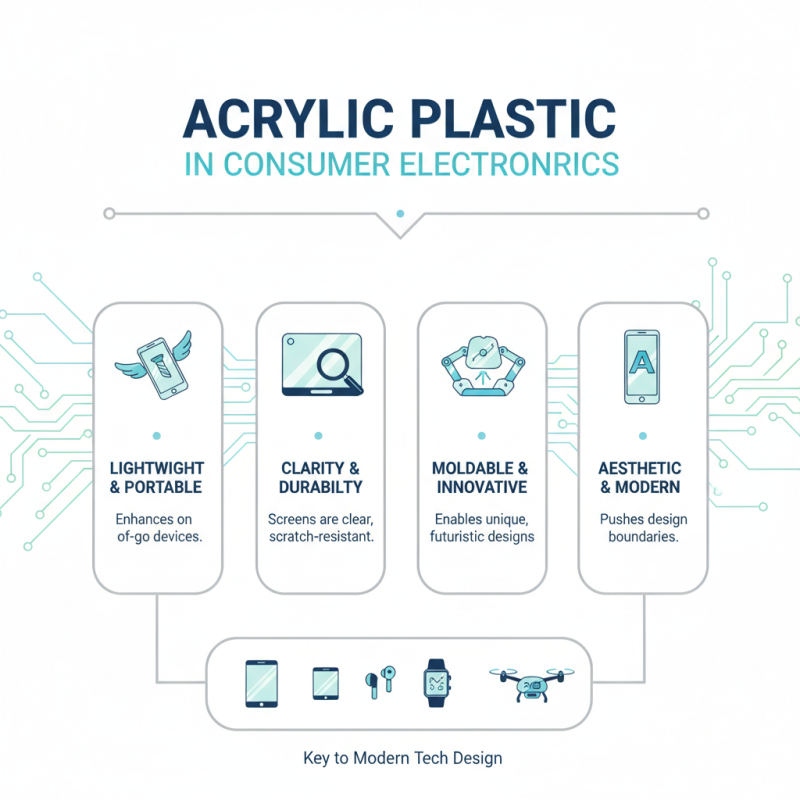
Acrylic plastic is becoming increasingly vital in consumer electronics and gadgets. Its lightweight nature offers portability and convenience for devices that are constantly on the go. Users appreciate how acrylic provides clarity and durability, making screens vivid and long-lasting. The material's ability to be molded enables innovative designs, pushing the boundaries of aesthetics in tech.
However, there are challenges. Acrylic can scratch easily, impacting the overall look of gadgets. Some users might notice that it doesn’t offer the same impact resistance as other materials. While it supports sleek designs, durability can be a concern for heavy-use items. Designers must balance aesthetics with practical function.
As we approach 2026, the role of acrylic plastic will only grow. Its versatility allows for an array of applications in smart devices. From transparent casings to intricate panel designs, acrylic is at the forefront of innovation. Yet, ongoing refinements are needed in its formulation to enhance both toughness and scratch resistance. The evolution of acrylic plastic will shape the future of consumer electronics significantly.
Acrylic Plastic for Medical Devices: Advancements in Safety and Usability
Acrylic plastic has made significant strides in the field of medical devices, especially by 2026. Its clarity, lightweight nature, and shatter resistance make it suitable for various applications. For example, transparent acrylic casings allow healthcare professionals to easily monitor devices and their functions. This transparency is crucial in settings where visibility is essential.
Innovations in production techniques have improved the safety of acrylic plastic. Enhanced chemical resistance reduces the risk of contamination in medical environments. Modified acrylic materials can withstand sterilization processes without degrading. This means devices remain safe and effective over time. However, challenges still exist. For instance, not all acrylic formulations perform equally in extreme conditions.
User experience has also become a focal point. Incorporating ergonomic designs into acrylic devices improves usability for both patients and medical staff. While advancements have been substantial, there is always room for improvement. Continuous feedback from users is essential to find and address flaws. Listening to those using these devices can guide further innovation.
Sustainable Practices in Acrylic Plastic Production and Recycling Methods
Acrylic plastic is becoming more popular due to its versatility and sustainability. As industries evolve, so does the production of acrylics. Sustainable practices in acrylic production are crucial for reducing environmental impact. Reports suggest that acrylic production can yield up to 15% lower emissions when recycling methods are applied effectively.
Recycling acrylic plastics is an important focus for manufacturers. Current methods involve mechanical recycling and chemical recycling. Mechanical recycling reprocesses scrap materials into new acrylic. Chemical recycling breaks down the polymer chains, allowing for high-quality output. This approach has shown promising results, with recycled acrylic having similar properties to virgin materials.
Tip: Look for products made from recycled acrylic to support a sustainable future. Using recycled materials can save energy and reduce waste.
Despite advancements, challenges remain. The efficiency of existing recycling methods needs improvement. Only around 30% of acrylic plastics are recycled today. This is a stark contrast to the 90% recycling rate of metals. Efforts must ramp up to enhance public awareness and streamline recycling programs. Promoting the correct disposal of acrylic can help create a more circular economy.
Best Uses of Acrylic Plastic in 2026
| Application Area |
Description |
Sustainability Practices |
Recycling Methods |
| Automotive Components |
Used for lightweight and durable parts. |
Utilization of recycled acrylic for new parts. |
Chemical recycling to recover monomers. |
| Construction Materials |
Used in transparent roofing and windows. |
Production from bio-based acrylic sources. |
Mechanical recycling into sheets and panels. |
| Medical Devices |
For making safe and sterilizable equipment. |
Adoption of non-toxic additives in production. |
Sterilization and recycling post-use procedures. |
| Consumer Products |
In items like eyewear frames and household goods. |
Focus on using recycled materials in manufacturing. |
Collection programs to reclaim useable plastic. |
| Display and Signage |
Utilized for durable and attractive displays. |
Digital printing methods that reduce waste. |
Reprocessing old signs into new products. |