
Posts
What Is the Best Vacuum Coating Machine in China?
Choosing the best vacuum coating machine in China is not a brand contest. It is a process-fit decision shaped by coating material, substrate, part geometry, production volume, and budget. A stainless-steel chamber, clean fixtures, stable pumping, and repeatable controls matter more than impressive claims. They matter on a Tuesday production shift, too. Compare deposition method, usable chamber size, pump-down time, film uniformity, service access, and operator training. Ask suppliers to run samples using your own parts. Inspect thickness maps, adhesion results, and cycle records—not just showroom demonstrations. Small details matter.
Who says the best system must be the most expensive? A practical, non-verbatim summary of vacuum-coating expert Dr. Donald M. Mattox’s technical perspective is: “Match the process to the film, substrate, and production goal.” Use that principle when evaluating suppliers across China. Confirm which materials and coating recipes the machine supports, and request documented acceptance criteria. Check spare-part lead times, installation support, and local engineering response. A machine can look capable yet struggle with awkward shapes or frequent product changes. Some trade-offs remain. Higher throughput may increase energy use, maintenance demands, or process complexity. The right choice is the machine that consistently meets measurable requirements, with support your team can actually reach. No specification sheet can promise that alone. A careful comparison can.
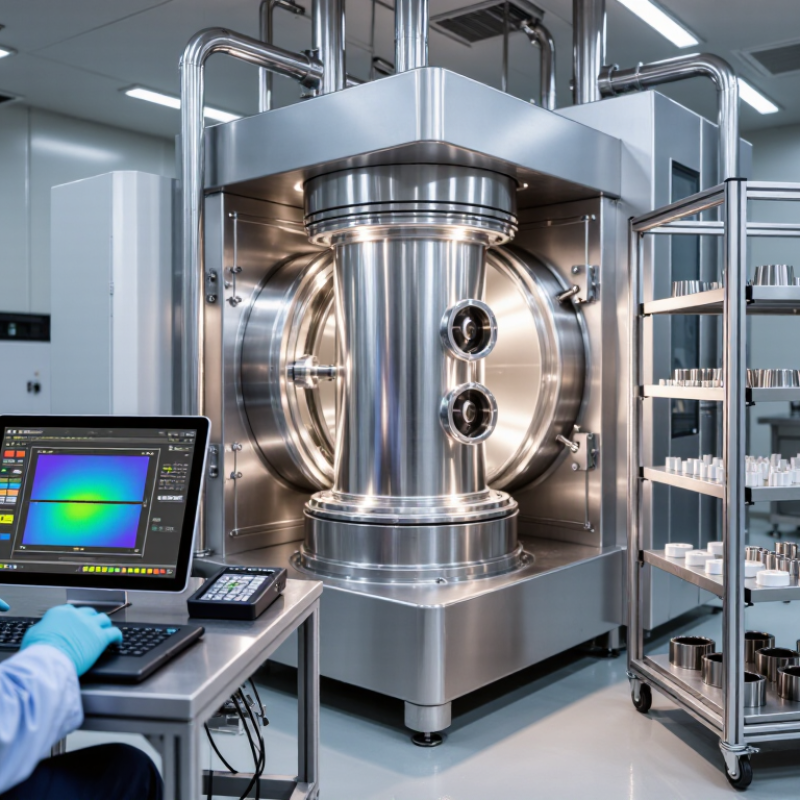
How Vacuum Coating Machines Work and What They Are Used For
What Is the Best Vacuum Coating Machine in China?
How Vacuum Coating Machines Work and What They Are Used For
A vacuum coating machine creates a low-pressure environment inside a sealed chamber. Pumps remove most of the air, and the system forms a thin film on prepared parts. In many physical vapor deposition processes, material is evaporated or sputtered from a source, then settles onto the substrate. The chamber may also receive a controlled process gas. It is a precise process, but not magic. Surface cleaning, part placement, and process settings all affect the result.
Tips: Remove grease and dust before loading parts. Keep surfaces dry, and arrange components so the coating source can reach them. Check the chamber seal and follow the machine’s operating procedure.
These machines can coat optical lenses, cutting tools, metal hardware, and some electronic components. A hard film may help a tool resist wear, while a thin optical layer can reduce reflections. The suitable machine depends on the part size, coating material, output needs, and required film properties. A machine that performs well on small, flat samples may coat complex shapes unevenly. That detail is easy to underestimate. Review sample results and process records before choosing equipment; a polished surface alone does not prove uniform coating.
Key Types of Vacuum Coating Machines Available in China
China’s vacuum-coating machines mainly fall into several process groups. Thermal evaporation is suited to straightforward metal films, while electron-beam evaporation handles higher-melting materials. Both can coat small optical parts, but fixture design affects thickness uniformity. That detail is easy to miss.
Magnetron sputtering offers dense, adherent films for glass, tools, and decorative components. Roll-to-roll systems coat flexible films continuously, making web speed and tension control central purchasing checks. IEA PVPS’s 2024 Snapshot estimated about 447 GW of new solar photovoltaic capacity in 2023. That figure is not coating-machine sales, but it helps explain interest in high-throughput solar manufacturing. Some processes, such as plasma-enhanced chemical vapor deposition, suit specific functional layers; they are not direct substitutes for every sputtering line.
SEMI’s mid-2024 forecast projected global semiconductor equipment sales of $109 billion for 2024. This covers many equipment categories, not vacuum coaters alone. When comparing Chinese suppliers, match the machine to substrate size, coating material, target uniformity, cycle time, and maintenance access. Ask for sample runs and measured film data. A polished specification sheet can still leave unanswered questions about uptime, yield, and actual operating costs.
Criteria for Evaluating a Vacuum Coating Machine
What Is the Best Vacuum Coating Machine in China?
Criteria for Evaluating a Vacuum Coating Machine
A good comparison starts with the coating task, not a machine’s headline capacity. Define the substrate, target film thickness, and acceptable variation across each part. Then check whether the chamber fits real production pieces, including fixtures and loading clearance. A sample run can reveal uneven edges or color shifts that a specification sheet may not show. Small details matter.
Assess process control and repeatability. Ask how the system records pressure, temperature, power, and cycle time, and whether operators can retrieve those records. Compare stated pumping time with tests using a representative load; an empty chamber may reach pressure much faster. Review coating uniformity across the usable area, not just at its center. Reliability also depends on practical service access: inspect pump connections, seals, and frequently replaced components. Ask for maintenance intervals and a clear response plan for faults. These points can be awkward to compare, and supplier data may use different test conditions. Request the conditions in writing. Finally, consider operator training, safety interlocks, and the availability of technical support. The best fit is the machine that meets verified process needs consistently, with manageable upkeep and room for honest improvement.
How to Compare Chinese Vacuum Coating Machine Manufacturers
The best vacuum coating machine depends on the product, not the factory’s location. Compare Chinese manufacturers against your actual substrate, coating material, part size, and production volume. Ask for chamber dimensions, pumping time, base pressure, film-thickness uniformity, and usable uptime. Request test results on parts like yours, not polished demonstration samples. Small details matter: a shadow near a fixture can leave a visible thin patch.
MarketsandMarkets’ 2023 report projected the physical vapor deposition market to grow from US$23.5 billion in 2023 to US$33.4 billion by 2028. That forecast describes the wider PVD market, not machine quality. Still, it highlights why buyers should check whether a supplier supports the specific process they need. Compare written specifications, calibration records, process recipes, and acceptance-test criteria. Ask how the machine performs after repeated production cycles. A single successful coating run proves little.
Visit the workshop if possible. Watch technicians load a chamber, inspect seals, and retrieve maintenance records. Check lead times for pumps, gauges, and other wear parts, then confirm who provides commissioning and operator training. Compare the total cost over several years, including service and downtime, rather than only the purchase price. No scorecard is perfect. I would still want a trial using real production parts before committing.
What Is the Best Vacuum Coating Machine in China? – How to Compare Chinese Vacuum Coating Machine Manufacturers
| Machine Type | Typical Coating Process | Indicative Vacuum / Process Pressure | Common Applications | Main Advantages | Points to Check When Comparing Manufacturers |
|---|---|---|---|---|---|
| Thermal evaporation system | Resistive heating vaporizes a source material, which condenses onto the workpiece. | Often pumped to approximately 10−3–10−5 Pa before deposition; the required level depends on the material and coating specification. | Decorative films, mirrors, optical layers, and thin metal coatings on suitable substrates. | Relatively simple process and suitable for many straightforward, high-volume thin-film jobs. | Ask about source configuration, film-thickness control, substrate heating, usable chamber space, and uniformity across the full load. |
| Electron-beam evaporation system | An electron beam heats and evaporates material in a high-vacuum chamber. | Commonly requires high-vacuum conditions; approximately 10−3–10−5 Pa is an indicative pre-deposition range, not a universal acceptance limit. | Optical coatings, multilayer films, and materials with relatively high melting points. | Can evaporate a range of refractory materials and supports controlled multilayer deposition. | Compare beam power, source capacity, layer-control method, substrate temperature limits, and demonstrated coating uniformity. |
| Magnetron sputtering system | Plasma ions eject atoms from a target; the atoms then form a film on the substrate. | Base pressure and process pressure are different measures. Sputtering commonly operates in process gas at roughly 0.1–1 Pa; the required base pressure is application-dependent. | Metal, alloy, and compound films for glass, electronics, tools, and functional surfaces. | Works with many target materials and can produce dense, adherent films; reactive sputtering can form compounds. | Check target number and size, power supply type, reactive-gas control, pumping speed, process repeatability, and production-load uniformity. |
| Cathodic arc PVD system | An electric arc vaporizes cathode material; reactive gas may be added to form compound coatings. | Reactive coating pressure varies with the gas and recipe; approximately 0.1–5 Pa is a broad indicative process range. | Hard and wear-resistant coatings on cutting tools, dies, and selected components. | High ionization of the coating material can support dense, strongly bonded films. | Ask how macroparticles are controlled, and compare coating uniformity, component rotation, bias control, and recipe repeatability. |
| Roll-to-roll vacuum coating line | A continuous web passes through vacuum zones and coating stations; the coating source may use evaporation or sputtering. | Vacuum and coating pressure depend on the source technology, web material, line layout, and target production rate. | Flexible films, packaging, decorative webs, and other continuous sheet materials. | Designed for continuous processing and high-area production rather than individual batch loading. | Compare web width, line speed at the required film specification, tension control, zone layout, changeover time, and actual throughput data. |
| Practical selection criterion | Match the coating method to the workpiece, coating material, required properties, and production volume. | Request written, application-specific base-pressure and process-pressure specifications; do not compare unlike pressure figures. | Suitable for evaluating any machine category before requesting a quotation. | The best machine is the one that reliably meets the coating specification and production target at an acceptable operating cost. | Ask for a sample run, coating test results, a defined acceptance checklist, utility requirements, warranty terms, spare-parts support, and references for comparable applications. |
Pressure ranges are indicative engineering ranges, not guaranteed specifications. Actual requirements vary with chamber design, workpiece, coating material, and process recipe; confirm them against the manufacturer’s technical proposal and a representative coating test.
Choosing the Best Machine for Your Production Requirements
The best vacuum coating machine in China is not automatically the largest or fastest model. It is the machine that fits your materials, output targets, and available floor space. Define the substrate size, coating type, daily batch volume, and required film consistency before comparing equipment. A chamber that is too small can create production bottlenecks. One that is oversized may increase energy use and operating costs.
Check pump-down time under realistic loading, not just an empty-chamber specification. Ask how the system handles fixtures, different substrate shapes, and routine cleaning. Stable temperature control and even coating distribution matter when parts must look consistent from batch to batch. Also review spare-parts availability, operator training, maintenance access, and the supplier’s technical support. A polished specification sheet can still leave questions unanswered. Request a production trial using your own parts when possible.
Tips: Bring sample substrates and a written process target to supplier discussions. Compare usable chamber volume, cycle time, and coating uniformity. Small details matter. Record trial results, including rejected parts and cleaning time. No checklist replaces a real production test.
What Is the Best Vacuum Coating Machine in China?
Choose a machine that matches your coating process and production requirements.
The chart compares representative deposition-pressure ranges. Actual settings vary with materials, coating design, and equipment. Consider substrate size, required film properties, throughput, and process support when selecting a machine; pressure alone does not determine the best choice.
