
Posts

What Is Cellulose Fiber and What Is It Used For?

Cellulose Fiber is often described as a simple plant-based material. Its story is more interesting than that. Found in wood, cotton, and other plants, cellulose can be processed into fibers for textiles, paper, hygiene products, and industrial materials. The finished fiber’s properties depend on its source and how it is made. A soft cotton shirt and a strong paper filter show how widely its uses can differ.

Cellulose researcher Akira Isogai’s work offers a useful guiding idea: “Understanding cellulose’s structure helps explain how processing can change its properties.” This is a paraphrase of the principle behind his research, not a direct quotation. That distinction matters. Reliable explanations should separate established findings from simplified claims.

This introduction explores what Cellulose Fiber is, how natural and regenerated fibers differ, and where each is used. It also considers practical details: absorbency, strength, texture, and performance in finished products. The material can be renewable, but that alone does not make every product sustainable. Forestry choices, chemical processing, water use, and product durability all deserve attention. There are trade-offs. Even familiar labels can hide important differences. By looking at both the fiber and its production, readers can make better sense of its benefits, limits, and everyday applications.
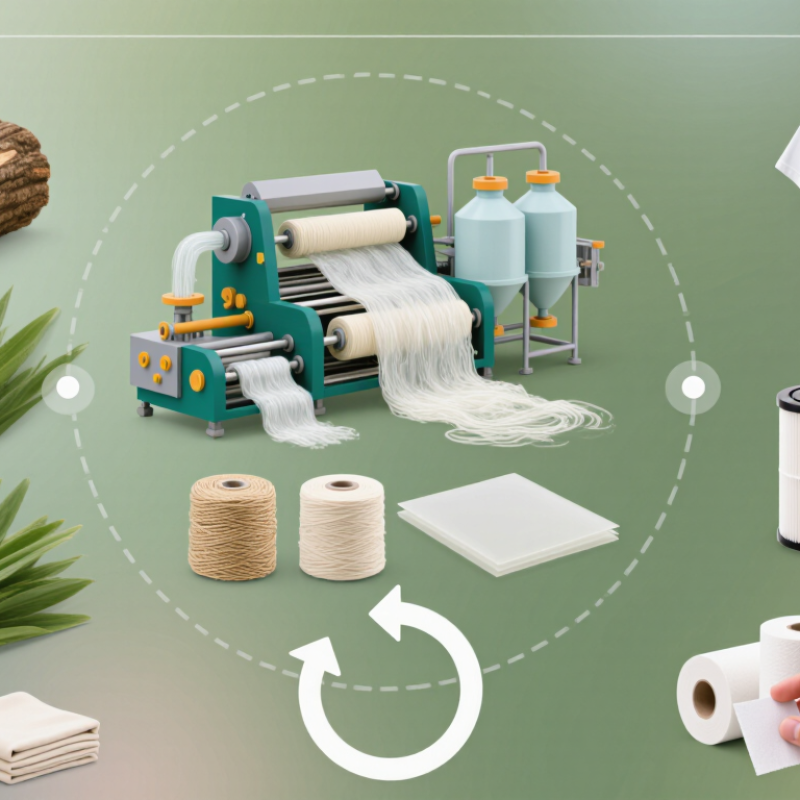
What Is Cellulose Fiber and What Is It Used For?

What Cellulose Fiber Is and How Its Structure Is Organized

Cellulose fiber begins with long chains of glucose units joined by β-1,4 bonds. These chains align and form tiny crystalline regions, which gather into microfibrils. The microfibrils then build larger fiber walls. Think of a rope made from finer ropes, though the arrangement is not perfectly uniform. Some regions are tightly ordered; others are less ordered and easier for water to reach.

That structure helps explain why cellulose fibers can be strong, absorbent, and useful in paper, textiles, and filtration. The USDA Forest Products Laboratory’s Wood Handbook (2021) reports that cellulose makes up about 40–50% of dry wood, alongside hemicellulose and lignin. The exact proportion varies by species and measurement method. In cotton, cellulose is especially concentrated; in wood-based pulp, other components must be separated or modified. Small structural differences matter. Fiber length, wall thickness, and surface chemistry can change how a sheet feels or how yarn handles during processing. It is tempting to treat cellulose as one consistent material, but that simplification hides real variation between sources and treatments. Even a clean-looking fiber has a complicated inner architecture.

Where Cellulose Fibers Come From in Nature and Industry

Cellulose is built by plants, not invented in a factory. Cotton fibers are nearly pure cellulose, while flax and hemp hold it in their stems. Wood is another major source: mills separate cellulose-rich pulp from lignin and other material. Agricultural residues, such as straw, can also supply cellulose, though collection and processing are not always practical. Not just trees. Forests, fields, and cotton bolls all contribute.

Industry transforms purified pulp into regenerated fibers, including viscose, modal, and lyocell. The pulp is dissolved, then cellulose is spun into fine filaments. Textile Exchange’s Materials Market Report 2024 estimates global fiber production reached about 124 million tonnes in 2023; man-made cellulosic fibers accounted for roughly 7.9 million tonnes. That figure shows their scale, but it does not tell us whether a particular fiber came from responsibly managed forests or crop residues. The boundary is less tidy than it sounds.

Cellulose also becomes paper, packaging, hygiene products, and filtration materials. Its source shapes its footprint: growing crops needs land and water, while wood sourcing depends on forest management. Processing matters, too. A soft fabric may begin as a hard tree trunk, but the route from pulp to fiber uses energy, water, and chemicals. The raw material alone tells only part of the story.

Cellulose Fiber: Sources in Nature and Industry

Cellulose is a structural carbohydrate found in plant cell walls. The chart compares approximate cellulose content in common raw fiber sources.

Values are representative midpoints of typical reported ranges and can vary by species, growing conditions, and processing. Cellulose from these sources is used in textiles, paper, regenerated fibers, filters, and composite materials.

How Cellulose Fibers Are Produced and Processed

Cellulose fiber begins as purified plant pulp, commonly made from wood or cotton linters. Mills remove lignin and other non-cellulose material, then produce dissolving pulp with high cellulose content. It looks like pale, dry sheets. The pulp is steeped in chemicals or dissolved in a solvent, depending on the fiber-making route.

In viscose production, alkali-treated pulp is pressed, shredded, and aged before further chemical treatment. The resulting solution is filtered, then forced through tiny spinneret holes into a bath that regenerates cellulose as continuous filaments. Those filaments are washed, stretched, cut, and dried. Lyocell uses a different solvent route, with solvent recovery designed to reduce losses; actual performance depends on plant equipment and operation. It is not a perfect closed loop.

Textile Exchange’s Materials Market Report 2024 estimates global fiber production reached 124 million tonnes in 2023, including about 7.9 million tonnes of man-made cellulosic fibers. That scale makes pulp sourcing and chemical management material concerns, not minor details. Filters must catch particles before spinning, and wash stages remove residual chemicals. A wet strand can look smooth and clean. That proves little about upstream impacts. Operators also monitor bath composition and fiber strength; small process changes can affect both consistency and waste. The report gives market context, but it does not describe every factory’s process or environmental performance.

What Is Cellulose Fiber and What Is It Used For? — How Cellulose Fibers Are Produced and Processed
Fiber type Cellulose source How it is produced and processed Common uses Key characteristics
Cotton Seed hairs of the cotton plant The harvested fibers are separated from seeds by ginning, then cleaned, carded, and spun into yarn. Fabric may be bleached, dyed, or finished. Clothing, towels, bed linens, denim, medical dressings, and other absorbent textiles A natural cellulose fiber that is absorbent, breathable, and comfortable against the skin. Its properties vary with fiber length and processing.
Flax (linen) Stems of the flax plant Stems are retted to help separate the bast fibers from surrounding tissues. Fibers are then broken, scutched, and hackled before spinning and weaving or knitting. Shirts, trousers, table linens, household textiles, and some specialty paper products A natural bast fiber known for strength and moisture absorption; linen fabrics often crease readily.
Jute Stems of jute plants After harvesting, stems are retted, and the long bast fibers are stripped, washed, dried, and spun. They may also be blended or processed into nonwoven materials. Sacks, ropes, geotextiles, backing fabrics, and some home furnishings A coarse, plant-based fiber commonly used where strength and low cost are more important than a soft hand.
Viscose rayon Purified cellulose pulp, usually from wood or other plant sources The pulp is treated with sodium hydroxide and carbon disulfide to make a soluble cellulose derivative. The solution is filtered, spun into a coagulation bath, washed, and finished. Apparel, linings, dresses, furnishings, and absorbent nonwoven products A manufactured regenerated cellulose fiber. Its softness, drape, and absorbency make it useful in textiles; wet strength depends on the fiber specification.
Modal Purified cellulose pulp Made by a modified viscose process. The cellulose solution is spun into fibers, then washed and finished; production specifications are designed to produce fibers with particular strength and performance. Underwear, shirts, sleepwear, towels, and blended fabrics A type of regenerated cellulose fiber. Commercial modal fibers are often designed to retain useful strength when wet, though performance varies by product.
Lyocell Purified cellulose pulp, commonly from wood The pulp is dissolved directly in an amine oxide solvent, typically N-methylmorpholine N-oxide. The solution is filtered and dry-jet wet spun; the solvent is recovered and reused in a closed-loop process. Apparel, denim, bed linens, upholstery, and some nonwoven products A regenerated cellulose fiber with a smooth surface and good moisture absorption. The closed-loop solvent recovery system is a characteristic feature of its production route.
Cellulose-based nonwoven fiber Natural pulp fibers or regenerated cellulose fibers Fibers or pulp are formed into a web and bonded mechanically, chemically, or with heat, depending on the material and intended product. The web may be treated for absorbency or other functions. Wipes, hygiene products, medical materials, filters, and absorbent household products Performance depends on the fiber source, web structure, and bonding method; not all cellulose-based nonwovens are biodegradable in every disposal environment.

Key Properties That Shape Cellulose Fiber Performance

Cellulose fiber performance depends on its structure, source, and processing. Its plant-based polymer chains help fibers provide useful strength and flexibility. Fiber length and fineness also affect how a fabric feels. A cotton shirt may feel soft and breathable, while a paper sheet feels firm and dry. Different forms behave differently.

Moisture is a key factor. Many cellulose fibers absorb water, which can help fabrics manage perspiration but may also cause swelling or slower drying. Strength when wet varies by fiber type; it is not safe to assume every cellulose fabric responds alike. Weave, finishes, and fiber blends matter too. The tricky part is that a single label rarely predicts performance on its own. Even familiar materials can surprise you.

Tips: Check the care label and test a small area before using heat or stain treatments. For a specific project, consider the fiber’s wet strength, drying time, and texture. Keep expectations realistic: processing can change how the material performs.

Common Uses of Cellulose Fibers Across Different Industries

Cellulose fibers serve different roles depending on their source, processing, and final form. In clothing, cotton and regenerated cellulose fibers such as viscose can make shirts, linings, and towels. Their ability to absorb moisture can feel comfortable against skin, though wet fabric may lose strength or take longer to dry. The details matter.

Paper and packaging are major uses. Cellulose fibers form the network that gives paper its structure, from thin tissue to sturdy cartons. In construction, they may be added to insulation or fiber-reinforced materials. A handful of loose insulation feels soft, but its performance depends on density, moisture control, and installation.

Cellulose also appears in nonwoven products, including wipes, filters, and some hygiene materials. In filtration, fibers can help capture particles as air or liquid passes through a layered sheet. In food and pharmaceutical manufacturing, purified cellulose may serve as a thickener or stabilizer; its role depends on the specific grade and formulation. Some fibers are also explored in composite parts, where they can reduce weight. That sounds simple, but durability and moisture sensitivity remain practical challenges. Processing choices can also affect environmental impacts, so “plant-based” does not automatically mean low-impact.