Why Choose Mine Exhaust Fans for Safe Ventilation?
Why Choose Mine Exhaust Fans for Safe Ventilation?
In underground mining, air movement is not an abstract engineering target. It is visible at the working face, where dust hangs under roof bolts and diesel fumes collect near parked equipment. Mine Exhaust Fans help remove contaminated air and maintain a controlled airflow path. Their performance affects worker exposure, equipment reliability, and emergency response.
Mining ventilation authority Dr. Malcolm J. McPherson stated, “Ventilation is the lifeblood of a mine.” This principle remains practical today. A properly selected fan can support steady air exchange through long headings, shafts, tunnels, and processing areas. It can also help manage heat, humidity, gases, and airborne particles. However, a powerful fan alone cannot guarantee safe conditions.
The fan must match the mine layout, resistance, airflow demand, and operating environment. Engineers should review pressure curves, motor efficiency, noise, vibration, impeller condition, and backup capacity. A fan that performs well in a workshop may struggle underground. That detail is easy to overlook.
Reliable Mine Exhaust Fans also need routine inspection. Look for damaged blades, loose fasteners, blocked inlets, unusual sounds, and changing airflow readings. Small defects can become expensive failures. Sometimes, the system design appears correct, yet workers still report stagnant air. That feedback deserves investigation, not dismissal.
This guide examines how Mine Exhaust Fans support safer ventilation decisions. It considers performance, durability, maintenance, and practical installation conditions. The discussion also recognizes an uncomfortable truth: ventilation safety depends on the entire system, not one machine.
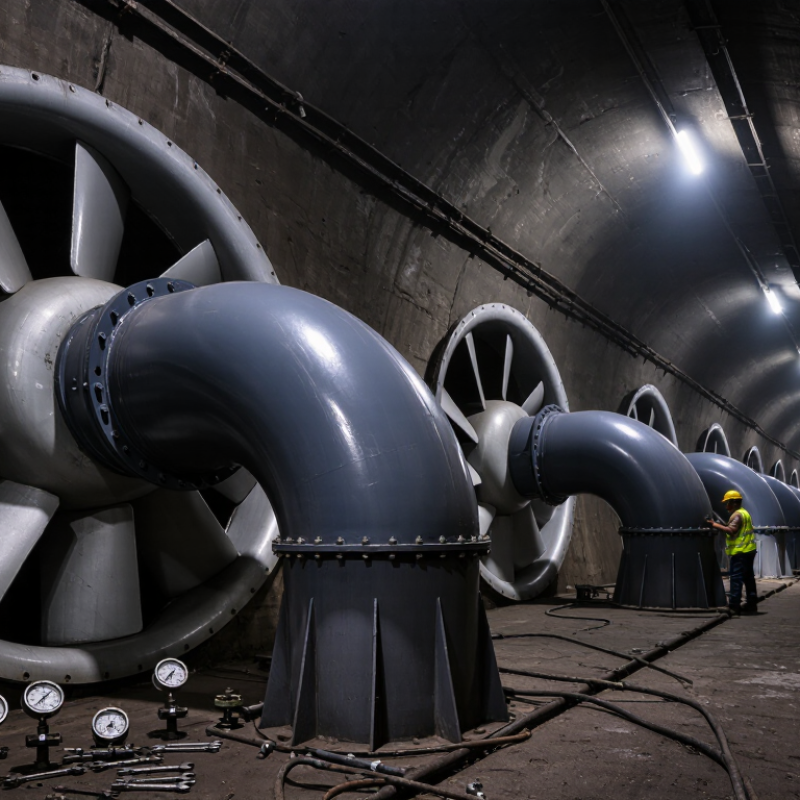
Mine Exhaust Fans: Purpose and Role in Underground Ventilation
Underground mines need controlled airflow long before workers notice a problem. Mine exhaust fans remove contaminated air, heat, dust, and gases from active workings. Their purpose is practical: create reliable negative pressure and guide polluted air toward safe discharge points. Fresh air can then reach faces, haulage routes, and refuge areas.
A properly selected fan supports the mine ventilation plan rather than working alone. Engineers consider airway resistance, required airflow, depth, temperature, and future production changes. Fan curves help confirm whether the system can deliver stable performance under real operating conditions. Sensors can track pressure, airflow, methane, carbon monoxide, and temperature near critical areas. Clear alarms matter. Workers need warnings they can understand quickly.
Exhaust fans also support emergency response by limiting smoke movement and directing hazardous air away from occupied zones. Backup power, accessible controls, vibration checks, and scheduled cleaning improve reliability. A blocked inlet or worn bearing can reduce airflow quietly. That detail is easy to miss. No fan is perfect, and calculations may not match field conditions because doors, leaks, and damaged stoppings change the circuit. Regular airflow surveys and independent inspections help reveal these gaps. Operators should record unusual noise, rising motor temperature, and pressure changes before they become serious failures. Safety depends on the whole ventilation network, not merely the largest fan.
How Mine Exhaust Fans Control Airflow and Remove Contaminants
In underground mining, exhaust fans do more than move air. They establish a controlled airflow path from working faces toward return airways. This direction helps carry dust, diesel particles, heat, and unwanted gases away from personnel. Air must move. Fan selection depends on tunnel length, resistance, airflow demand, and operating conditions. A fan that is too small may leave stagnant pockets. An oversized unit can waste energy and create uncomfortable drafts.
Modern systems regulate airflow with variable-speed drives, dampers, and pressure sensors. These controls respond when doors open, equipment changes position, or production increases. Proper duct sealing also matters. Leaks can reduce delivered airflow before it reaches the face. During a site inspection, technicians may compare measured air velocity with design values at several points. They also check vibration, bearing temperature, noise, and filter condition. Small errors matter. A damaged impeller or blocked intake can quickly reduce performance.
Contaminant removal requires more than installing a powerful fan. The exhaust path must capture pollutants near their source and discharge them safely. Regular monitoring should test dust levels and relevant gases, while maintenance records support dependable decisions. Still, real workings are rarely perfect. Readings can fluctuate, and one sensor may not represent an entire heading. Experienced teams review trends, inspect physical conditions, and adjust controls carefully. Reliable ventilation develops through measured airflow, disciplined maintenance, and honest attention to weaknesses.
Safety Features That Support Reliable Mine Ventilation
Mine ventilation fans do more than move air. They help control methane, dust, heat, and diesel emissions underground. Safety features support this work when conditions change quickly. NIOSH identifies methane’s explosive range as approximately 5% to 15% in air. That range is narrow. Small errors matter.
Reliable mine exhaust fans should include airflow sensors, pressure monitoring, automatic alarms, and emergency power connections. Variable-speed control can respond to changing production levels without wasting energy. Backdraft protection also helps limit reverse airflow during shutdowns. MSHA recorded 40 mining fatalities in the United States in 2023, according to its annual safety data. That figure does not prove ventilation caused every incident. It does show why inspections and engineered controls cannot be treated as paperwork.
Tips: Test alarms under realistic conditions. Inspect blades, guards, bearings, and electrical connections regularly. Record airflow readings at fixed points. Compare trends, not only single measurements. NIOSH guidance supports continuous atmospheric monitoring where hazardous gases may accumulate. A manual check still matters. Sensors can drift. People can miss signs. A quieter fan may not be a healthier fan; unusual vibration or falling airflow deserves investigation.
Choosing Fan Capacity, Efficiency, and Explosion Protection
Why Choose Mine Exhaust Fans for Safe Ventilation?
Choosing Fan Capacity, Efficiency, and Explosion Protection
Choosing a mine exhaust fan starts with airflow, but capacity is not simply a larger number. Engineers should calculate excavation size, duct resistance, leakage, equipment heat, and required air changes. A fan that moves too little air can leave methane, dust, or heat near working areas. An oversized fan may waste power and create unnecessary pressure.
Field conditions matter. Long ducts, sharp bends, and damaged joints can reduce performance quickly. Fan selection should match the expected static pressure, not only the advertised airflow. Variable-speed control can adjust ventilation as operations change. It may also reduce energy use during quieter shifts. Still, controls need careful commissioning and regular review.
Efficiency is important over years of operation. Check motor efficiency, impeller design, vibration levels, noise, and access for cleaning. Explosion protection requires more than a warning label. Select equipment with suitable certification for the hazardous area, including the motor, electrical enclosure, cable glands, and monitoring devices. Grounding, temperature protection, and routine inspections deserve equal attention. Small oversights become serious underground.
No calculation is perfect.
Dust buildup can alter balance and efficiency. Maintenance teams should record airflow, pressure, vibration, and temperature at defined intervals. I would also question any selection based only on catalogue data; actual duct losses and changing mine layouts often tell a different story.
Installation, Monitoring, and Maintenance for Safe Operation
Mine exhaust fans support safe ventilation by removing contaminated air and stabilizing airflow underground. Their value depends on installation, not just motor capacity. A correctly sized fan must match airway resistance, production changes, and emergency requirements. Poorly sealed stoppings can waste airflow before it reaches the working face.
Installation should include vibration isolation, guarded drive components, weather protection, and accessible emergency shutoff controls. Commissioning teams should measure airflow, pressure, temperature, and noise at several operating points. According to the Mine Safety and Health Administration’s 2023 statistics, 40 mining fatalities occurred in the United States. Ventilation controls cannot prevent every hazard, but weak controls increase exposure when conditions change. Small leaks matter.
Monitoring needs fixed gas sensors, calibrated portable detectors, and recorded inspection routes. For U.S. coal operations, federal rules commonly require methane below 1.0% in return air and oxygen at safe levels; local regulations must govern the final design. NIOSH ventilation research also emphasizes airflow quantity, gas distribution, and worker exposure as linked controls. Maintenance crews should inspect bearings, belts, impellers, seals, and electrical connections on a scheduled basis. A clean impeller is not enough. Dust buildup, unusual vibration, or a two-degree temperature rise may signal trouble. Operators sometimes trust stable readings too quickly, which deserves review. Sensor drift and damaged ducting can quietly defeat a healthy-looking fan.
Why Choose Mine Exhaust Fans for Safe Ventilation?
Installation, continuous monitoring, and preventive maintenance help keep airflow stable and identify developing fan problems before they affect underground working conditions.
The chart shows a realistic sample monitoring profile over one operating shift. Airflow is expressed in m³/s, while fan vibration is expressed in mm/s RMS. A gradual airflow decline combined with rising vibration can indicate fouling, belt or bearing wear, imbalance, or other maintenance conditions. Alarm limits must be established according to the mine ventilation plan, equipment specifications, and applicable regulations.