How to Choose a Stainless Steel Coil Manufacturer?
Choosing the right Stainless Steel Coil Manufacturer can determine whether your production line runs smoothly or absorbs costly delays. The decision involves more than comparing prices. Material grade, coil consistency, surface finish, delivery discipline, and technical support all matter.
Markus Moll, a respected stainless-steel market analyst, offers a practical warning: “Price is only one part of the stainless-steel equation.” That principle deserves attention. A lower quotation may exclude slitting, protective packaging, inspection, or reliable documentation. Ask for mill test certificates, heat numbers, thickness tolerances, and chemical analysis. Check whether the supplier can provide 304, 316L, 430, or other required grades consistently.
Look closely.
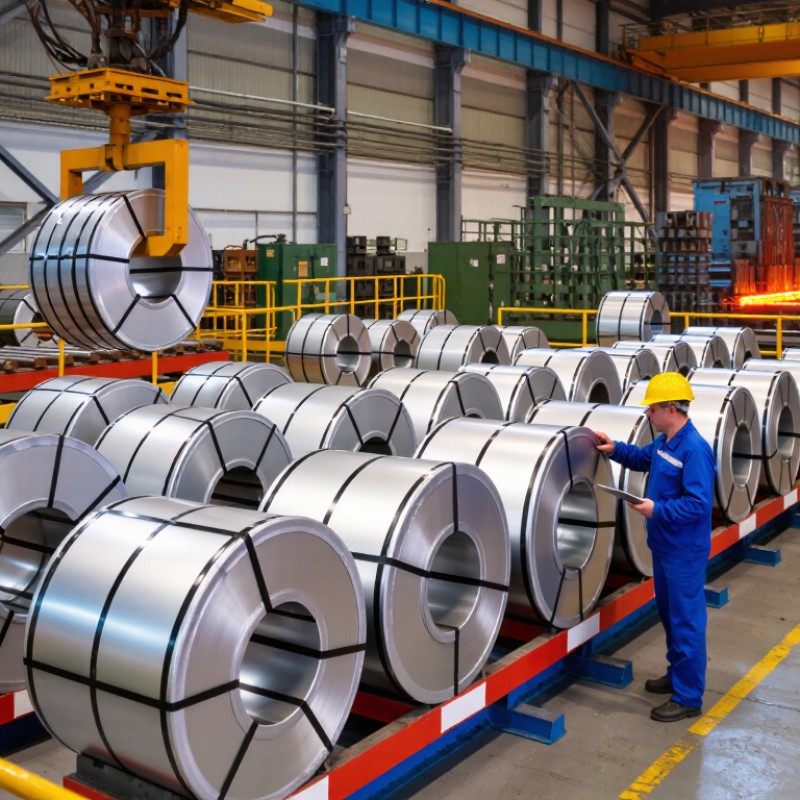
An experienced buyer should examine production evidence, not attractive claims. Visit the facility when possible. Observe coil storage, labeling, surface protection, and loading procedures. A dusty warehouse or unclear identification system may reveal deeper control problems. Request sample coils and compare them under actual forming, stamping, welding, or fabrication conditions.
A dependable Stainless Steel Coil Manufacturer should explain its melting source, rolling process, annealing practice, and inspection methods clearly. It should also communicate realistic lead times. Promises are easy. Repeatable performance is harder.
Past supply experience matters, but it can mislead if requirements have changed. Ask for references from companies with similar thicknesses, widths, industries, and order volumes. Consider responsiveness when defects appear. Even strong manufacturers can make mistakes. The real test is how openly they investigate, correct, and prevent recurrence.
A careful selection process protects quality, scheduling, and long-term costs. Yet no checklist is perfect. Your application may expose risks that a supplier’s brochure never mentions.
Stainless Steel Coil Grades: Comparing 304, 316, 430, and ASTM A240
Choosing a stainless steel coil manufacturer starts with understanding the grade behind the quotation. Grade 304 suits food equipment, tanks, and indoor fabrication because it balances corrosion resistance, formability, and cost. Grade 316 contains molybdenum, which improves resistance in salty air, chemical areas, and coastal plants. It usually costs more. Grade 430 is magnetic and economical, but it performs less reliably in chloride-rich environments.
ASTM A240 is not a separate stainless grade. It is a material specification covering stainless steel plate, sheet, and strip, including many coil products. A dependable manufacturer should identify both the grade and the applicable ASTM requirements on the mill test certificate. Check chemistry, mechanical values, thickness tolerance, surface finish, and heat number traceability. Ask how samples are tested and stored. Clear answers matter.
Practical inspection still catches uncomfortable gaps. I check coil edges for splitting, surface scratches, and uneven winding after delivery. A polished surface can fool the eye. For 316, verify molybdenum content rather than trusting a label. For 430, confirm magnetic behavior only as a basic check, not as proof of quality. One weak point is assuming every 304 coil forms identically; annealing history and rolling quality can change performance. A manufacturer with documented process controls, responsive technical staff, and consistent records is easier to trust when production problems appear.
Manufacturing Standards: Evaluating ASTM A240 and EN 10088 Compliance
When choosing a stainless steel coil manufacturer, examine compliance with ASTM A240 and EN 10088 first. These standards define more than a steel grade. They cover chemical composition, mechanical properties, dimensions, surface quality, and testing requirements. ASTM A240 is widely used for stainless steel sheet, strip, and plate. EN 10088 provides European requirements for stainless products and grade designations. A reliable manufacturer should identify the exact standard edition and product category.
Do not assume two similar grades perform identically. For example, a common austenitic grade may have comparable names under both systems, but limits and delivery conditions can differ. Request a mill test certificate for every heat number. Check carbon, chromium, nickel, tensile strength, yield strength, elongation, and hardness. Review coil thickness and width tolerances too. I have found that certificates can look complete while missing surface condition details. That gap deserves attention. Factory audits, sample testing, and traceability records add practical confidence.
Tips: Ask for evidence.
Confirm whether the coil was solution annealed, pickled, or polished. Inspect a sample under consistent lighting. Compare the certificate with independent test results when the application is demanding. Also ask how nonconforming coils are identified and controlled. A manufacturer may claim full compliance, but measurable records should support every claim. Keep the request specific, documented, and tied to your actual forming, welding, and corrosion requirements.
Quality Metrics: Checking Thickness Tolerance, Surface Finish, and Flatness
Choosing a stainless steel coil manufacturer requires more than comparing prices. Thickness tolerance should match the ordered grade, width, and gauge. ASTM A480/A480M-24 provides tolerance tables, but it does not create one universal limit. Request the exact table reference and inspection method. A calibrated micrometer should check the center and both edges. Record readings across several coil lengths. One reading is weak evidence.
Surface finish needs measurable language. “Bright” or “smooth” can mean different things between mills. Specify the finish designation, sampling location, and roughness parameter. ISO 21920-2 defines how surface texture is assessed, including Ra measurement. Many purchasing specifications use Ra values near 0.3 micrometers for 2B material, but this is not an automatic guarantee. Ask for test results from the actual production coil. Visual inspection alone can miss fine roll marks.
Flatness is equally practical. EN 10051 lists permissible deviations according to thickness and width, rather than using one simple percentage. Ask whether the supplier measures flatness on a leveled sheet, a moving strip, or the coil itself. Those methods may produce different results. A useful factory check combines a straightedge, feeler gauge, and documented sampling plan. I once treated a clean surface as proof of quality; that assumption was incomplete. Certificates can also contain copied values. Independent verification is worth the small delay.
Typical purchasing checkpoints for stainless steel coil quality are shown for comparison. The values represent commonly specified inspection limits: thickness tolerance of ±0.10 mm, surface roughness of Ra ≤0.80 μm, and flatness deviation of ≤3.00 mm per metre. Actual limits should be confirmed against the selected grade, thickness, width, and applicable ASTM or EN standard.
Production Capacity: Assessing Coil Width, Weight, Lead Time, and MOQ
When evaluating a stainless steel coil manufacturer, stated production capacity means little without matching your required coil width and gauge. Ask for the minimum and maximum widths, thickness range, edge condition, and slitting capability. A 1,500 mm master coil may not solve a 480 mm requirement if accurate slitting is unavailable. Review recent production records or inspection reports, rather than relying only on a sales sheet. This practical check can reveal capacity gaps early.
Coil weight affects handling, freight, crane limits, and line stability. Request the permitted weight range and actual weight tolerance. Heavy coils reduce handling frequency but may exceed your decoiler capacity. Light coils can fit smaller equipment, yet increase joins and packaging costs. Keep it measurable. Ask for a sample packing list and photographs of identification tags. This evidence is more useful than a broad promise.
Lead time should reflect order size, material grade, testing, and surface requirements. Ask whether quoted days include production, inspection, packing, and dispatch. A written schedule with inspection dates makes delays easier to manage. MOQ also deserves careful attention. A low MOQ supports a trial order, while a high MOQ may lock cash into slow-moving stock. I have seen buyers focus on price and overlook warehouse space. That was an expensive oversight. Compare a standard order with an urgent order before choosing. Capacity claims may change during peak demand.
How to Choose a Stainless Steel Coil Manufacturer? — Production Capacity: Assessing Coil Width, Weight, Lead Time, and MOQ | Capacity Category | Typical Specification | What to Verify with the Manufacturer | Typical Planning Range | Capacity Assessment |
| Standard Narrow Coil | Width: 600–999 mm
Coil weight: 3–12 metric tons | Whether the mill can maintain stable edge quality and flatness at narrow widths without excessive slitting loss. | Lead time: 3–6 weeks
MOQ: 1–3 metric tons | Suitable for small and medium orders |
| Common Mill Width | Width: 1,000–1,219 mm
Coil weight: 8–20 metric tons | Available thickness range, maximum coil outer diameter, lifting limits, and whether the requested grade is regularly produced. | Lead time: 2–5 weeks
MOQ: 3–5 metric tons | Efficient for regular production |
| Wide Coil | Width: 1,500–1,600 mm
Coil weight: 12–25 metric tons | Maximum rolling width, allowable coil weight, transportation restrictions, and packaging capability for heavy coils. | Lead time: 4–8 weeks
MOQ: 5–10 metric tons | Best for high-volume requirements |
| Custom Slit Coil | Width: 20–999 mm
Coil weight: 0.5–10 metric tons | Slitting tolerance, burr control, minimum slit width, number of mults, recoiling options, and yield management. | Lead time: 2–6 weeks
MOQ: 1–5 metric tons | Flexible but may increase processing cost |
| Made-to-Order Coil | Non-standard width, thickness, surface, or grade
Typical coil weight: 5–25 metric tons | Production slot availability, technical approval process, test certificate capability, and raw-material reservation policy. | Lead time: 6–12 weeks
MOQ: 10–25 metric tons | Use for specialized specifications |
| Stock-Supported Coil | Common grades and finishes held in inventory
Coil weight: 3–20 metric tons | Actual stock quantity, heat number traceability, storage date, surface protection, and replenishment frequency. | Lead time: 3–10 working days
MOQ: 1 metric ton or one available coil | Fastest option for urgent demand |
| Planning note: The ranges above are practical industry benchmarks for stainless steel coils, not guaranteed limits. Actual width, weight, lead time, and MOQ depend on grade, thickness, surface finish, temper, slitting requirements, order volume, inspection requirements, and shipping method. |
| Recommended comparison method: Request the manufacturer’s maximum rolling width, minimum and maximum coil weight, confirmed production lead time, standard and custom MOQ, and recent production capacity for your exact specification. |
Supplier Reliability: Verifying ISO 9001 Certification, Testing, and Traceability
Choosing a stainless steel coil manufacturer requires more than comparing price and surface finish. Supplier reliability begins with verifiable quality systems. Request a current ISO 9001 certificate and check its registration number, scope, issuing body, and expiry date. The scope should cover stainless steel processing, not an unrelated activity. A scanned certificate is not enough. Verify it through the certification body’s public records when possible.
Testing records reveal how seriously a supplier controls production. Ask for mill test certificates, chemical analysis, tensile results, hardness readings, and dimensional checks. Compare the results with your purchase specification. Testing should identify the heat number, coil number, standard, and inspection date. Look closely. Vague reports create avoidable risk. Independent inspection can strengthen confidence, especially for critical applications, although it adds time and cost.
Traceability should connect the finished coil to its raw material and processing history. A reliable supplier can show how heat numbers remain visible on labels, packing lists, certificates, and internal records. Request a sample traceability trail before placing a large order. Follow one coil backward, from packaging to test data and original melt information. Keep digging. Many buyers accept paperwork too quickly, and even certified systems can suffer from weak record discipline, transcription errors, or outdated procedures. Ask how corrections are controlled and how long records remain available.