
Posts

How to Choose a 22kW Car Charger in 2026

Choosing a 22kw Car Charger in 2026 is less about buying the highest number on the box and more about matching equipment to your car and home. A 22 kW charger can deliver useful speed, but only when the vehicle’s onboard charger can accept that rate. Your electrical supply matters too. Many homes do not have the three-phase connection such charging typically requires, so an electrician’s site assessment is a sensible starting point.

Small details can change the experience. Check connector compatibility, cable reach, outdoor protection, warranty terms, and whether the unit supports load management. A cable that barely reaches the parking spot becomes annoying on rainy evenings. Smart scheduling may help coordinate charging with household demand, but extra app features are not automatically useful. Keep the basics in view.

This is where buyers—and sometimes product pages—can oversimplify. A higher rating can look reassuring on paper, yet add cost without speeding up your particular car. Before comparing models, note your vehicle’s maximum AC charging rate, available electrical capacity, and typical daily mileage. Ask a qualified installer to confirm what your property can support; estimates from a product listing cannot replace that check. Consider future vehicle plans, but avoid paying for capacity you may never use. There is no perfect choice for every driveway. This guide explains the practical trade-offs, key specifications, and questions worth asking before you buy. One careful check now can prevent an expensive mismatch later.
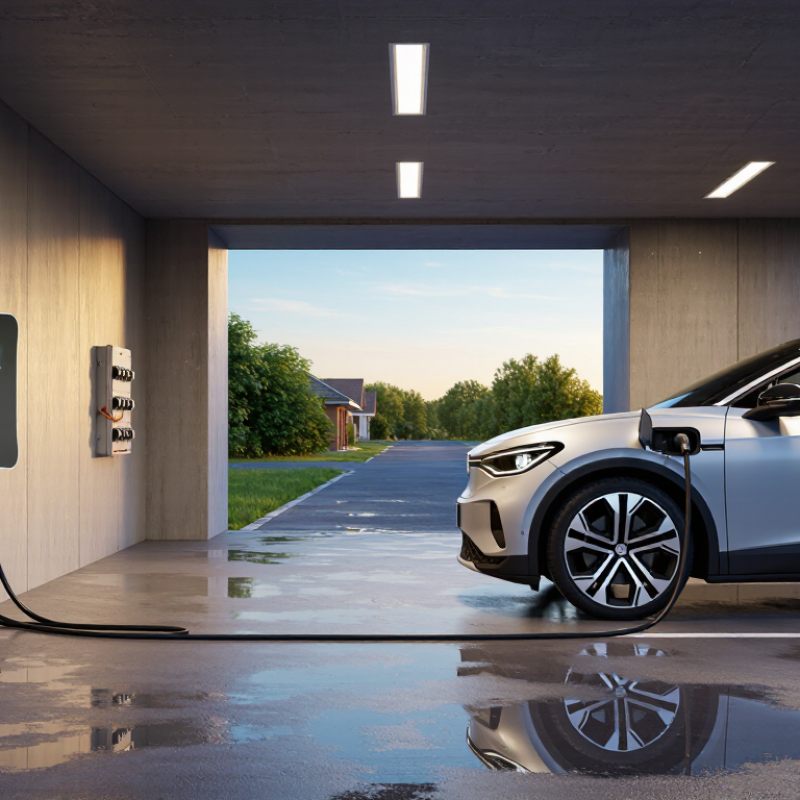
How to Choose a 22kW Car Charger in 2026

Define 22 kW Charging: 400 V × 32 A × √3 ≈ 22 kW

A 22 kW AC charger is usually calculated as 400 V × 32 A × √3, giving about 22.2 kW. Here, 400 V is the line-to-line voltage in a three-phase supply, and 32 A is the current on each phase. The square-root-of-three factor matters. Without it, the estimate is wrong. The result is nominal, not a promise of constant power: supply voltage, installation limits, and the vehicle’s onboard charger can all reduce charging speed.

Check the car’s AC charging limit before choosing a 22 kW unit. A vehicle limited to 11 kW AC will not draw 22 kW, even when the charger and supply can provide it. On a site survey, look for a three-phase connection and confirm the available current; a neat label on a charger cannot tell you what the wiring can safely support.

IEA’s Global EV Outlook 2024 reports more than four million public charging points worldwide at the end of 2023, around 40% more than in 2022. That growth makes power ratings easy to compare, but the figures can hide practical constraints. Measure twice. A small mismatch in expectations can mean a much slower charge.

Check Vehicle Limits: The Onboard AC Charger Sets Maximum Charging Power

A 22 kW wall charger does not guarantee 22 kW into your car. The vehicle’s onboard AC charger sets the maximum rate it can accept. Many models are limited to 11 kW, while some accept less. Check the owner’s manual or vehicle specifications for the AC charging limit, not just the battery size. Small detail, big difference.

A 22 kW unit commonly supplies three-phase AC at up to 32 amps per phase. Your home or parking space must also have a compatible supply, and the charging cable must support the intended current. If the car accepts only 11 kW, a 22 kW charger may still work, but the car will not charge faster than its own limit. I once assumed the larger number meant shorter charging times; that was an easy mistake.

Real charging power can be lower still. Battery temperature, charge level, household load management, and the site’s available power all matter. For example, a car rated for 11 kW may draw less on a cold morning or when other equipment shares a limited supply. Compare the vehicle’s AC limit with the electrical installation before choosing a charger, and ask a qualified installer to verify the supply. Specifications can be confusing, and I would recheck them rather than rely on a sales label alone.

Verify the Supply: A 22 kW Charger Needs Three-Phase Power at 32 A

Before buying a 22 kW charger, check the supply at the property, not just the charger’s label. At 400 V three-phase, 32 A per phase provides about 22.2 kW, using the standard three-phase power calculation. A 230 V single-phase, 32 A circuit delivers only about 7.4 kW. That difference matters. Ask a qualified electrician to confirm the incoming supply, available capacity, protective devices, and cable rating. A three-phase connection can still fall short if other large loads are running or the service limit is low.

The International Energy Agency’s Global EV Outlook 2024 reports that public charging points worldwide grew by more than 40% in 2023, reaching over four million. More chargers are appearing, but that growth does not guarantee a suitable supply at home. Check the vehicle’s onboard AC charging limit too; some cars cannot accept the full 22 kW. I would also ask whether dynamic load management is needed when cooking, heating, and charging overlap. It can help prevent demand from exceeding the property’s capacity, though it cannot create a missing phase. One detail is easy to overlook: supply voltage and installation conditions vary, so the calculation is a guide, not a site assessment.

How to Choose a 22 kW Car Charger in 2026

Verify the supply: a 22 kW charger needs three-phase power at 32 A.

The figures are theoretical AC power estimates at nominal voltage and a power factor of 1. At 400 V three-phase and 32 A, power is approximately 22.2 kW. Actual charging speed may be lower depending on supply conditions and the vehicle’s onboard charger.

Compare Safety Requirements: IEC 61851 and 30 mA RCD Protection

How to Choose a 22kW Car Charger in 2026

Compare Safety Requirements: IEC 61851 and 30 mA RCD Protection

A 22kW charger usually needs a three-phase supply and can draw about 32 amps per phase. Check your home’s available capacity before comparing models. IEC 61851 covers charging equipment and its control functions, including communication between the vehicle and charger. It does not confirm that your wiring or electrical panel can safely support the load. Those details need a site assessment.

A 30 mA residual current device (RCD) helps protect against dangerous leakage current. But the RCD type matters. An electric vehicle can produce smooth DC leakage, which may affect some Type A devices. Depending on the charger’s built-in protection and local installation rules, a separate Type B RCD or Type A RCD with 6 mA DC detection may be required. Check the equipment documentation and have a qualified electrician confirm the complete protection arrangement.

Estimate Charging Time: 60 kWh ÷ 22 kW ≈ 2.7 Hours Before Losses

A 60 kWh battery divided by a 22 kW charger gives about 2.7 hours before losses. That is a best-case estimate, not a promise. The car must support 22 kW AC charging; its onboard charger may accept less, even when the wall unit can deliver more. The U.S. Department of Energy’s Alternative Fuels Data Center lists Level 2 equipment from 3.3 to 19.2 kW, so check local supply and charger specifications before buying.

Allow extra time for conversion losses, temperature limits, and slower charging near a full battery. As a simple planning example, assuming 90% efficiency, storing 60 kWh takes about 3 hours at a steady 22 kW. Real sessions can take longer. A warm garage, a cold battery, or another large electrical load can change the result. That clean calculation is useful, but it hides a few messy details.

Tips: Check your vehicle’s AC charging limit in its manual. Confirm the site has compatible three-phase power where required. Compare the charger’s rated output with the car’s acceptance rate, not just the number on the box. Leave some time in your schedule. You may need it.

How to Choose a 22kW Car Charger in 2026 — Estimate Charging Time: 60 kWh ÷ 22 kW ≈ 2.7 Hours Before Losses
What to Check Example or Estimate Why It Matters
Charger type 22 kW AC charging AC charging power is limited by the vehicle’s onboard AC charger, as well as the available electrical supply.
Ideal calculation for a 60 kWh battery 60 kWh ÷ 22 kW ≈ 2.7 hours This is a theoretical estimate before charging losses and assumes the vehicle can accept 22 kW AC continuously.
Estimated time including charging losses About 2.9–3.0 hours at 90–95% charging efficiency Actual time can vary with temperature, battery condition, vehicle settings, and charging power changes.
Vehicle’s onboard AC charging limit If limited to 11 kW: approximately 5.5 hours ideally, or about 5.7–6.1 hours with losses A 22 kW charger cannot make a vehicle charge faster than its onboard AC charging limit.
Electrical supply 22 kW AC commonly requires a suitable three-phase supply; around 400 V and 32 A per phase is a typical reference point Supply voltage, current capacity, installation conditions, and local electrical rules must be checked by a qualified installer.
Single-phase supply comparison At 230 V and 32 A, theoretical power is about 7.4 kW A 22 kW-rated unit will not deliver 22 kW if the supply or vehicle supports less.
Daily charging requirement For example, 30 kWh added at 22 kW takes about 1.4 hours ideally Choose charging capacity based on typical daily energy use, parking time, and the vehicle’s charging capability.
Installation and safety Confirm circuit capacity, protective devices, cable routing, and applicable local requirements A qualified electrician should assess the site and verify that the installation is suitable for the selected charger.
Estimate limitation Times assume a 60 kWh energy amount and steady charging; actual results may be longer Battery usable capacity, starting charge level, vehicle power limits, thermal conditions, and charging behavior affect real-world time.