China Top Humanoid Robot Manufacturers and Suppliers?
China has become a major testing ground for the global Humanoid Robot industry. Its manufacturers benefit from dense electronics supply chains, advanced battery production, and large industrial customers. The International Federation of Robotics reported 276,288 industrial robot installations in China during 2023. That represented 51% of global installations. This ecosystem supports faster development, although humanoid production remains less mature.
Goldman Sachs Research estimates that the Humanoid Robot market could reach approximately 6 billion US dollars by 2030. Morgan Stanley has also projected substantial long-term growth, but forecasts vary widely. The gap matters. Many companies demonstrate impressive walking, lifting, and vision capabilities. Fewer have proven stable factory operation, low maintenance costs, or reliable mass delivery. That is where careful supplier research becomes essential.
As robotics professor Henrik Christensen has stated, “Robots should be designed around the task, not around the human body.” This principle deserves attention when comparing Chinese manufacturers and suppliers. UBTECH, Unitree Robotics, Fourier Intelligence, Leju Robot, and EngineAI represent different technical and commercial directions. Their products differ in payload, degrees of freedom, battery endurance, software openness, safety controls, and after-sales support. Some specifications remain difficult to verify independently. That should not be ignored.
This guide examines China’s leading Humanoid Robot manufacturers and suppliers through practical criteria. It considers manufacturing experience, research capability, production readiness, certification, integration services, and customer evidence. The market is developing quickly. Yet enthusiasm should not replace testing. A polished demonstration is only the beginning.
What Are Humanoid Robots?
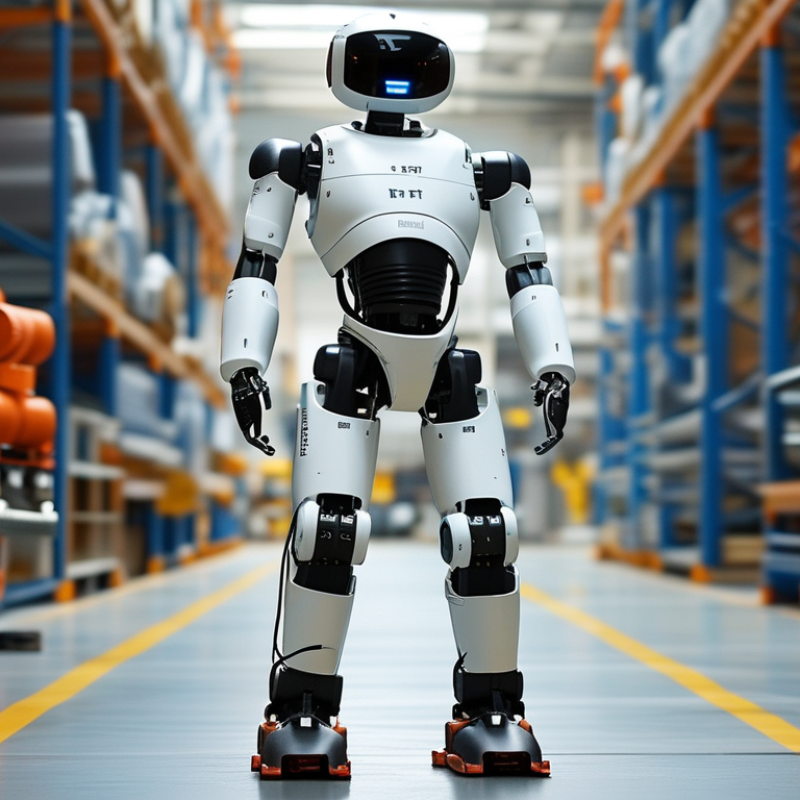
Humanoid robots are machines designed to resemble the human body in useful ways. Most have a torso, two arms, two legs, hands, cameras, microphones, and onboard computers. This shape lets them use stairs, door handles, shelves, and tools built for people. It does not make them human. Their movements come from motors, sensors, control software, and trained artificial intelligence models. Sensors estimate balance, distance, pressure, and joint position while the robot walks or reaches. Some systems operate autonomously, while others require remote supervision.
In warehouses, laboratories, hospitals, and training facilities, humanoid robots may transport items, inspect equipment, or perform repetitive handling tasks. A typical demonstration might show a robot lifting a box, turning its wrist, and placing the box on a shelf. These actions appear simple, but they require real-time coordination between vision, balance, grip strength, and motion planning. Small errors can matter. A wet floor, poor lighting, or an uneven package may interrupt the task.
The term “humanoid” can also be misleading. A robot may copy the human form without matching human flexibility, judgment, or endurance. Buyers should examine payload, battery duration, walking stability, safety controls, software updates, maintenance support, and operator training. Independent testing is valuable because short demonstrations rarely reveal long-term reliability. Current systems remain expensive and imperfect. Some cannot safely handle crowded spaces or unexpected contact. Suppliers with clear technical specifications, testing records, and service procedures offer stronger evidence than attractive videos alone.
China’s Humanoid Robot Industry and Key Technologies
China’s humanoid robot industry is moving from laboratory prototypes toward practical factory and service applications. Its progress depends on a dense manufacturing network for motors, reducers, sensors, batteries, and control boards. This supply chain can shorten development cycles and reduce component costs. However, lower cost does not automatically mean reliable performance.
Key technologies include high-torque electric actuators, real-time motion control, and multi-sensor perception. Cameras, force sensors, and inertial units help robots understand uneven floors and moving objects. Artificial intelligence supports speech, task planning, and visual recognition. A stable robot also needs precise thermal management and safe battery control. Small errors matter.
Testing remains a serious challenge. Engineers must measure walking stability, joint temperature, collision response, charging safety, and operation time. Factory trials often reveal problems that laboratory demonstrations miss. A robot may lift a box smoothly, then hesitate near a narrow doorway. That detail matters. Suppliers should provide traceable test records, software update policies, spare parts, and clear service responsibilities. Industry standards are developing, but they are not yet perfectly consistent. Buyers therefore need independent verification, realistic workload tests, and transparent technical documentation rather than attractive demonstrations alone.
Leading Humanoid Robot Manufacturers in China
China’s leading humanoid robot manufacturers are moving from laboratory demonstrations toward repeatable industrial deployment. The country installed 276,288 industrial robots in 2023, representing about 51% of global installations, according to the International Federation of Robotics’ World Robotics 2024 report. This installed base supports local expertise in servo motors, reducers, sensors, batteries, and precision assembly.
The strongest Chinese manufacturers usually combine mechanical design, artificial intelligence, and high-volume supply-chain access. Buyers should examine walking stability, payload accuracy, battery endurance, safety controls, and maintenance response. A reliable supplier can show test records, failure rates, spare-part availability, and clear software update procedures. Factory trials matter.
A polished demo proves little.
Goldman Sachs Research estimates that the humanoid robot market could reach 38 billion US dollars by 2035. That forecast is ambitious, and real adoption may develop more slowly. Current systems still face difficult tasks, including uneven floors, delicate object handling, heat management, and long operating cycles. Some suppliers publish impressive specifications, yet independent testing remains limited. This gap deserves attention. Leading manufacturers in China are improving quickly, but buyers should compare verified performance rather than promotional claims. Field experience, transparent documentation, and measurable reliability remain stronger indicators than appearance alone.
China’s Robot Manufacturing Ecosystem: Annual Industrial Robot Installations
China has remained the world’s largest market for industrial robot installations, creating a broad manufacturing and supply-chain foundation for emerging humanoid robot production. The figures represent annual industrial robot installations in China and are not limited to humanoid robots.
Major Suppliers and Their Product Capabilities
China’s humanoid robot market includes research-led manufacturers, industrial integrators, and specialized component suppliers. Their product capabilities differ widely. Some develop full-body bipedal robots for logistics, inspection, and public demonstrations. Others focus on actuators, controllers, vision modules, or robotic hands. In practical evaluations, walking stability matters less than repeatable task performance. A robot may lift a box smoothly, yet struggle with uneven floors, poor lighting, or crowded workspaces. A polished demo is not proof.
Reliable suppliers usually provide technical specifications, software documentation, maintenance plans, and test data. Check payload, battery duration, joint speed, balance recovery, sensor coverage, and operating temperature. Ask whether the platform supports SDK access and system integration. Experience shows that open interfaces reduce future modification costs. However, specifications can be difficult to compare. Testing methods may differ between suppliers. That weakness deserves attention.
Tips: Request a live task demonstration using your actual objects, floor surfaces, and workflow. Inspect emergency-stop functions, collision detection, remote monitoring, and spare-part availability. Review factory quality controls and after-sales response times. Avoid choosing by appearance alone. A capable supplier should explain limitations clearly, including tasks the robot cannot complete reliably. Small pilot projects often reveal more than large promises.
How to Evaluate China’s Humanoid Robot Companies
How to Evaluate China’s Humanoid Robot Companies
Evaluating Chinese humanoid robot companies requires more than watching a smooth factory demonstration. Goldman Sachs Research estimated a potential humanoid market of 250,000 annual shipments by 2035. That forecast is ambitious, not proof of current readiness. Check whether a supplier publishes walking uptime, payload, battery duration, and maintenance intervals. Ask for test conditions. A robot carrying three kilograms for ten minutes tells little.
Supply-chain depth is another practical indicator. The International Federation of Robotics reported that China installed 276,288 industrial robots in 2023, representing 51% of global installations. This figure concerns industrial robots, not humanoids. Still, it shows manufacturing capacity for motors, reducers, sensors, controllers, and production tooling. Evaluate whether these components are internally tested or simply purchased and integrated. Request failure-rate records, spare-part lead times, software update policies, and technician response times.
Real deployment evidence matters most. Visit a pilot site if possible. Watch the robot recover from a misaligned grip, a slippery floor, or a dropped object. Ask how many hours it operates without human intervention. Public benchmarks remain inconsistent, so comparisons can be unfair. I would also question impressive videos; edited footage can hide delays and repeated failures. A reliable supplier should explain limitations clearly, provide traceable test data, and discuss safety compliance for the intended workplace. Cheap hardware may look attractive, but weak after-sales support can make the total cost surprisingly high.