
Posts

What Is a Maize Mill Machine and What Types Are Available?

A Maize Mill Machine turns whole kernels into meal, flour, grits, or other products. The choice matters. A small hammer mill may suit a village shop, while a roller mill can support higher-volume, more consistent production. Plate mills offer another option, often with simpler layouts and adjustable grinding gaps. Each design handles grain differently, so the right fit depends on capacity, product texture, power supply, and maintenance skills.

The scale is substantial. FAO’s 2022 production data records about 1.16 billion tonnes of maize worldwide, underscoring the crop’s importance in food and feed systems. Yet global output does not tell an operator which mill to buy. Moisture, kernel condition, screen size, and cleaning practices all affect the flour coming out of the machine. A dusty floor or worn screen can change results quickly.

Food-security expert Norman Borlaug famously said, “You can’t build a peaceful world on empty stomachs and human misery.” His words concern food access, not mill design, but they frame why reliable processing matters. This guide explains what a Maize Mill Machine does and compares the main types available. It also considers their practical trade-offs. One detail is easy to overlook: the most powerful machine is not always the most useful one.
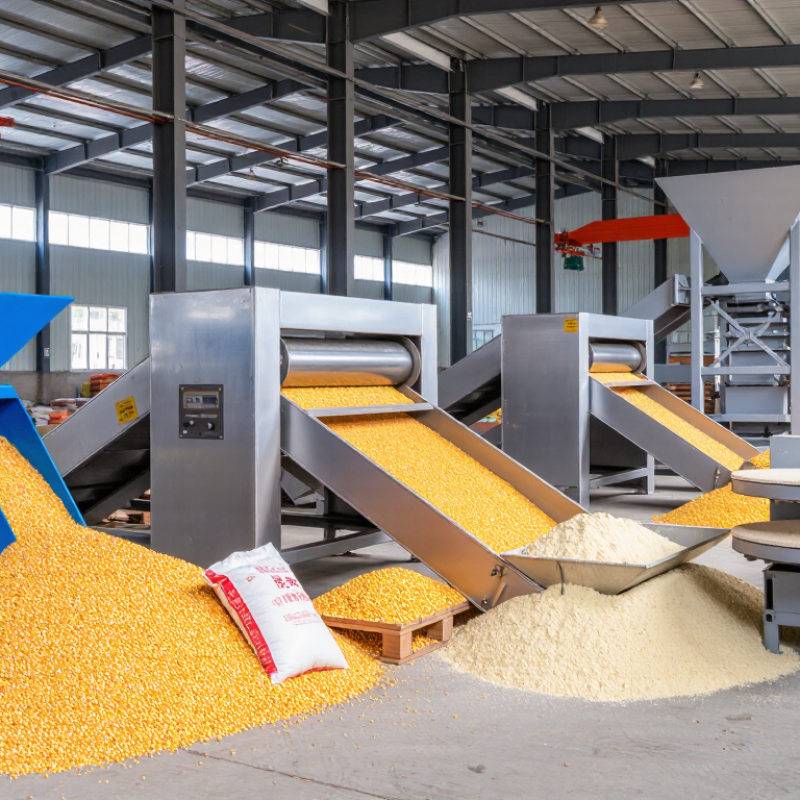
What Is a Maize Mill Machine and What Types Are Available?

What a Maize Mill Machine Is and What It Produces

A maize mill machine processes dried maize kernels into food ingredients by cracking, grinding, and, in some systems, separating parts of the grain. A basic mill may use plates, hammers, or rollers to reduce kernels, while screens help control the final particle size. Some lines also remove the outer bran or separate the germ. The machine’s design determines how much separation is practical. Not every mill performs every step.

The main outputs are maize flour, meal, and grits. Flour is finely ground and suits doughs and batters; meal has a coarser texture for porridge or baking, while grits retain larger particles. Bran and germ may also be collected when the process separates them. Output depends on kernel moisture, screen size, and machine settings, so two mills can produce noticeably different textures. In practice, the boundary between meal and flour is not always neat. A small change in screening can alter how the product feels between the fingers. The result should be checked against the intended use, not judged by appearance alone.

How Maize Milling Works from Grain Preparation to Finished Product

A maize mill machine converts cleaned maize kernels into flour, meal, grits, or other useful fractions. Milling starts with grain preparation, not grinding. Screens remove leaves and broken stalks, while magnets and destoners help catch metal and stones. Operators check kernel moisture because damp maize can clog equipment, while very dry grain may produce excess fines. Small details matter.

The milling method shapes the finished product. Hammer mills use fast-moving beaters and suit relatively coarse meal or animal feed. Plate mills grind between textured surfaces, while roller mills use paired cylinders for more controlled particle sizes. Some lines remove the germ and bran before fine grinding; others retain more of the kernel. A typical process includes grinding, sieving, and returning larger particles for another pass. The right setup depends on the desired texture and how consistently the grain is prepared. In practice, results may vary more than a simple machine chart suggests.

Tips: Check screens and grinding surfaces regularly, and adjust the sieve opening to match the product. Test a small batch after changing grain moisture or settings. Look at the flour under good light for uneven particles. Clean equipment between runs to limit carryover, and record settings that work. A little trial and error is normal.

What Is a Maize Mill Machine and What Types Are Available? — How Maize Milling Works from Grain Preparation to Finished Product
Stage or Mill Type Main Equipment What It Does Typical Output or Result Key Notes
1. Grain cleaning Sieve cleaner, aspirator, magnetic separator Removes dust, chaff, oversized or undersized material, and ferrous metal from incoming maize. Cleaner grain ready for further processing. Cleaning protects downstream equipment and helps improve product quality. The exact cleaning line depends on the condition of the grain.
2. Destoning Gravity destoner Separates stones and other dense particles from maize using differences in weight and airflow. Maize with fewer dense impurities. Destoning is commonly used where stones or similar contaminants may be present after harvesting and handling.
3. Conditioning or tempering Water dosing system and tempering bins Adds a controlled amount of water and allows moisture to distribute through the kernels before milling. Conditioned grain suited to the chosen milling method. Moisture targets and resting time vary with the grain and process. Conditioning can help separate kernel components in dry milling.
4. Degermination and dehulling Degerminator or dehulling machine Separates some or most of the germ and outer bran from the maize kernel before reduction. Grits or cleaned endosperm fractions, plus separated germ and bran. Often used for dry milling intended to produce more uniform grits or refined maize meal. Not every mill includes this step.
5. Roller milling Roller mill with sifters and, where required, purifiers Breaks kernels or intermediate pieces between rollers and separates particles by size. Depending on the setup: maize grits, meal, or flour, with bran and germ fractions when separation is included. Roller systems can produce several particle sizes and are commonly used in larger dry-milling operations.
6. Hammer milling Hammer mill with screen Uses rotating hammers to reduce maize by impact; the screen helps determine the particle size range. Ground maize meal or flour, often with more of the kernel retained in the product. A practical option for general-purpose grinding. Particle size depends on the screen, feed rate, and grain characteristics.
7. Plate or disc milling Plate mill or disc mill Grinds maize between grooved or textured plates or discs. Meal or flour, depending on the machine adjustment and screen arrangement. Used in small-scale and local milling applications. Output and fineness vary by machine design and operating conditions.
8. Stone milling Stone mill Crushes and grinds maize between millstones. Coarse meal through finer flour, depending on the stone gap and feed. Often chosen for traditional-style products. It generally offers less precise fraction separation than a multi-stage roller system.
9. Wet milling (alternative process) Steeping tanks, mills, screens, and separation equipment Steeps maize in water, then mills and separates the kernel components in a wet process. Starch, germ, fiber, and protein-rich fractions for further processing. Wet milling is a distinct industrial route, commonly used to recover multiple components; it does not simply produce dry maize flour.
10. Sifting and grading Plansifter, vibrating sieve, or other grading screen Separates milled material into particle-size fractions and can return oversize particles for further grinding. More consistently graded grits, meal, or flour. Screen openings and the number of sifting stages depend on the desired product specifications.
11. Product handling and packing Conveyors, storage bins, weighing and bagging equipment Moves finished product to storage or packaging while limiting exposure to contamination and moisture. Packaged or bulk maize products ready for distribution or use. Finished product should be stored in clean, dry conditions. Packaging and storage requirements depend on local food-safety rules and product use.

The Main Components of a Maize Mill Machine

A maize mill machine is a connected line of parts, not just a grinder. The hopper receives grain, while a metering feeder controls the flow into the machine. Even feeding helps prevent uneven grinding. A cleaner removes chaff and stones; magnets can catch stray metal before it reaches the milling chamber. Small parts matter.

The grinding unit may use plates, rollers, or a hammer rotor, depending on the required meal or flour. Screens then separate particles by size, returning coarse material for another pass. An aspiration fan draws away light bran and dust, while an elevator or conveyor moves grain between stages. USDA’s September 2024 World Agricultural Supply and Demand Estimates put 2023/24 global maize production at about 1.23 billion metric tons, showing the scale of grain these systems may handle. Actual capacity depends on grain moisture, screen size, and motor power.

The frame supports the working parts, and guards reduce exposure to moving components. A control panel lets operators monitor the motor and adjust feed rate. FAO’s 2019 report estimated that 14 percent of food is lost between harvest and retail worldwide; this is not a maize-mill figure, but careful cleaning and handling can help limit avoidable waste. Dust control is easy to underestimate. In practice, a small leak around a chute can leave a fine layer on nearby surfaces, so seals and extraction need regular checks.

Common Types of Maize Mill Machines and Their Uses

Hammer mills use fast-moving hammers and screens to break kernels into meal or flour. They suit small farms and feed mills because screen changes adjust particle size. The trade-off is heat and dust; operators should check bearings, airflow, and screen wear. A small detail matters: damp kernels can clog the screen.

Plate or disc mills grind maize between grooved plates. They work well for household and community processing, producing meal for porridge and other staple foods. Roller mills use paired cylinders to crack and flatten kernels more uniformly. They are common in larger plants making grits, flour, or breakfast products. For finer flour, operators may add sieving and repeat grinding. That adds time and power use.

Stone mills grind between rotating stones and are valued for slower, traditional meal production, though output is usually lower. Degerminating mills remove the germ and bran before grinding, helping produce refined, more shelf-stable meal; they also reduce some nutrients. Scale matters. FAOSTAT recorded about 1.16 billion tonnes of maize production worldwide in 2022, showing why processing needs range from village-scale milling to industrial lines. The right machine depends on kernel moisture, desired texture, daily throughput, and available power—not just purchase price. A common mistake is choosing capacity on paper without testing local maize.

Factors That Shape the Choice of a Maize Mill Machine

Choosing a maize mill machine means matching throughput, grain condition, product, and site constraints—not simply buying the highest-capacity unit. USDA’s December 2024 WASDE report projected 2024/25 global corn production at about 1.22 billion metric tonnes. Local operations, however, may process a few daily batches or several tonnes per hour. Not just capacity. Estimate peak-season volume, operating hours, and cleaning downtime before comparing hammer, plate, or roller mills.

The target product shapes the choice. Hammer mills suit meal and animal feed, while roller systems can produce more controlled particle sizes. Screen design and motor power also affect the result. Ask for a sample run using your own maize. Damp, dusty, or uneven kernels can clog screens and increase wear. FAO post-harvest guidance places safe maize storage near 13% moisture; wetter grain may need drying before milling, adding cost and time. A moisture meter helps avoid guesswork.

Power reliability, operator skills, spare-part access, dust control, and cleaning time matter as much as rated output. Compare energy use per tonne and flour recovery, not just motor power. Request results from a sustained test; short demonstrations can hide heat buildup and downtime. A smaller machine may fit better. Yet undersizing can create harvest queues, while oversized equipment may sit idle and tie up capital. I would check the estimates twice; crop seasons rarely follow neat spreadsheets.