
What Is Plastic Cut to Size and How Does It Work?
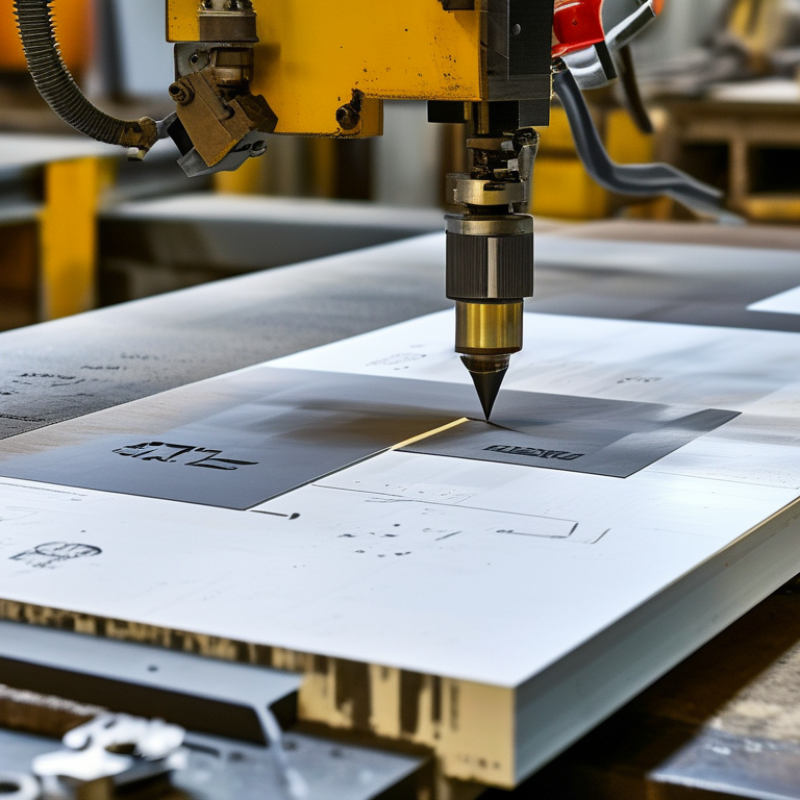
Plastic cut to size refers to the controlled cutting of plastic sheets, rods, tubes, and blocks into specified dimensions. Suppliers use panel saws, CNC routers, band saws, waterjet systems, or lasers, depending on the material and required accuracy. A technician first reviews the drawing, confirms the polymer grade, and checks thickness, tolerances, and surface requirements. The selected machine then follows programmed measurements, while deburring and inspection prepare the part for assembly.
This service matters because plastic is not dimensionally neutral. Acrylic can chip, polycarbonate can melt, and UHMW-PE can expand under heat. Cutting speed, tool geometry, cooling, and workholding must match the material. The Plastics Industry Association reports that plastics remain essential across packaging, construction, healthcare, and transportation. However, the OECD Global Plastics Outlook estimates that global plastic waste reached 353 million tonnes in 2019, with only 9% recycled. Accurate cutting can reduce avoidable offcuts, although it cannot solve the wider waste problem alone.
The process begins with a clear specification. It should include dimensions, quantity, edge finish, hole locations, and acceptable tolerance. Even a simple 300-millimetre panel may require careful measurement. Small errors can prevent a clean fit. That is the part many basic explanations miss. Material certification and inspection records also support reliable purchasing decisions, especially for food-contact, electrical, or engineering applications. This guide explains what plastic cut to size means, how the workflow operates, and where practical limitations deserve closer attention.
What Plastic Cut to Size Means
What Is Plastic Cut to Size and How Does It Work?
What Plastic Cut to Size Means
Plastic cut to size means supplying plastic in dimensions selected for a specific project. Instead of buying a full sheet or long rod, customers request a measured length, width, diameter, or thickness. The service can cover acrylic, polycarbonate, nylon, polyethylene, PVC, and other engineering plastics.
It starts with a clear drawing or measurement list. A technician checks the material, cutting method, and required tolerance. Sawing works well for straight cuts. CNC routing can create slots, holes, and shaped edges. Waterjet cutting helps produce detailed profiles without creating much heat.
The phrase sounds more exact than it is.
Every cutting method has limits. A saw may leave a slightly rough edge, while heat-sensitive plastic can soften during machining. Experienced suppliers consider blade choice, clamping pressure, and material movement before production. These details affect the final fit.
In practical use, a cut panel may need to slide into a metal frame with only a small gap. A plastic spacer may require consistent thickness across dozens of pieces. Measurements should be checked twice, although mistakes still happen. A drawing can be accurate, yet the real assembly may reveal an overlooked corner, fastener, or expansion gap. Clear specifications and sample checks make the process more dependable.
What Is Plastic Cut to Size and How Does It Work? - What Plastic Cut to Size Means
| Dimension | What It Means | Typical Data or Options | Why It Matters |
|---|---|---|---|
| Definition | Plastic cut to size is a plastic sheet, plate, rod, tube, or block trimmed to specified dimensions before delivery. | Common dimensions include length, width, outside diameter, inside diameter, and thickness. | It reduces on-site cutting, material waste, and preparation time. |
| Common Materials | The material is selected according to mechanical, chemical, thermal, and optical requirements. | Acrylic, polycarbonate, PVC, polyethylene, polypropylene, acetal, nylon, and PTFE. | Different plastics vary in strength, impact resistance, chemical resistance, friction, and operating temperature. |
| Material Forms | Plastic can be supplied in several standard shapes and then cut or machined to the required size. | Sheets and plates; solid rods; hollow tubes; rectangular bars; blocks; and films. | The starting form affects the available dimensions, cutting method, and final cost. |
| Cutting Methods | The cutting process is chosen based on the plastic type, thickness, shape, quantity, and required accuracy. | Saw cutting, CNC routing, CNC milling, laser cutting, waterjet cutting, and turning. | The correct method helps control edge quality, heat exposure, dimensional accuracy, and production speed. |
| Typical Thickness Range | Thickness depends on the material form and the supplier’s available stock. | Thin films may be below 1 mm; sheets commonly range from about 1–25 mm; thicker plates and blocks are also available. | Thickness affects rigidity, weight, load capacity, cutting time, and total material usage. |
| Dimensional Accuracy | Accuracy describes how closely the finished part matches the requested dimensions. | Standard saw-cut parts often use millimetre-level tolerances; precision CNC machining can achieve tighter tolerances when specified. | Tolerances should be stated on the drawing because plastic expands, contracts, and may deflect during machining. |
| Edge Finish | Cut edges may be left as machined or further processed for appearance and safety. | Standard cut edge, deburred edge, rounded edge, sanded edge, polished edge, or flame-polished edge for suitable plastics. | Finishing can remove sharp edges, improve appearance, and support sealing or assembly. |
| Color and Surface | Color, transparency, texture, and surface protection can be selected before cutting. | Clear, translucent, opaque, black, white, and custom colors; smooth, textured, or protective-film-covered surfaces. | The surface specification affects visibility, light transmission, scratch resistance, and product appearance. |
| Additional Operations | Cutting may be combined with machining steps to create a finished component. | Drilling, countersinking, slotting, threading, engraving, bending, polishing, and assembly preparation. | Combining operations can simplify procurement and reduce the number of separate production stages. |
| Specification Information | A clear specification defines the material and the required finished condition. | Material grade, color, thickness, length, width, quantity, tolerance, edge finish, holes, and drawing requirements. | Complete information helps prevent incorrect material selection and dimensional errors. |
| Typical Applications | Cut-to-size plastic components are used where a lightweight, corrosion-resistant, insulating, or transparent part is needed. | Machine guards, protective covers, spacers, wear strips, display panels, windows, electrical insulation, seals, and prototypes. | Plastic can provide useful performance while often reducing weight and corrosion compared with metal. |
| How the Process Works | The required dimensions are converted into a cutting plan, the stock material is secured, and the selected tool removes material along the defined cutting path. | 1. Select material; 2. confirm dimensions; 3. choose a cutting method; 4. cut or machine; 5. inspect; 6. deburr and package. | This workflow turns standard plastic stock into a component prepared for direct installation or further assembly. |
Note: Dimensions, tolerances, and available finishes vary by material, stock form, equipment, and project requirements.
Related Posts
-
Why is Plastic Fabrication Important for Modern Industries?
-

What are the Best Plastic Molding Machines of 2026?
-
What is Plastic Cut to Size and How is it Used?
-

2026 Top Trends in Plastic Fabrication Innovations and Applications?
-

Top Plastic Parts Innovations in Modern Manufacturing?
-

2026 How to Use Acrylic Plastic in Your Art Projects?