
7 Tips for Buying Crystals in Bulk
Buying Crystals in bulk can lower unit costs, but a low price means little if the pieces arrive chipped, mislabeled, or unlike the photos. Each parcel deserves a closer look. Check the stated mineral, dimensions, weight, finish, and country of origin when available. Ask for current photographs of the actual lot, not only polished catalogue images. A tray of clear points may look uniform online; in person, some may be cloudy, cracked, or noticeably smaller. That difference matters when you sell by size or build matching sets.
Mineralogist Dr. George Rossman’s research offers a useful reminder: identify the mineral before trusting its label. Treat that as a practical buying principle, not a direct quotation. Request written details about grading, shipping, returns, and how damaged pieces are handled. Compare the delivered quality with the seller’s description. Keep a small sample order before committing to a large one. It may feel slower. It can also reveal inconsistent color, sizing, or packaging before those problems fill your shelves. Track the landed cost, including freight and breakage, rather than judging by the listed price alone. Even careful buyers misjudge a batch sometimes; note what went wrong and adjust the next order. These seven tips will help you assess suppliers, inspect stock, and buy with clearer expectations.
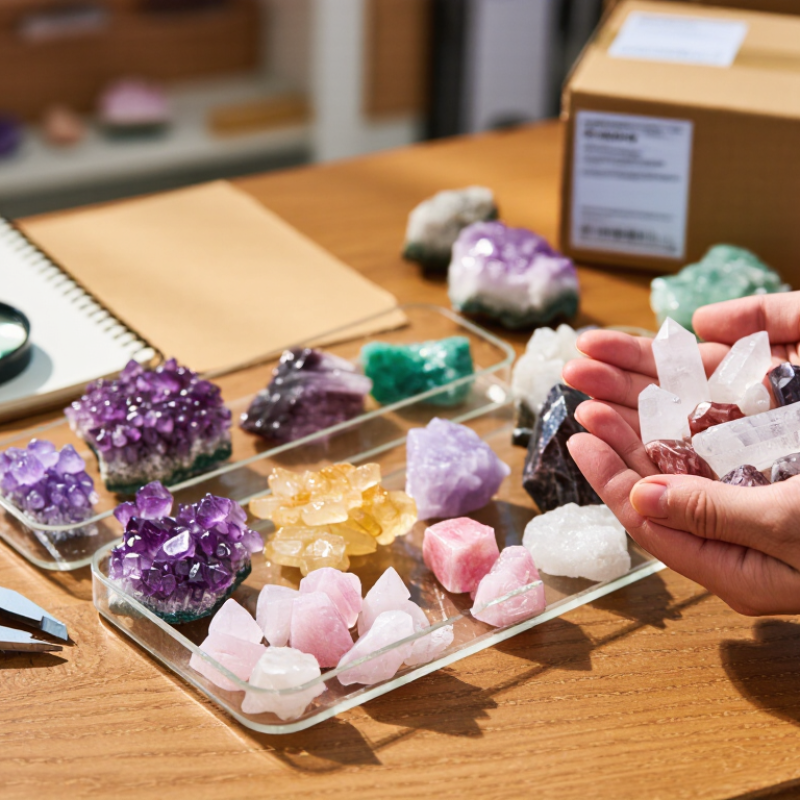
Define Your Bulk Crystal Needs and Intended Use
Before comparing bulk prices, define what the crystals need to do. Jewelry makers may need small, drilled pieces with consistent colors. A classroom might benefit more from varied shapes and clearly labeled specimens. For display, larger pieces can work, but check their dimensions and weight before ordering. Small details matter.
Write down the type, approximate quantity, size range, color preferences, and acceptable variation. Then set a budget that includes shipping and storage materials. If appearance is important, ask whether the seller can provide current photos or a sample; lighting can make colors look different. Also clarify how “grade” is defined, since the term may not mean the same thing across sellers. A photo is not a guarantee.
Consider how the stones will be handled. Delicate pieces may chip during packing or repeated use, while polished surfaces can show scratches under bright light. Ask about packaging and how damaged items are handled. For resale or teaching, request clear descriptions of material and origin where available, and avoid making health claims based on a crystal’s appearance. Even a careful list can miss something. Start with the intended use, but leave room to revise quantities after inspecting a small order. Bulk buying saves effort only when the pieces actually fit the plan.
7 Tips for Buying Crystals in Bulk - Define Your Bulk Crystal Needs and Intended Use
| Tip | Need to Define | Example Planning Details | Why It Matters | What to Confirm Before Ordering |
|---|---|---|---|---|
| 1. Identify the intended use | How the crystals will be used or displayed | Jewelry making, craft kits, retail display, classroom activities, or decorative fill | Different uses call for different sizes, shapes, finishes, and levels of uniformity. | Ask for product dimensions, shape, finish, and clear photographs of the actual grade being offered. |
| 2. Choose a suitable form | Whether you need rough pieces, tumbled stones, points, chips, or beads | For example, 6 mm beads for stringing or small tumbled pieces for gift sets | Form affects compatibility with tools, packaging, display layouts, and production methods. | Confirm whether measurements refer to length, diameter, bead-hole size, or a size range. |
| 3. Set a usable size range | Minimum and maximum dimensions that work for your project | A project might accept tumbled pieces approximately 15–25 mm long, with some natural variation. | Natural stones vary; a defined range helps prevent a shipment that is difficult to use or sort. | Request the stated size range and ask how undersized, oversized, or irregular pieces are handled. |
| 4. Estimate quantity from your plan | Number of finished items, kits, or display units required | For 100 kits using 5 stones each, plan for 500 usable stones, then add a practical allowance for sorting and breakage. | Buying by weight does not guarantee a fixed piece count, especially when stone sizes vary. | Ask for an approximate piece count per weight unit and whether the order is sold by weight, count, or both. |
| 5. Define appearance and grading expectations | Acceptable color variation, inclusions, polish, and visible imperfections | Decide whether a mixed natural appearance is acceptable or whether pieces need to look closely matched. | Color and pattern can vary between stones and batches; “natural” does not mean visually identical. | Request representative batch photos and written grading criteria; clarify whether photos show typical or selected pieces. |
| 6. Check handling and safety requirements | Whether pieces will be handled, worn, drilled, or used in children’s activities | For jewelry, check bead-hole consistency and smooth edges; for children’s activities, consider choking hazards and age suitability. | Sharp edges, small parts, dust, and unsuitable materials can create handling or product-safety concerns. | Confirm material identification and any relevant test documentation for the intended application; do not assume a crystal has health benefits. |
| 7. Test a sample before scaling up | Whether the material meets your size, appearance, and processing needs | Use a small sample to test drilling, stringing, sorting, packaging, or display before placing a larger order. | A sample can reveal practical issues that are not obvious from a listing or description. | Compare the sample with the written specifications and confirm that the bulk lot will use the same material and grade. |
Planning note: Examples are for order planning only. Natural crystal size, color, pattern, and piece count can vary by material and batch.