
Posts
7 Tips for Buying the Right Metal Filter Disc
A Metal Filter Disc can look simple on a product sheet: a round screen, a stated pore size, and a choice of alloy. The real decision is less tidy. A disc that fits the housing may still clog too quickly, deform under pressure, or fail in a corrosive process. Small details matter. Check the opening size, wire or powder structure, disc thickness, edge finish, and operating conditions before comparing prices.
To avoid presenting an invented quotation as a real industry source, this introduction uses a clearly fictional expert voice. Filtration engineer “Alex Morgan” offers this practical reminder: “A filter disc is only right when its material, rating, and support match the process—not just the drawing.” Treat that as editorial guidance, not a verified quotation. In practice, a supplier’s test data and traceable specifications are more useful than confident marketing language.
This guide explores seven buying considerations, from filtration accuracy and metal selection to pressure limits, cleaning, custom dimensions, and supplier documentation. It also explains what to ask before ordering samples. For example, confirm whether the stated micron rating is nominal or absolute, and whether the disc must withstand repeated cleaning. A quick check of those details can prevent a costly mismatch. Still, no checklist catches every operating variation. That deserves a second look. Compare the recommendations with your actual fluid, temperature, and maintenance routine before selecting a Metal Filter Disc.
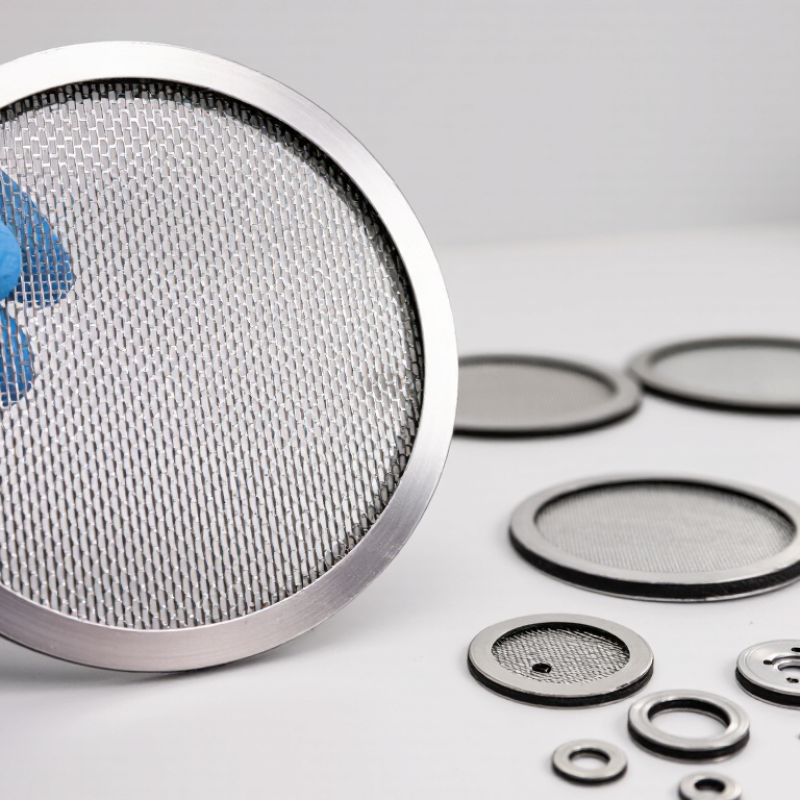
Define the Filtration Requirements for Your Application
7 Tips for Buying the Right Metal Filter Disc
Define the Filtration Requirements for Your Application
Start with the process. Before choosing a metal filter disc, describe the fluid or gas, its operating temperature, and the contaminants you need to capture. Record the particle-size range, not just the largest visible grit. Fine haze and hard flakes behave differently. Decide what level of removal the process actually needs; selecting an extremely fine rating can restrict flow and increase pressure drop.
Measure it. Note the required flow rate and the pressure available across the disc. A viscous liquid may need more open filtration area than a thin solvent. Consider pressure spikes during startup, too. They are easy to overlook. If the disc will face frequent cleaning, describe the cleaning method and expected cycle count. These details help determine whether the mesh or porous structure suits the duty.
Check chemical compatibility with every process fluid and cleaning agent, not only the main liquid. Also define the installation space, disc diameter, thickness, and sealing arrangement. Small dimensional errors can create bypass leakage. Where possible, test a sample under realistic conditions and inspect both flow and captured particles. I would avoid treating a single successful test as proof; changing temperature or contaminant load may alter performance. A short list of known operating limits is more useful than a vague request for “fine filtration.”
Compare Metal Types and Corrosion Resistance
Choosing a metal filter disc starts with the fluid it must handle. In dry air, carbon steel may be adequate and economical. Water, cleaning chemicals, or salty spray can change that quickly. 304 stainless steel suits many mild environments, while 316 stainless steel often handles chloride exposure better because it contains molybdenum. Neither grade is immune to corrosion. Salt matters. Temperature, exposure time, and chemical concentration also affect performance.
Tip: Compare the disc material with the actual process conditions, not just a general “corrosion-resistant” label. Check whether the filter will face acids, chlorides, or frequent washdowns. Ask for material specifications when the grade is unclear.
Look closely at joints and nearby components, too. Dissimilar metals touching in a wet environment may create galvanic corrosion, even when the disc itself seems suitable. For harsher service, a nickel alloy may be worth evaluating, but higher cost does not automatically mean a better choice. A material chart is a useful starting point, not a substitute for testing under realistic conditions. It is easy to focus on the fluid and overlook cleaning cycles; that oversight can lead to early pitting or a shortened service life.
Choose Disc Diameter, Thickness, and Pore Size
A metal filter disc can look simple, yet a small sizing error may leave a gap in the housing or make installation difficult. Tip 1: Measure the seat where the disc rests, not just the old disc. Check the diameter at two points; a worn or slightly oval opening can mislead you. Confirm the supplier’s tolerance before ordering, since “fits” can mean different things in different assemblies.
Tip 2: Match thickness to the support and clamping method. A disc that is too thin may deform under pressure, while an overly thick one may prevent the housing from closing properly. Check the available clearance with the seal in place. It is an easy measurement to overlook. Recheck it.
Tip 3: Choose pore size around the particles you need to retain, then consider flow and pressure drop. Smaller openings can capture finer material, but may clog sooner and reduce throughput. Ask whether the stated rating is nominal or absolute; those terms are not interchangeable. Test a sample under realistic fluid, temperature, and flow conditions when possible. A clean-water test may not predict performance with a thicker process fluid, so treat early results as a starting point, not a guarantee.
| Tip | Selection factor | Practical guidance | What to confirm before ordering |
|---|---|---|---|
| 1 | Measure disc diameter | Measure the seat or opening where the disc will fit, not just an old disc that may be worn or distorted. Confirm whether the specified diameter is the outside diameter, the opening diameter, or another drawing dimension. | Record the required diameter in millimetres or inches, the measurement location, and any permitted tolerance from the equipment drawing. |
| 2 | Match thickness to the assembly | Choose a thickness that fits the available space and any retaining or sealing arrangement. A thicker disc may affect stack height or clamping; a thinner disc may need more support. For reference, 0.5 mm and 1.0 mm are example thickness specifications, not universal recommendations. | Check the drawing, available clearance, support method, and whether the stated thickness includes a tolerance. |
| 3 | Specify pore size clearly | Match the filtration rating to the particles that must be retained and the required flow. Confirm whether the rating is nominal or absolute; these terms describe different retention claims and should not be treated as interchangeable. | State the pore-size rating and unit, such as micrometres (µm), and ask how the rating is defined and tested. |
| 4 | Distinguish mesh from micron rating | Mesh count describes the number of openings per unit length and does not by itself specify an exact opening size. Wire diameter and weave also affect the opening, so mesh count and micron rating should not be assumed to convert directly. | If using a mesh specification, request the aperture or opening-size information and the wire or weave details. |
| 5 | Choose a compatible metal | Select the alloy for the process fluid, cleaning chemicals, temperature, and operating environment. Stainless-steel grades such as 304 and 316L have different compositions, but neither is suitable for every chemical or service condition. | Provide the fluid and cleaning-agent names, concentration, temperature, and any known corrosive conditions for a compatibility review. |
| 6 | Check pressure and support | A disc's ability to withstand differential pressure depends on more than thickness. Diameter, pore structure, material, edge support, and the direction of loading can all affect performance. | Specify operating and maximum differential pressure, flow direction, support arrangement, and any pressure-cycle requirements. |
| 7 | Confirm the complete specification | Before purchase, review the dimensions, filtration rating, material, edge finish, and any required cleaning or traceability documents. A clear drawing or written specification helps prevent mismatches. | Request confirmation of diameter, thickness, tolerance, pore rating definition, alloy, quantity, and inspection or material documentation needs. |
Check Construction Quality and Equipment Compatibility
Construction quality is more than a polished surface. Inspect the disc under bright light, especially around the rim, welds, and layered seams. Uneven joints, loose fibers, or visible gaps can become weak points under repeated pressure changes. A smooth finish helps, but it does not prove the pores are uniform. Ask for the stated material, filtration rating, and inspection method; vague answers make comparisons difficult. Small details matter. If possible, compare the disc with a sample from the same production lot, since appearance can vary slightly.
Compatibility deserves equal attention. Measure the housing’s inner diameter, seat depth, and sealing area rather than relying on a nominal size alone. Check the connection style and whether a gasket is required. Compare the disc’s rated temperature, pressure, and chemical exposure with your actual process conditions. A loose fit may let fluid bypass the filter; a disc that is too thick can distort the seal. Review the expected flow rate, too, because finer openings can increase pressure drop. Choosing the smallest pore size may seem safer, but it can shorten service intervals and burden the pump. Published ratings do not always capture every operating fluctuation, so allow for some uncertainty when checking the fit.
Verify Testing, Cleaning, and Supplier Support
7 Tips for Buying the Right Metal Filter Disc
Verify Testing, Cleaning, and Supplier Support
A metal filter disc should suit the process, not just match a drawing. Ask for test data that identifies the test method, sample size, and measured results. For example, a retention test should state the test conditions; a pore rating alone may not show how the disc performs in your fluid. Check that material and dimensions are documented, too. Ask for the data. If a report is vague, request clarification before ordering.
Tip: Confirm cleaning requirements before installation. Ask whether the disc arrives cleaned, how it was cleaned, and how to handle it without adding lint or oil. In practice, even a clean disc can pick up debris during unpacking. Inspect it under good light, and follow the supplier’s handling guidance. Keep records. I would not assume that rinsing is always harmless; fluid compatibility matters.
Tip: Test supplier support with a specific question about operating pressure, cleaning cycles, or replacement intervals. Clear answers should distinguish verified data from estimates. Ask how defects are reported and what information the supplier needs to investigate them. A useful supplier can provide traceable documents and practical guidance, but no disc is right for every setup. Check the recommendation against your actual process before committing to a large order.
Choosing a Metal Filter Disc: Reference Sieve Openings
Standard test-sieve openings provide a useful starting point when discussing filtration requirements. Confirm the disc’s actual opening, test method, cleaning needs, and supplier documentation before purchase.
Nominal openings shown: ASTM E11 standard sieve sizes. These reference values are not a guarantee of a finished filter disc’s retention performance.
