China Top 10 Ceramic Ball Filler Manufacturers?
Choosing among China’s top 10 Ceramic Ball Filler manufacturers requires more than comparing prices. These products support filtration, chemical processing, petroleum refining, heat exchange, and other demanding industrial applications. A reliable supplier must control raw material quality, forming accuracy, firing temperature, surface finish, and batch consistency. Small differences can affect pressure drop, wear resistance, packing density, and service life.
W. David Kingery, a respected authority in ceramic science, stated, “Ceramics are the most versatile materials known to man.” His observation remains relevant. A Ceramic Ball Filler may look simple, yet its performance depends on detailed engineering. Alumina content, water absorption, crushing strength, and thermal stability all deserve careful review. Product drawings matter too. A few millimeters can change how a reactor bed performs.
This guide examines ten notable Chinese manufacturers through practical purchasing criteria. It considers production experience, technical capability, testing systems, export reliability, customization, and customer support. Certifications are useful, but they should not replace independent verification. Buyers should request inspection reports, sample testing, and clear specifications before placing large orders.
The ranking is not absolute. Application conditions differ widely. A strong supplier for wastewater treatment may not suit high-temperature catalyst support. That point is easy to overlook. We also recognize an imperfect reality: public manufacturer data is sometimes incomplete, outdated, or overly promotional. Readers should treat this list as a research starting point, not a final verdict. Careful comparison remains essential when selecting a Ceramic Ball Filler partner in China.
Ceramic Ball Fillers Explained: Types, Uses, and Key Performance Metrics
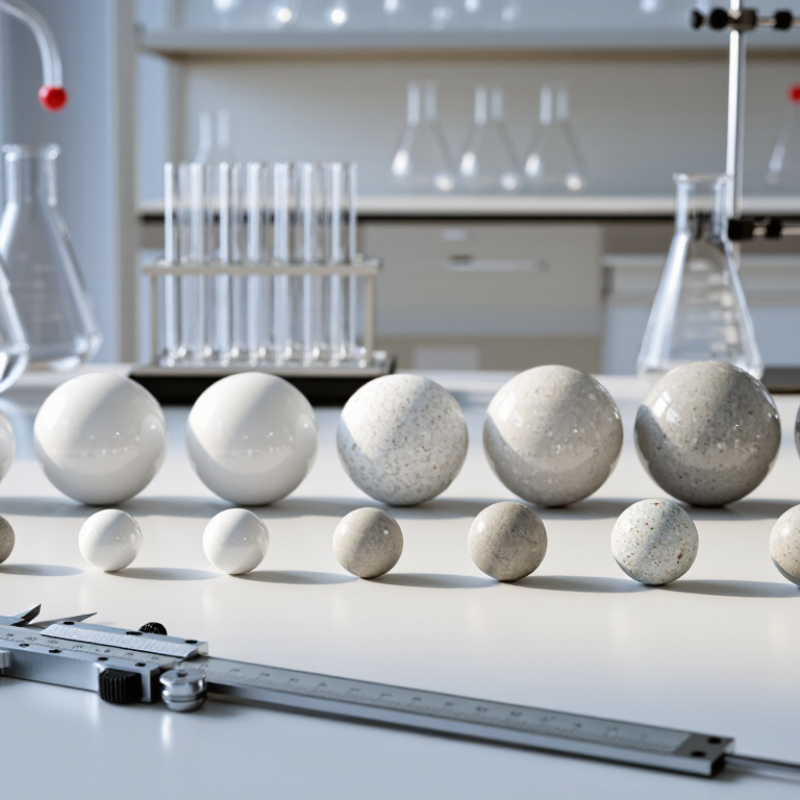
Ceramic ball fillers are shaped media used to support catalysts, distribute gas, and protect reactor internals. Their chemistry usually includes alumina, silica, or blended oxides. Inert balls suit catalyst beds, while activated grades offer greater surface area for moisture control. Common sizes range from 3 to 75 millimeters, depending on vessel design and flow conditions. Size matters.
In field procurement, I check crush strength before comparing price or appearance. A weak ball can powder under a packed bed, increasing pressure drop and maintenance risk. Key metrics include water absorption, abrasion loss, bulk density, thermal shock resistance, and chemical stability. High crush strength supports deep beds. Low absorption limits unwanted process moisture. Manufacturers should provide batch data, dimensional tolerance, firing temperature, and independent test methods. Certificates help, but sampling still matters.
For gas treatment towers, uniform spheres improve void distribution and reduce channeling when loading is controlled. In desiccant systems, pore structure and adsorption capacity may matter more than crushing strength alone. Chinese production lines commonly support custom sizes and high-volume orders, but consistency requires inspection. Engineers should match the filler to temperature, pressure, fluid chemistry, and cleaning cycles. A laboratory result is not the whole story. I have seen oversized media survive handling yet reduce contact efficiency in narrow vessels. That tradeoff deserves a pilot test, not an assumption. Clear drawings, traceable samples, and realistic operating data make supplier comparisons more reliable.
China Top 10 Ceramic Ball Filler Manufacturers? Ceramic Ball Fillers Explained
Ceramic ball fillers are commonly used as support media in packed towers, reactors, dryers, and heat-treatment systems. Alumina content is a key indicator of chemical resistance, hardness, density, and high-temperature performance.
The chart shows representative midpoint values from commonly specified alumina-content bands: low-alumina porcelain ceramics typically contain about 17–25% Al₂O₃, medium-alumina grades about 30–45%, high-alumina grades about 50–70%, and very-high-alumina grades about 90–95%. Exact specifications vary by composition, manufacturing process, size, and application.
Low-alumina porcelain Cost-effective filler and support media for general chemical and petrochemical service.
Medium- and high-alumina grades Higher hardness, density, and wear resistance for demanding packed-bed applications.
Very-high-alumina grades Selected for severe thermal, mechanical, or corrosive conditions where premium performance is required.
China’s Ceramic Filler Industry: 2024 Market Scale, Capacity, and Trade Data
China Top 10 Ceramic Ball Filler Manufacturers?
China’s ceramic filler industry expanded steadily in 2024, supported by chemical processing, gas treatment, and refinery projects. Public estimates place annual domestic demand in the hundreds of thousands of tonnes, although definitions vary. Some reports count ceramic saddles and structured packing. Others include only ceramic balls and tower fillers. That difference matters.
Production capacity is concentrated in several industrial clusters across eastern and central China. Medium and large plants commonly operate multiple high-temperature kilns, automated forming lines, and covered storage yards. Individual annual capacity may range from 5,000 to over 30,000 tonnes. Product grades often include inert ceramic balls, activated alumina blends, and acid-resistant packing materials. Quality depends on crushing strength, water absorption, porosity, and dimensional consistency.
Trade data offers useful signals, but it is not perfectly clean. Ceramic fillers may appear under broad customs categories, making exact export values difficult to isolate. In 2024, overseas shipments reportedly remained strong across Southeast Asia, the Middle East, Europe, and North America. Export orders often involved palletized 25-millimeter and 50-millimeter balls, packed in woven bags or wooden cases. Freight costs and energy prices affected quotations sharply.
My cautious view is that capacity data deserves more verification, especially when suppliers report installed capacity instead of actual output. Kilns can exist without running at full load.
Ranking China’s Top 10 Manufacturers by Output, Certifications, and Product Range
China Top 10 Ceramic Ball Filler Manufacturers?
A credible top-10 ranking should measure output, certifications, and product range together. Public market reports from Grand View Research and Mordor Intelligence show steady demand for ceramic packing media in refining, chemical processing, and environmental equipment. However, factory capacity is often self-reported. That deserves caution. I would rank manufacturers by verified annual tonnage, audited production lines, and export records, not website claims. The strongest producers usually offer inert ceramic balls, alumina balls, catalyst support media, and tower packing products in multiple sizes. A practical ranking should also check crushing strength, water absorption, dimensional tolerance, and batch consistency.
Certification adds useful evidence. ISO 9001 supports process control, while ISO 14001 and ISO 45001 indicate wider operational management. Laboratory certificates should identify test methods and sampling dates. Independent inspection is better than a glossy certificate scan. Manufacturers with automated kilns, in-house laboratories, and traceable batch numbers deserve higher positions. Yet output alone can mislead. A large plant may produce inconsistent filler during peak demand. The ranking should therefore combine output with rejection rates, lead times, and technical support. Industry surveys often report procurement pressure around price, but the cheapest material can increase pressure drop and replacement frequency.
Tips: Request three recent test reports, one production sample, and a capacity statement. Compare bulk density and crushing strength under the same standard. Confirm whether certificates cover the actual factory. Small details matter. A transparent supplier may admit a limitation; that can be more reliable than perfect marketing language.
Comparing Al₂O₃ Content, Crushing Strength, and 3–76 mm Size Options
When comparing China’s top ten ceramic ball filler manufacturers, I start with data, not polished catalogs. Their products may look similar, yet Al₂O₃ content can vary between grades and production lots. A higher percentage usually supports hardness and chemical stability, but it does not guarantee longer service life. Numbers need context. I request batch-specific certificates, test methods, and production dates before accepting a specification.
Crushing strength deserves equal attention. A 3 mm ball experiences different handling and loading stresses than a 76 mm ball. Smaller sizes often need careful screening because chipped particles can increase dust and pressure drop. Larger balls may improve void distribution, but poor sizing can create uneven flow. During supplier reviews, I inspect edges, sieve distribution, packaging damage, and visible powder. One laboratory result is not enough. Independent retesting can reveal inconsistent lots, although it adds time and cost.
A reliable manufacturer should offer size options across the 3–76 mm range, with clear tolerances and stable Al₂O₃ values. Mixed-size beds also require practical advice, not just a product table. I compare crushing strength data under stated testing conditions, since methods can change the result. My own judgment is not perfect; I sometimes give too much weight to a high alumina figure. A supplier’s claim may be technically correct but commercially incomplete. That deserves careful questioning before purchase.
Applications in Refining, Petrochemicals, Gas Treatment, and Water Processing
China Top 10 Ceramic Ball Filler Manufacturers?
Ceramic ball fillers support stable operation in refining and petrochemical towers. They protect catalyst beds, distribute liquid, and reduce channeling. In gas treatment, inert ceramic media can support desiccants and absorbents. Their low chemical reactivity matters when acidic gases, solvents, or hot hydrocarbons are present. A practical buyer should check crush strength, water absorption, surface finish, and particle grading. Datasheets alone are not enough.
Water processing adds another demand driver. The UN World Water Development Report 2024 states that agriculture represents about 70% of global freshwater withdrawals. Industrial facilities therefore need tighter reuse and treatment systems. Ceramic support balls can improve flow distribution in filtration and biological treatment units. They also tolerate repeated washing better than some polymer alternatives. However, performance depends heavily on vessel design and backwash conditions. This point is often overlooked.
Look beyond price.
For a China-based top-ten manufacturer review, request independent test results, batch traceability, and dimensional inspection records. ISO 9001 certification is useful, but it cannot replace application testing. The International Energy Agency’s Oil 2024 report identifies petrochemicals as a major source of oil-demand growth through 2030, increasing pressure on reliable tower internals. Field experience suggests that a slightly higher initial cost may reduce replacement work. Still, ceramic balls are not universally superior. Poor sizing can increase pressure drop, while rough surfaces may collect deposits. Pilot testing remains the safer decision.