China Top Single Cartridge Mechanical Seal Suppliers?
Choosing a supplier for a Single Cartridge Mechanical Seal takes more than comparing prices or catalog dimensions. Buyers need to know how a seal performs under their actual pressure, temperature, speed, and fluid conditions. A pump handling hot process water may need different face materials and elastomers from one handling abrasive slurry. Small details matter.
Reliability authority Heinz P. Bloch’s work on rotating equipment supports this practical takeaway: “A seal is only as dependable as its installation and operating conditions.” This is an editorial summary, not a verbatim quotation. It points to a common gap in supplier comparisons: a well-made seal can still fail early when installation guidance or application data is incomplete. Still, product pages rarely tell the whole story.
This guide examines China-based suppliers through practical criteria: engineering support, material options, dimensional consistency, testing, documentation, and spare-parts availability. It also considers how suppliers explain compliance with relevant specifications, including API 682 where applicable. A supplier’s response to a detailed duty sheet can reveal more than a polished brochure. Ask for drawings, material records, and clear limits for the proposed operating range. Then check whether those details match your pump and process.
No shortlist can replace application review. Supplier capabilities vary, and claims should be verified directly. The aim here is a more grounded comparison—not a guaranteed ranking—so procurement teams can ask better questions before requesting a quotation.
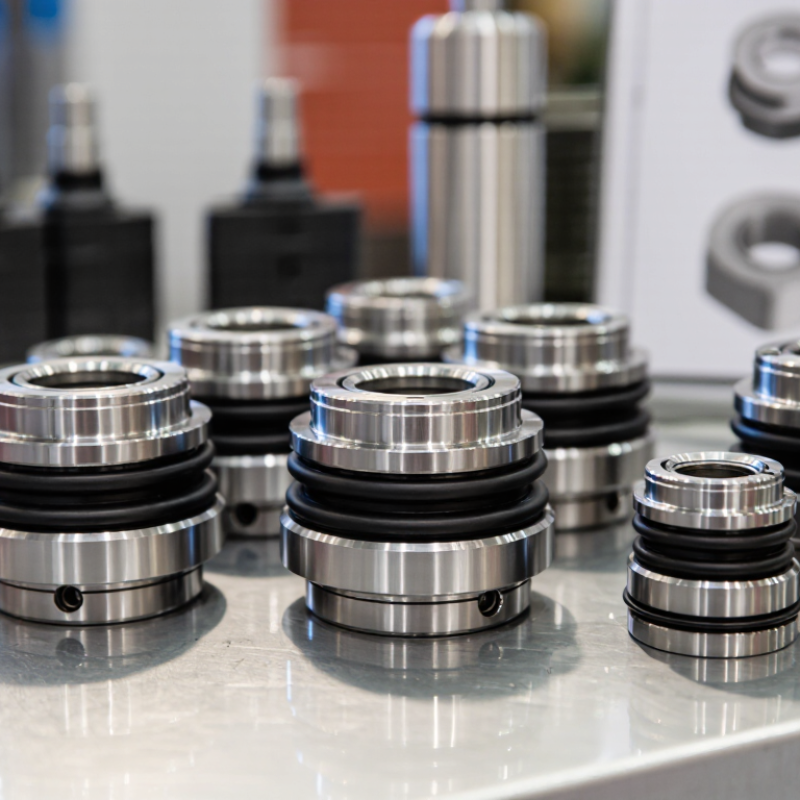
Define Single Cartridge Mechanical Seals and Their API 682 Applications
A single cartridge mechanical seal is a preassembled sealing unit fitted around a pump shaft or sleeve. Its rotating and stationary faces meet to limit process-fluid leakage. The cartridge also contains secondary seals, a gland plate, and setting devices, reducing installation adjustments at the equipment site. Less guesswork.
API 682 sets design and application requirements for sealing systems used mainly with centrifugal and rotary pumps in petroleum, natural gas, and chemical services. It distinguishes seal arrangements and support systems, helping engineers match a configuration to the fluid and operating conditions. A single cartridge seal may be specified within an API 682 arrangement, but “cartridge” alone does not prove compliance. The applicable edition, arrangement, and project specification still matter.
For a supplier assessment, request dimensional drawings, material details, pressure and temperature limits, and documented inspection or testing information. Check how the seal handles solids, low lubricity, or temperature changes; a clean-water test may not represent actual service. In China, as elsewhere, manufacturing capability varies between suppliers. A polished catalogue is useful, but it cannot replace engineering review. Even a carefully selected seal can need adjustment after startup, so operating data should inform later maintenance.
Map China’s Supplier Landscape by Seal Type, Materials, and Industry
China’s single cartridge mechanical seal suppliers cover a varied field, from standard pump seals to application-specific designs. Their catalogues may include balanced and unbalanced configurations, different face arrangements, and options for common shaft sizes. A cartridge’s preassembled design can simplify installation, but it does not guarantee a reliable fit. Check shaft dimensions, operating pressure, speed, and allowable leakage against the actual pump conditions.
Material choices shape where a seal can work. Carbon faces paired with silicon carbide are common options, while tungsten carbide may suit demanding wear conditions. Elastomers such as EPDM or FKM must match the fluid and temperature; a familiar material is not automatically compatible. Details matter. Wastewater service may involve grit and solids, whereas chemical processing can require careful corrosion review. Food and beverage applications also need suitable hygienic design and documented material specifications. Ask suppliers for drawings, test conditions, and traceable material data. A polished catalogue can obscure limits, and supplier comparisons are easy to get wrong when duty conditions are vague. Recheck the assumptions.
Compare API 682’s 3 Seal Arrangements for Process-Pump Applications
China Top Single Cartridge Mechanical Seal Suppliers?
Compare API 682’s 3 Seal Arrangements for Process-Pump Applications
API 682 groups process-pump seals into three arrangements based on their sealing setup.
Arrangement 1 uses a single seal, often selected when the process fluid and operating conditions allow it.
Arrangement 2 uses dual seals with an unpressurized buffer system.
Arrangement 3 uses dual seals with a pressurized barrier system.
A cartridge seal describes a preassembled design, not a separate API arrangement. This distinction matters when comparing supplier specifications.
With Arrangement 2, buffer pressure is generally below seal-chamber pressure. The system can collect leakage and support the inboard seal, but it needs suitable fluid and monitoring.
Arrangement 3 keeps barrier-fluid pressure above process pressure, helping prevent process fluid from moving outward. It can offer stronger containment, but requires a dependable supply and pressure control.
More equipment, more checks. The best fit depends on fluid hazards, temperature, pressure, and maintenance capability—not just the seal price.
Tips: Before choosing, confirm the pump’s pressure and temperature range, fluid compatibility, and seal-support plan. Ask how operators will check reservoir level, pressure, and temperature during routine rounds. A quick selection based only on “single” or “dual” can miss important details. Real service conditions are sometimes messier than the datasheet.
Assess Supplier Performance Using Pressure, Temperature, and Shaft-Speed Limits
When comparing China-based single-cartridge mechanical seal suppliers, check the operating envelope before comparing price. Ask for continuous and transient limits for pressure, temperature, and shaft speed, not just a maximum rating. A seal rated for 2 MPa may not tolerate pressure spikes during startup. Likewise, temperature at the seal faces can differ from the pump’s measured process temperature. Request the stated test medium, duration, leakage criteria, and shaft diameter behind each rating. API Standard 682 provides a recognized framework for mechanical-seal design and testing, but the applicable limits still depend on the seal arrangement and service conditions.
Put each supplier’s figures into one comparison sheet. Record pressure in MPa, temperature in °C, and surface speed in m/s; verify speed against shaft diameter and rpm.
U.S. Department of Energy’s Improving Pumping System Performance: A Sourcebook for Industry reports that pumping systems can account for 25–50% of energy use in some industrial facilities. That figure is not a seal rating, but it shows why reliable operation matters.
Ask for test records and materials compatibility details for the actual fluid. Small differences matter. Yet supplier tables can look cleaner than operating histories; confirm how the seal performs during cycling, dry starts, and brief process upsets.
Verify Quality Systems, Test Records, and ISO 21049 Compliance
When comparing China’s top single-cartridge mechanical seal suppliers, check the records behind the certificate. ISO 9001 describes a quality management system; it does not prove that a specific seal meets ISO 21049 requirements. Ask for the certificate’s scope, issuing body, validity dates, and recent surveillance-audit status. Then request a clause-by-clause compliance statement for the offered seal configuration.
Test evidence matters more than polished brochures. Request pressure, leakage, temperature, and endurance test records tied to the model and serial or batch number. Check instrument calibration dates, acceptance limits, and whether failed tests appear in the log. ISO 21049, which addresses shaft sealing systems for centrifugal and rotary pumps, provides a relevant technical benchmark. A supplier’s declaration is useful, but independent witnessing can strengthen confidence.
Paper is not proof.
Also review how the supplier controls design changes, material traceability, and nonconforming parts. A seal face material substitution should trigger documented approval, not an informal email. The U.S. Department of Energy’s Improving Pumping System Performance guide notes that pumping systems can account for 25–50% of energy use in some industrial facilities. That figure is not a seal-quality metric, but it shows why leakage and reliability records deserve attention. A gap remains: even complete test files cannot predict every site condition, so verify the application details with the supplier.