
Posts
China Best Package Wrapper Manufacturers for Global Buyers
Choosing a China-based Package Wrapper manufacturer can shape product protection, shelf appeal, and delivery costs. For global buyers, the decision involves more than comparing quoted prices. Film structure, thickness, roll width, sealing performance, and print accuracy all affect how a wrapper performs on a packaging line.
A useful supplier review looks at practical evidence. Request material specifications, recent sample rolls, quality-control records, and clear details about minimum order quantities and production lead times. Ask how the manufacturer checks color consistency and handles defects. A crisp printed logo may look convincing on a sample, yet registration can shift during a longer production run. Details matter.
Communication deserves equal attention. Confirm who approves artwork, how specification changes are documented, and what information appears on cartons and shipping documents. Reliable manufacturers explain limitations as well as capabilities. Be cautious when answers stay vague or promised delivery dates leave no room for inspection and transport delays.
No supplier is perfect. A lower price may come with a longer lead time, while a technically strong factory may not suit a small first order. This guide compares China’s packaging manufacturers through buyer-focused criteria, including product range, customization, quality practices, and service. Use the findings to build a shortlist, verify claims directly, and request samples that match your intended product and machinery. A careful comparison takes work, but it can prevent costly surprises after production begins.
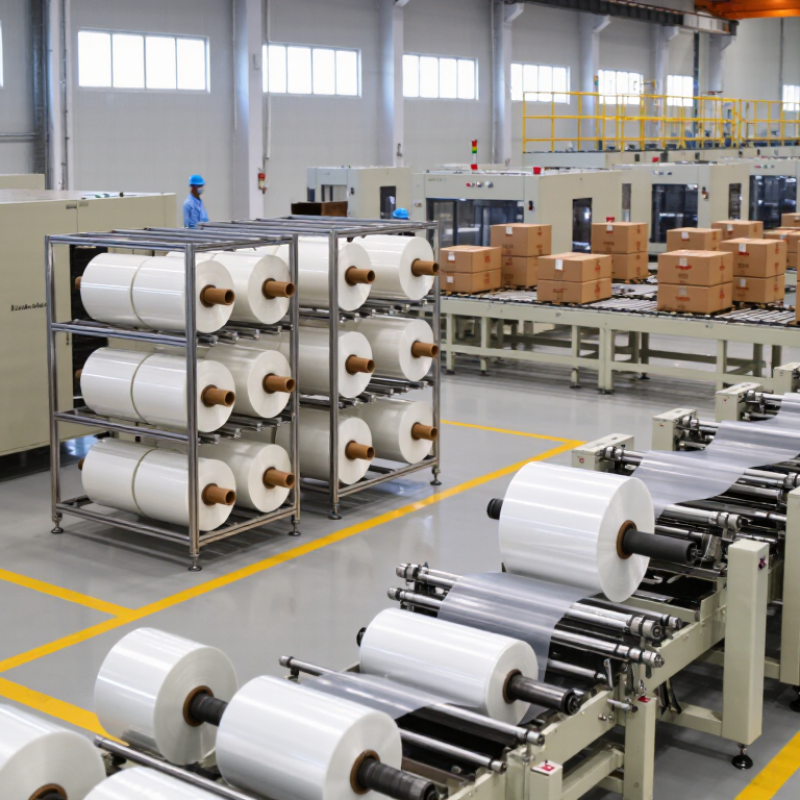
What Package Wrappers Are and How They Protect Products
Package wrappers are the close-fitting layers around products, such as paper sleeves, plastic films, and laminated pouches. They help limit exposure to moisture, dust, oxygen, and scuffs during storage and transport. A sealed film can keep a snack’s aroma in; a paper sleeve can prevent small parts from rubbing against each other.
The right material depends on the product. A wrapper is not a magic shield.
Protection also depends on seal quality, thickness, and handling conditions. A tiny crease near a heat seal may become a leak after repeated handling. Light-sensitive goods may need opaque layers, while products that release moisture may need breathable materials.
The Flexible Packaging Association’s 2024 State of the U.S. Flexible Packaging Industry report estimated 2023 U.S. sales at $42.9 billion. This shows the format’s commercial importance, not that every wrapper offers equal protection. That distinction matters.
Tip: Match the wrapper to the actual risk. Test filled samples through stacking, vibration, and temperature changes before confirming a specification. Check seals and corners after testing. A sample can look excellent on a desk and still fail in transit. It is easy to overlook that gap.
China’s Package Wrapper Manufacturing Landscape
China Best Package Wrapper Manufacturers for Global Buyers
China’s Package Wrapper Manufacturing Landscape
China’s package wrapper manufacturing landscape includes material suppliers, printing workshops, laminators, and converting factories. Many facilities can produce flexible rolls or pre-cut wraps for food, household goods, and retail products. Capabilities vary widely, even within the same industrial region. The picture is uneven. A supplier’s equipment list does not prove consistent output, so buyers should check production samples and quality records.
A wrapper’s performance depends on more than its printed appearance. Film thickness, seal strength, barrier properties, and roll dimensions affect packing-line speed and product protection. Ask how the factory controls color variation and checks seals during production. Request samples made with the intended material and printing method. Small details matter. A short trial run can reveal wrinkles, ink rubbing, or seals that weaken after storage. These checks take time, but they reduce costly surprises.
Common Wrapper Materials, Formats, and Applications
A wrapper’s material should match the product’s moisture, light, and handling needs. Paper suits dry goods and offers a natural feel, but it may need a coating for grease or humidity. Plastic films can provide clear product visibility and flexible sealing. Foil-containing laminates block light and moisture well, though their layered structure can make sorting more difficult. There is no perfect choice.
Tips: Test a filled pack, not just a flat sample. Check seal strength, opening ease, and how the wrapper looks after transport.
Formats shape the user experience. Flow-wrap works for bars, biscuits, and other individual portions. Bags and pouches suit snacks, powders, and refill products, while roll stock supports high-speed packing lines. Fit matters. A neat sample can still crease or leak on a real machine, so confirm dimensions and sealing conditions with production trials. Small changes in film thickness or pouch shape may affect both material use and packing efficiency. For global buyers, request clear specifications for barrier performance, print area, and intended application before comparing supplier quotes.
How Global Buyers Can Evaluate Chinese Manufacturers
Global buyers should assess Chinese package wrapper manufacturers against the actual product, not a broad catalog. Share the wrapper’s intended use, dimensions, storage conditions, and expected order volume. Ask for written material specifications, including thickness tolerance, roll width, and core diameter. For printed wrappers, check color consistency and registration across a physical sample. Small differences matter.
Request samples made on the same equipment and materials proposed for production. Test sealing, cutting, and handling under realistic line conditions. Review inspection records and ask how defects are identified, recorded, and corrected. A polished sample alone proves little. Ask again.
Factory visits or live video calls can help buyers verify equipment, storage practices, and production flow. Discuss capacity, lead times, minimum order quantities, and how changes to specifications are approved. Compare quotations carefully: setup, packing, and freight may affect the delivered cost. Keep key requirements in a clear written specification, since informal assurances can be remembered differently by each team. No evaluation is perfect; sample performance may not predict every production run. Buyers should agree on acceptance criteria before ordering and keep a record of any unresolved questions.
How Global Buyers Can Evaluate Chinese Package Wrapper Manufacturers
Suggested evaluation weights for a buyer’s supplier scorecard. These are a practical starting point, not market-survey results; adjust them to fit your product and sourcing priorities.
Compare suppliers using documented evidence, such as product specifications, relevant compliance documents, production-capacity details, sample results, delivery records, and after-sales terms. Verify requirements for your product and destination market independently.
International Standards, Quality Control, and Sourcing Considerations
Global buyers should assess package wrapper manufacturers against the finished product’s needs, not a glossy sample alone. Confirm intended use, material, thickness, sealing range, and print tolerances in a written specification. For food-contact applications, request relevant declarations and migration-test evidence for the target market. Standards vary by destination. Keep the scope clear.
Quality control should be visible on the production floor. Ask how incoming films are checked, how seal strength is sampled, and how defects are recorded by batch. Request audit records, calibration logs, and traceability examples, then verify their dates and product scope. An audit certificate helps, but it cannot replace a trial on your actual machine. That trial may reveal wrinkles near a fin seal or ink scuffing after transport.
Before a large order, approve a production-representative sample and agree on acceptance limits. Compare roll width, core size, color variation, and delivery packaging with the purchase specification. Discuss change control, complaint response times, and retained samples. Price matters, naturally. I would still be cautious: complete-looking paperwork does not guarantee consistent output. Small pilot runs take time, but they often reveal more than another polished presentation.
China Best Package Wrapper Manufacturers for Global Buyers - International Standards, Quality Control, and Sourcing Considerations
Use this checklist to assess packaging-wrapper suppliers. Applicable regulations and testing depend on the packaging material, intended use, and destination market; confirm requirements for each product before placing an order.
| Evaluation dimension | Relevant standard or reference | What buyers should verify | Sourcing consideration |
|---|---|---|---|
| Food-contact compliance | For EU markets, Regulation (EC) No 1935/2004 and Regulation (EC) No 2023/2006 apply to relevant food-contact materials. Plastics may also be subject to Regulation (EU) No 10/2011. | Request material-specific declarations and applicable migration-test reports. Check that reports cover the intended food type, contact conditions, and finished packaging construction. | Do not assume one certificate covers every material, structure, or use condition. Confirm compliance for the target market and application. |
| United States food-contact requirements | Applicable provisions of Title 21 of the U.S. Code of Federal Regulations, depending on the substance and intended use. | Ask for the regulatory basis for each food-contact component and supporting compliance documentation relevant to its conditions of use. | “FDA approved” is not a substitute for checking the applicable regulatory provision and use conditions for the specific material. |
| Quality management system | ISO 9001 quality management system requirements. | Check the certificate’s validity, issuing certification body, site address, scope, and coverage of the relevant manufacturing activities. | Treat certification as supporting evidence of a managed quality system, not as a guarantee that every product will meet your specification. |
| Packaging hygiene and product safety | Good manufacturing practice requirements applicable to food-contact materials; sector-specific packaging standards may also be used. | Review documented hygiene controls, contamination prevention, pest management, staff training, cleaning records, and nonconformance procedures. | Match the control level to the packaging’s intended use, especially where direct food contact or sensitive products are involved. |
| Material and construction specification | Buyer-approved product specification; test methods should be selected for the material and application. | Define layer structure, material grades, thickness, dimensions, sealing method, print requirements, and permitted substitutions in writing. | Require written approval before changes to materials, production sites, processes, or subcontractors. |
| Barrier performance | Water-vapor and oxygen transmission testing may use applicable ASTM or ISO methods, selected for the material and test conditions. | Request test results with units, method, temperature, relative humidity, specimen details, and conditioning stated. | Set acceptance limits from product shelf-life and storage needs; results from different test conditions may not be directly comparable. |
| Print and appearance control | Approved artwork, color standards, proofing process, and buyer-defined inspection criteria. | Approve a production-representative proof; define color measurement conditions, registration, text legibility, defect limits, and inspection lighting where relevant. | Agree tolerances and reference samples before mass production; color tolerances are product- and buyer-specific rather than universal. |
| In-process and final inspection | Documented inspection plan; sampling may be agreed using ISO 2859-1 for attribute inspection. | Review inspection records for dimensions, seal integrity, print defects, appearance, and other specification-critical properties. | Agree the sampling plan, acceptance criteria, defect classifications, and any pre-shipment inspection requirements in the purchase contract. |
| Traceability and corrective action | Documented lot identification, record retention, complaint handling, and corrective-action procedures. | Confirm that finished goods can be linked to production dates, material batches, inspection records, and relevant production site. | Agree how quickly the supplier must provide traceability records and how nonconforming or recalled goods will be managed. |
| Environmental management | ISO 14001 environmental management system requirements, where certified or otherwise used by the supplier. | Verify the certificate scope and site, and request relevant information on material sourcing, waste handling, and environmental controls. | Assess environmental claims against supporting documentation and the rules of the destination market; avoid relying on unsupported recyclability claims. |
| Capacity, lead time, and continuity | Buyer-supplier production plan and agreed service levels. | Check confirmed production capacity, order minimums, sample and production timelines, peak-season constraints, and contingency arrangements. | Use a pilot order to validate communication, production consistency, packing, and delivery performance before scaling volumes. |
| Trade terms and shipment documents | Incoterms® 2020 rules, where incorporated into the sales contract. | Specify the named place or port, transport mode, packaging and marking requirements, shipping documents, and responsibility for freight, insurance, and customs formalities. | Compare total landed cost, not unit price alone, and have the selected trade term stated clearly in the contract or purchase order. |
Note: Standards and regulatory references are provided as a sourcing guide, not a substitute for confirming current legal requirements, product-specific compliance, or independent technical advice.
