
Posts
What Are the Top Types of Lifting Bolts in 2026?
Choosing the right Lifting Bolts in 2026 requires more than comparing prices or thread sizes. These components secure loads above people, machinery, and valuable production areas. A small mismatch can create serious consequences. The correct choice depends on load direction, working load limit, thread engagement, material, temperature, and inspection history.
Lifting-equipment engineer David C. Smith explains, “A lifting point is only reliable when its rating matches the complete lifting system.” That principle guides this article. We examine shoulder eye bolts, regular eye bolts, swivel hoist rings, and engineered lifting points. Each type serves a different purpose. Shoulder eye bolts suit vertical loading when installed correctly. Regular eye bolts need greater caution during angled pulls. Swivel hoist rings can rotate with changing load direction. Engineered lifting points often provide better flexibility for complex machinery.
Look closely at the details. A shoulder eye bolt should sit firmly against a flat surface. Its threads must engage fully, without dirt or damaged edges. A swivel ring should move smoothly, not grind or bind. The washer, nut, and mounting plate also matter. They are easy to overlook.
Not every popular design is suitable for every job. That assumption needs challenging. Manufacturer instructions and applicable lifting standards should control the final decision. Working load limits are not suggestions. They reflect tested conditions, not careless installation or sudden shock loading.
This 2026 guide compares the top types of Lifting Bolts, their strengths, limitations, and practical applications. It also highlights common selection mistakes. Some mistakes look harmless. They are not.
What Are Lifting Bolts and How Are They Used?
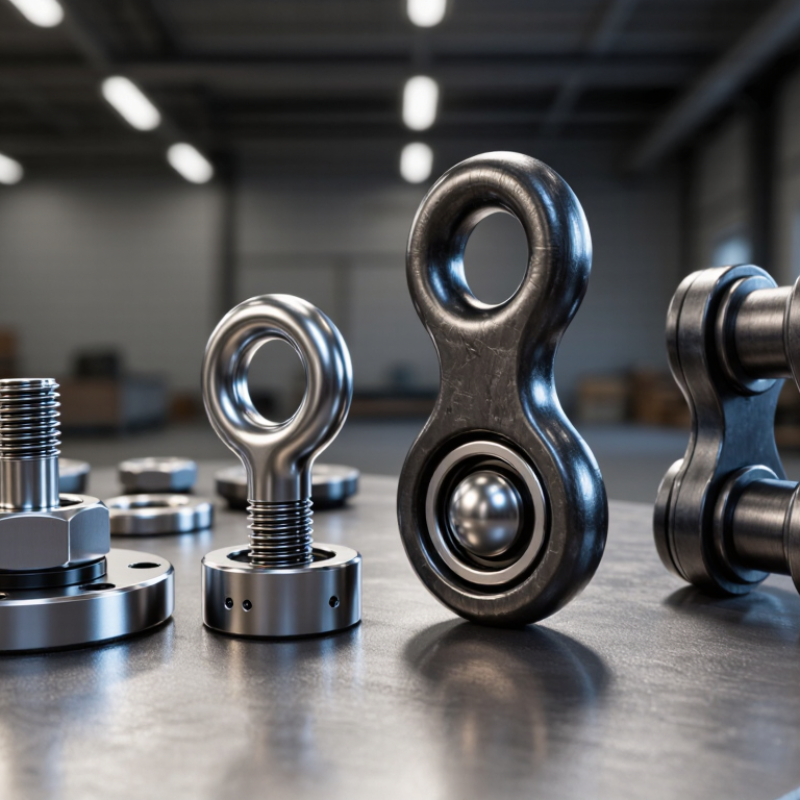
Lifting bolts are threaded lifting points used to attach slings, hooks, or shackles to machinery. They create a controlled connection between the load and lifting equipment. Common types in 2026 include eye bolts, shoulder eye bolts, swivel lifting bolts, and rotating hoist rings. Each design suits different movement, load direction, and installation space.
Eye bolts work best for straight, vertical lifts. Shoulder eye bolts offer better support when the shoulder sits firmly against the load surface. Swivel lifting bolts can rotate with a moving load and reduce unwanted sling twisting. However, rotation does not mean unlimited side loading. The working load limit must match the lifting angle, bolt position, and equipment condition.
Installation needs care. Clean the threaded hole, check thread engagement, and tighten the bolt according to the maker’s instructions. The shoulder should sit flat. Never use damaged threads, bent eyes, or bolts with unclear markings. A practical inspection should look for cracks, corrosion, deformation, and stretched metal. Small defects matter.
A common mistake is treating every lifting bolt as interchangeable. They are not. A vertical lift may be safe, while a sharp angled pull can greatly reduce capacity. Load charts also require attention, although workers sometimes rely too heavily on memory. That habit deserves correction. A trained person should verify the lifting plan, connection method, and rated capacity before the load leaves the ground.
Which Main Types of Lifting Bolts Are Available in 2026?
Lifting bolts in 2026 mainly fall into four practical types: shoulder eye bolts, non-shoulder eye bolts, swivel hoist rings, and lifting-point assemblies. Shoulder eye bolts suit vertical loads when the shoulder sits firmly against the surface. Non-shoulder versions are more limited and require careful alignment. Swivel hoist rings rotate under load, helping reduce side-loading during awkward lifts. Some assemblies also include a captive bolt, washer, and engineered mounting base.
The choice should follow the lifting direction, working load limit, thread engagement, and base-material strength. ISO 3266 covers forged lifting eyebolts, while ASME B30.26 addresses identification, inspection, and use of rigging hardware. These standards emphasize marked working load limits, not guesswork.
The U.S. Bureau of Labor Statistics recorded 5,283 fatal work injuries in 2023, showing why small rigging decisions deserve serious attention.
In the field, I check the bolt marking first, then inspect threads, shoulders, deformation, and corrosion. I also verify whether the load pulls vertically or sideways. A strong-looking eye bolt may fail when loaded at an angle. That distinction is easy to miss. Market studies often predict continued growth in industrial lifting equipment through 2030, but forecasts cannot replace a site-specific assessment. I would not treat a catalogue photograph as proof of suitability. The overlooked detail is often the mounting material, not the bolt itself.
How Do Different Lifting Bolt Designs Compare?
What Are the Top Types of Lifting Bolts in 2026?
Different lifting bolt designs suit different load paths, not identical lifting conditions. Shoulder eye bolts perform well with vertical loads when the shoulder seats firmly against the surface. Their performance drops during side loading. Non-shoulder eye bolts are simpler, but they generally require straight, in-line loading. Swivel hoist rings offer better flexibility because the lifting eye can align with changing force directions. They also demand careful torque control, thread engagement, and inspection.
A practical comparison should examine working load limit, angular capacity, fatigue resistance, and installation time. ASME B30.26 provides guidance for rigging hardware, including marking, inspection, and loading practices. MarketsandMarkets estimated the material-handling equipment market at approximately 32.5 billion dollars in 2024. It projects about 50.7 billion dollars by 2029, reflecting stronger demand for engineered lifting systems. The market data does not measure bolt quality directly. That limitation matters.
Safety decisions need more than a catalogue rating. The U.S. Bureau of Labor Statistics recorded 1,030 fatal injuries in transportation and material-moving occupations in 2023. This figure does not prove that lifting bolts caused those incidents. It does show why connection details deserve attention.
In field inspections, damaged threads, poor seating, and hidden corrosion are common warning signs. A swivel design may reduce side-load risk, but it cannot correct incorrect installation. The imperfect part is easy to overlook. A higher-rated bolt is not automatically the safer choice.
How Can You Choose the Right Lifting Bolt for a Load?
What Are the Top Types of Lifting Bolts in 2026?
Choosing the right lifting bolt starts with the load, not the bolt diameter. Check the weight, center of gravity, lifting path, and connection angle. Confirm the working load limit for the exact setup. Vertical loading differs from side loading. Angles matter. A shoulder eye bolt can suit a straight, centered lift when its shoulder sits firmly against a flat surface. Use full thread engagement and matching thread specifications. Never depend on a few exposed threads.
A swivel lifting point is often better when the load may rotate or pull from changing directions. Fixed eye bolts can bend under side force. Select a bolt rated for the intended angle, not only its highest vertical capacity. Consider shock loads, vibration, temperature, and corrosion. The bolt material should match the equipment and environment. A larger bolt is not automatically safer.
Inspect every lifting bolt before use. Look for cracks, bent rings, damaged threads, severe wear, and corrosion. Check that the hole depth and seating surface are suitable. A qualified lifting professional should review unusual lifts or incomplete drawings. This step is easy to overlook. In real work areas, fittings and loads are sometimes mismatched. Stop and verify. No selection process is perfect, especially when site conditions change. Keep inspection records, and replace questionable hardware instead of relying on appearance alone.
What Safety Standards Apply to Lifting Bolts in 2026?
In 2026, lifting-bolt selection still depends on geometry, loading direction, and certification. Common types include plain eye bolts, shoulder eye bolts, and swiveling hoist rings. Shoulder designs support better alignment for vertical lifting, but only when fully seated. Side loading remains a serious mistake.
ASME B30.26 covers rigging hardware requirements, including marking, inspection, and safe use. ISO 3266 addresses forged lifting eye bolts, while the EN 1677 series covers lifting components and working-load requirements. These standards do not make an unsuitable bolt safe. The user must verify working load limits, thread engagement, lifting angle, and material condition.
The U.S. Bureau of Labor Statistics reported 5,283 fatal workplace injuries in 2023. Its Census of Fatal Occupational Injuries does not isolate lifting-bolt failures, but the figure shows why controlled lifting matters. HSE’s 2023/24 workplace safety statistics recorded 138 worker fatalities in Great Britain. Equipment defects were not the only concern; poor planning and incorrect use also contributed.
Inspect threads, shoulders, markings, and deformation before every lift. Look for stretched holes and fresh cracks around the connection. Replace questionable hardware. Do not repaint damage.
A practical weakness remains. Many sites record inspections without proving competent assessment. That gap deserves attention. Standards define minimum controls, yet site conditions, corrosion, shock loading, and human judgment can change the real risk quickly.
What Are the Top Types of Lifting Bolts in 2026? - What Safety Standards Apply to Lifting Bolts in 2026?
| Lifting Bolt Type | Typical Design | Recommended Load Direction | Common Applications | Relevant Standards or References | Key Safety Requirements |
|---|---|---|---|---|---|
| Plain Eye Bolt | Threaded shank with a fixed, non-shouldered eye | Primarily vertical, in-line loading | Light-duty lifting and temporary attachment points | ASME B30.26 for rigging hardware; ISO 3266 may apply where the product is designed and marked accordingly | Do not use for angular loading unless specifically rated. The eye must face the sling direction, and the threaded shank must be fully engaged in a suitable tapped hole. |
| Shoulder Eye Bolt | Eye bolt with an integral shoulder intended to seat against the load surface | Vertical loading; limited angular loading only when permitted by the manufacturer | Machinery, dies, molds, covers, and fabricated equipment | ASME B30.26; applicable national or regional lifting-hardware requirements | The shoulder must bear evenly against a flat, machined surface. The bolt should be tightened correctly and never side-loaded beyond its marked rating. |
| Swivel Hoist Ring | Load ring mounted on a high-strength threaded bolt with rotational movement | Vertical and multi-directional loading within the rated capacity | Heavy machinery, dies, structural assemblies, and lifting fixtures | ASME B30.26; ASME BTH-1 for below-the-hook lifting-device design principles | Use only the specified fastener, torque, and mounting-hole depth. Inspect the ring, bolt, threads, and articulation mechanism before use. |
| Fixed Lifting Point | Fixed eye or ring attached to an internal or external threaded fastener | Usually in-line; some designs permit rated side loading | Permanent lifting points on machines, frames, and transportable equipment | ASME B30.26; ISO 3266 where applicable; product-specific technical documentation | Confirm the working load limit for the actual loading angle. The supporting structure and tapped hole must be strong enough for the intended load. |
| Weld-On Lifting Point | Eye, ring, or attachment plate permanently welded to a structure | Depends on the engineered design and rated sling angle | Steel frames, containers, heavy equipment, and fabricated assemblies | ASME B30.26; ASME BTH-1; applicable welding and structural-design codes | Welding must be completed by qualified personnel using an approved procedure. Inspect welds and the surrounding base material for cracks, deformation, and corrosion. |
| Lifting Eye Nut | Internally threaded lifting eye fitted onto a compatible stud or bolt | Generally vertical and in-line loading | Removable lifting points on shafts, vessels, covers, and equipment | DIN 582 for lifting eye nuts; ASME B30.26 where applicable to the rigging assembly | Use a compatible thread and adequate stud engagement. The supporting stud must be secured against rotation and must meet the required strength grade. |
| Rotating Lifting Point | Pivoting or swiveling attachment designed to align with the applied load | Multi-directional loading within the marked working load limit | Complex lifts, tilting operations, dies, molds, and mobile machinery | ASME B30.26; ASME BTH-1 principles for engineered below-the-hook applications | Verify that the attachment rotates freely under load and that the rating covers the actual angle, shock factor, and lifting configuration. |
