
Posts

What Are the Top Seamless Pipe Types in 2026?

In 2026, choosing a Seamless Pipe is not simply a matter of selecting a familiar grade. The right type depends on pressure, temperature, corrosion exposure, and the job the pipe must perform. A carbon-steel line pipe may suit a demanding transport system, while stainless or duplex steel can offer better resistance in corrosive service. Boiler and heat-exchanger tubes face a different test: repeated heat cycles and close dimensional requirements. Details matter.

Metallurgist John D. Verhoeven’s work on steel offers a useful principle: “Steel performance depends on composition, processing, and resulting microstructure.” That perspective helps explain why two pipes with similar dimensions may behave differently in service. A mill’s manufacturing route, heat treatment, and inspection records deserve attention—not just the grade stamped on the surface. Ask for traceable test documentation. Check the intended operating conditions. Small oversights can become expensive.

This guide compares the leading Seamless Pipe types used across energy, construction, manufacturing, and thermal systems. It looks at carbon, alloy, stainless, and duplex options, along with common line-pipe and mechanical applications. No single type wins everywhere. That is the part buyers sometimes miss. The comparison also considers strength, corrosion resistance, temperature limits, and practical selection factors. Specifications still need careful review against the actual project; a neat chart cannot capture every operating condition.
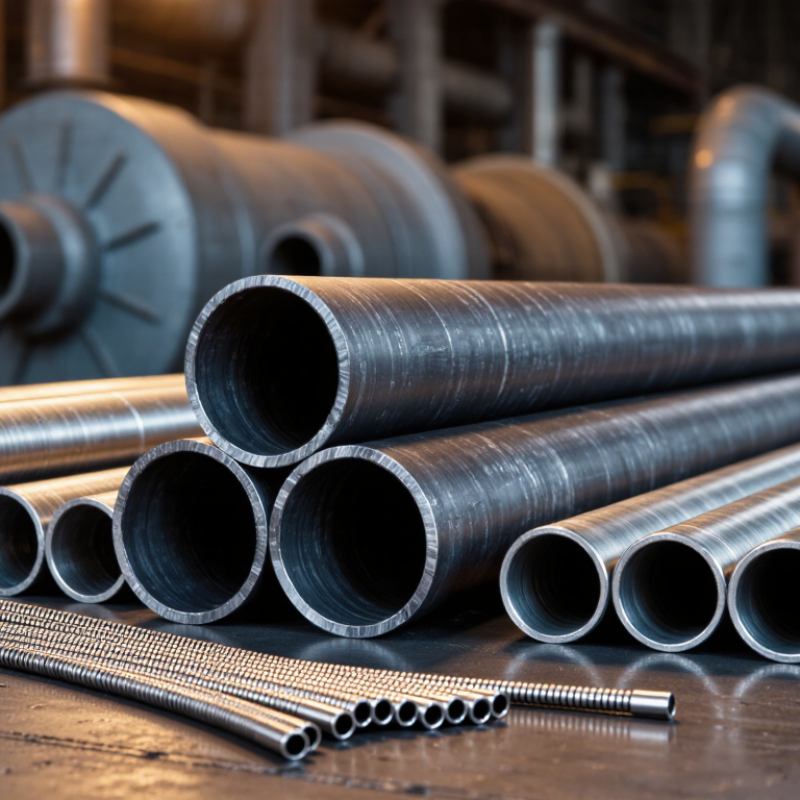
What Are the Top Seamless Pipe Types in 2026?

What Defines a Seamless Pipe and How Is It Made?

What Are the Top Seamless Pipe Types in 2026?
What Defines a Seamless Pipe and How Is It Made?

A seamless pipe has no longitudinal welded joint; it begins as a solid steel billet. At the mill, workers heat the billet and pierce it with a tool to create a hollow shell. The shell is then rolled and stretched to reach its required diameter and wall thickness. After sizing, pipes may receive heat treatment, straightening, and nondestructive inspection. That sequence matters. A small defect can affect pressure performance, so inspection and dimensional checks are essential. Common types include carbon-steel, alloy-steel, and stainless-steel seamless pipes. Their suitability depends on service temperature, pressure, and corrosion exposure.

The World Steel Association’s World Steel in Figures 2025 reports global crude steel production of 1,882.6 million tonnes in 2024. This figure covers all crude steel, not seamless-pipe output, so it should not be treated as a measure of pipe availability. The distinction is easy to miss. In practice, manufacturing route, steel grade, and final testing all shape a pipe’s performance. A seamless designation alone does not guarantee suitability for a demanding installation. Engineers still need to check the applicable product specification, dimensions, and inspection records against actual service conditions.

Top Seamless Pipe Types in 2026

Typical melting-temperature ranges by material family (°C). Values are approximate; specific ranges vary by grade and composition.

What defines a seamless pipe? It has no welded seam. It is commonly made by heating a solid steel billet, piercing it to form a hollow shell, then rolling or drawing it to the required dimensions. Carbon steel, alloy steel, stainless steel, and duplex stainless steel are common material families; the appropriate choice depends on service conditions and applicable specifications.

Which Seamless Pipe Types Are Most Widely Used in 2026?

In 2026, carbon steel seamless pipe remains one of the most widely used options for oil and gas lines, power plants, and general industrial service. Its broad use reflects dependable strength, familiar fabrication practices, and availability in many dimensions. For higher temperatures or pressures, engineers may specify alloy steel seamless pipe, including chromium-molybdenum grades. These pipes are common in boilers, refineries, and heat exchangers, where temperature changes matter.

Stainless steel seamless pipe is widely selected for food processing, chemical equipment, and water systems that need greater corrosion resistance. Grade selection matters: a pipe suitable for mild cleaning chemicals may not withstand hot chlorides. Duplex stainless pipe appears in demanding marine and process applications because it combines useful strength with corrosion resistance. It costs more and needs careful welding control. Not always necessary.

The most widely used type depends on the fluid, pressure, temperature, and inspection requirements, rather than a universal popularity ranking. Buyers should check the material certificate, wall thickness, heat treatment, and applicable product specification before ordering. Compare operating conditions with the pipe schedule, not just the nominal diameter. This comparison has limits. “Seamless” describes how a pipe is made; it does not guarantee consistent quality. Details matter.

How Do Material Grades Shape Seamless Pipe Performance?

Material grade is not merely a procurement code; it sets limits for strength, temperature, and corrosion resistance. API Specification 5L’s grade tables list minimum yield strengths of 52 ksi for X52 and 70 ksi for X70. The higher figure may support thinner walls in some designs, but pressure, temperature, weldability, and applicable design rules still matter. Stronger is not automatically better.

For high-temperature carbon-steel service, ASTM A106/A106M specifies Grade B with minimum tensile strength of 60 ksi and yield strength of 35 ksi. Stainless grades can help resist corrosion, while duplex grades combine corrosion resistance with higher strength. Neither label guarantees suitability: actual chemistry, heat treatment, pipe dimensions, and the operating fluid affect performance. A common selection mistake is choosing by grade alone and overlooking the service conditions.

Tips: Check the current API or ASTM specification tables, then confirm the grade against the project’s design code. Ask for mill test certificates and verify heat number traceability. Note the limits, too: certificates support verification, but they do not replace engineering review.

Where Are the Main Seamless Pipe Types Used?

Seamless pipe types serve different jobs, and the service conditions matter more than the label. Oil-country tubular goods, including casing and tubing, go into wells where pressure, depth, and corrosive fluids shape the specification. Seamless line pipe carries oil or gas in selected high-pressure or demanding routes. IEA’s Gas 2024 report projected global gas demand growth of about 2.5% in 2024, adding context for infrastructure needs, but it does not measure seamless-pipe demand. The fit matters.

Boiler and heat-exchanger tubes are used in power plants, refineries, and process facilities, where hot fluid and repeated temperature changes test the metal. Mechanical-grade seamless tubes suit shafts, cylinders, and machine parts; larger structural sections appear in construction and equipment frames. World Steel Association’s October 2024 Short Range Outlook forecast steel demand growth of 1.7% in 2024 and 1.2% in 2025. That is broad steel demand, not a seamless-pipe sales figure. A pipe that works on paper may still be a poor choice if wall thickness, corrosion allowance, or inspection access is overlooked. Small details matter.

How to Choose the Right Seamless Pipe for an Application?

Choosing the right seamless pipe begins with the service conditions, not the catalog. Record design pressure, operating temperature, fluid chemistry, flow rate, and expected corrosion before selecting a grade. Carbon-steel pipe, such as material specified to ASTM A106, often suits high-temperature service. Alloy steel handles demanding heat conditions, while stainless steel can resist many corrosive environments. None is universally best. Check the applicable design code, such as ASME B31.3 for process piping, and confirm material certificates and dimensional tolerances. A seamless construction does not automatically make a pipe suitable for every pressure or fluid.

Corrosion deserves early attention. NACE International’s IMPACT study estimated its global cost at US$2.5 trillion annually, or 3.4% of global GDP, and noted that better corrosion management could save 15–35%. Use that finding as a reason to assess corrosion risk, not as a pipe-sizing rule. Consider chloride levels, acidity, temperature, erosion, and cleaning chemicals; a small sample of the actual fluid can reveal surprises. Then compare wall thickness, corrosion allowance, inspection access, and lifecycle cost. For pipeline transport, API 5L grades are commonly specified, but grade alone cannot settle the choice. Ask a qualified piping engineer to verify the design calculations and material compatibility. The messy details matter. A neat spreadsheet can still miss a changing process condition.

What Are the Top Seamless Pipe Types in 2026? How to Choose the Right Seamless Pipe for an Application?

Seamless Pipe Type Common Grades or Specifications Typical Strengths Common Applications Key Selection Considerations
Carbon Steel ASTM A106 Grade B; ASTM A53; API 5L grades such as X42 and X52 (where available as seamless) Widely used, weldable with appropriate procedures, and available in a broad range of sizes and wall thicknesses. Process piping, water and gas service, oil and gas lines, and general industrial piping. Check design pressure, temperature, corrosion allowance, fluid compatibility, and the exact product specification. A53 and API 5L include product forms beyond seamless, so confirm the ordered form.
Low-Temperature Carbon Steel ASTM A333 Grade 6 Specified for low-temperature service with requirements that address impact toughness. Refrigeration systems, cold-region facilities, and piping exposed to low design temperatures. Confirm the required minimum design metal temperature, impact-test requirements, thickness, and applicable construction code.
Alloy Steel ASTM A335 grades such as P11, P22, and P91 Chromium-molybdenum alloy grades are used where elevated-temperature strength and resistance to high-temperature degradation are required. Power-generation, refinery, and other high-temperature pressure piping. Match the grade to design temperature and pressure. Heat treatment, welding procedure, post-weld heat treatment, and inspection requirements can be critical.
Austenitic Stainless Steel ASTM A312 TP304/304L and TP316/316L Good general corrosion resistance; 316 grades include molybdenum for improved resistance to many chloride-containing environments compared with 304. Food and beverage processing, chemical plants, water systems, and corrosive-service piping. Assess the specific chemical environment, chloride concentration, temperature, and risk of pitting or stress-corrosion cracking. Stainless steel is not immune to corrosion.
Duplex Stainless Steel ASTM A790 UNS S31803 or S32205 Combined austenitic-ferritic structure; commonly selected for higher strength and improved resistance to chloride stress-corrosion cracking compared with many standard austenitic grades. Offshore and marine systems, chemical processing, and chloride-bearing process fluids. Verify the required grade and corrosion performance. Fabrication, welding, and heat-input control matter because the final properties depend on maintaining the appropriate microstructure.
Nickel Alloy ASTM B622 covers seamless nickel and nickel-cobalt alloy pipe; select the specific alloy by service conditions. Some nickel alloys offer strong resistance to particular combinations of corrosive chemicals, high temperatures, or both. Severe chemical processing and specialized high-temperature or corrosive services. Choose by the exact medium, concentration, temperature, and exposure conditions; “nickel alloy” is not a single performance category. Confirm the governing specification and alloy designation.

How to choose: Start with the design code, pressure, temperature, fluid composition, corrosion allowance, and required service life. Then confirm pipe dimensions and wall thickness, grade and specification, impact-testing needs, fabrication requirements, inspection, and documentation. The applicable code, project specification, and current standard edition govern final selection.

Article Source: