
Posts
Top Tokimec Equivalent Pump Suppliers Worldwide
Choosing a Tokimec Equivalent Pump requires more than matching a model name. Buyers need to compare displacement, pressure rating, shaft dimensions, mounting style, rotation, and fluid compatibility. These details affect whether a replacement fits the system and performs as expected. Small differences matter.
This guide introduces suppliers worldwide and the factors that help distinguish a useful alternative from a merely similar product. It focuses on verifiable specifications, product documentation, technical support, and access to replacement parts. Supplier listings and product ranges can change, so confirm current details directly before making a purchase.
A careful comparison should begin with the original pump’s nameplate and the equipment manufacturer’s documentation. Then ask suppliers to confirm the proposed pump’s operating limits and interface dimensions in writing. Request drawings when available. Check warranty terms and delivery coverage for your location, too. A low price alone does not establish compatibility or long-term value.
Not every equivalent is a direct substitute. That matters. Installation conditions, oil cleanliness, and system demands can influence performance, even when published specifications appear close. The suppliers covered here provide a starting point for research, not a substitute for engineering review. Use the shortlist to ask better questions, verify claims, and select a Tokimec Equivalent Pump suited to the actual application.
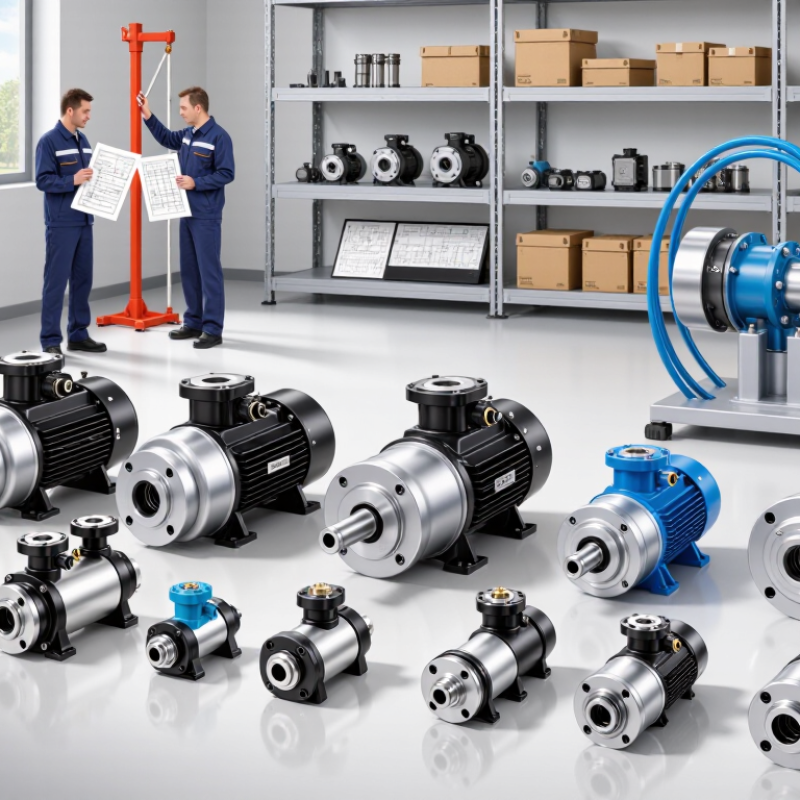
Define Tokimec Pump Equivalence by Displacement (cm³/rev), Pressure (bar), and Mounting
A pump should not be called equivalent based on appearance alone. Compare displacement in cm³/rev, rated pressure in bar, and mounting dimensions before requesting a replacement. A 25 cm³/rev pump may deliver similar flow at the same shaft speed, but actual output also depends on speed, efficiency, and operating conditions. Small details matter.
Check whether the listed pressure is continuous or intermittent. A unit rated for a brief pressure peak may not suit a machine that runs under load all day. Match the flange pattern, shaft diameter and length, port positions, and rotation direction. I have seen a promising match fail because the ports faced the wrong way. That is an easy detail to miss.
Ask suppliers for dimensional drawings and performance data, not just a model cross-reference. Confirm fluid compatibility and the required control configuration as well. Specifications can vary between product revisions, so verify the exact unit being quoted. I would also compare the machine’s real operating pressure with its nameplate rating; records are not always current. A careful fit check takes time, but it can prevent costly installation surprises.
Map Worldwide Alternatives Across Vane, Piston, and Gear Pump Technologies
Finding a hydraulic pump equivalent starts with the circuit, not the catalog title. Record displacement, rated pressure, speed, rotation, shaft dimensions, port positions, and fluid type. A pump that fits the mounting face may still deliver the wrong flow or turn in the wrong direction. Small details matter.
Vane pumps often suit systems needing steady flow and relatively quiet operation. Check pressure limits and contamination controls, especially in older machinery. Piston pumps can handle higher pressures and variable displacement, but their controls and case-drain requirements need close review. Gear pumps are often simpler and more compact. They may be a practical choice for fixed-flow duties, though noise and wear deserve attention. Fit matters. No technology is a universal substitute.
Worldwide suppliers may list equivalent units under different series or configuration codes. Ask for a dimensional drawing, performance curve, and written confirmation of shaft and port compatibility. Compare operating temperature, seal materials, lead time, and service support in the destination region. A spreadsheet helps, but it can hide missing details; verify the actual machine before ordering. One overlooked port orientation can turn a promising replacement into a costly delay.
Top Tokimec Equivalent Pump Suppliers Worldwide - Map Worldwide Alternatives Across Vane, Piston, and Gear Pump Technologies
Technology-neutral comparison of common hydraulic pump alternatives. The ranges below are indicative market ranges, not specifications for a particular supplier or model.
| Pump technology | Typical displacement range | Typical maximum pressure range | Common design options | Typical strengths | Selection considerations |
|---|---|---|---|---|---|
| Vane | Approximately 5–250 cm³/rev | Common designs reach roughly 100–210 bar | Fixed or variable displacement; single or double pumps; balanced or unbalanced designs | Relatively smooth flow and moderate noise; useful for steady-duty hydraulic systems | Check fluid cleanliness, operating temperature, pressure duty, and availability of the required displacement-control arrangement. |
| Axial piston | Approximately 5–1,000 cm³/rev, depending on design | Common industrial and mobile designs are rated around 250–420 bar | Swash-plate or bent-axis; fixed or variable displacement; pressure, load-sensing, or power control | High power density and suitability for high-pressure or variable-flow systems | Match control response, shaft and mounting interface, pressure rating, case-drain requirements, and fluid cleanliness. |
| Radial piston | Design-dependent; commonly selected for low-to-moderate flow applications | Some designs operate at several hundred bar; confirm the model rating | Fixed or variable displacement; multiple piston arrangements | Can provide high pressure at comparatively low flow | Verify duty cycle, pulsation, speed limits, pressure rating, and service requirements for the specific design. |
| External gear | Approximately 0.5–250 cm³/rev, depending on construction | Many standard designs are rated around 160–250 bar; heavier-duty designs may be higher | Fixed displacement; single or multiple sections; different shaft and port configurations | Compact construction, simple operation, and broad availability | Check continuous versus intermittent pressure ratings, noise, inlet conditions, and compatibility with the working fluid. |
| Internal gear | Approximately 1–250 cm³/rev, depending on design | Common industrial designs are often rated around 160–250 bar | Fixed displacement; optional pressure-balancing features | Smooth delivery and typically low noise in suitable operating conditions | Compare viscosity range, speed limits, inlet pressure, and the pump’s pressure rating at the intended speed. |
Note: Pressure and displacement ranges vary substantially by construction, frame size, speed, fluid, and duty cycle. Confirm rated operating limits and interface dimensions in the selected pump’s technical documentation before specifying a replacement.
Compare Supplier Ratings: Flow (L/min), Speed (r/min), and Efficiency (%)
When comparing equivalent pump suppliers, rate flow, rotational speed, and efficiency under matching test conditions. A published flow of 80 L/min means little if measured at low pressure, with warm oil, or minimal restriction. Compare figures at the stated pressure, fluid viscosity, and operating temperature. Check whether flow is nominal or measured under load. Speed figures need the same attention. A pump rated at 1,500 r/min may deliver differently as pressure rises. Efficiency data should specify whether it is volumetric, mechanical, or overall. Without that detail, rankings can look precise but mislead. That’s the catch.
Tips: Request a test curve, not one headline number. Confirm tolerance, noise level, and continuous-duty limits. Record your system’s actual pressure and fluid temperature before requesting quotations. Keep units consistent. Small details matter.
Use your required speed and pressure to estimate delivered flow. Then compare efficiency at that duty point. Service access and replacement lead time matter too. A high catalog score cannot keep a line running when parts arrive late. One practical wrinkle: suppliers may use different test setups, and a neat table will not fix that. Ask for comparable data, and flag missing conditions rather than assuming the best.
Check Fluid Compatibility and Cleanliness Using ISO 4406 Codes
When comparing equivalent pump suppliers, check fluid compatibility and cleanliness as separate requirements. A pump may tolerate the specified oil yet wear quickly if particles circulate through its clearances. ISO 4406:2021 classifies solid contamination using particle counts per millilitre at 4, 6, and 14 μm(c). Each rising code step represents roughly a doubling in the particle-count range. Three numbers, one practical warning.
Ask suppliers to state cleanliness limits for the proposed pump, not just quote a general “clean oil” target. Compare those limits with the system’s measured ISO 4406 code and filtration plan. Also verify viscosity across operating temperatures, seal-material compatibility, and the fluid’s additives. A cold start can change flow and pressure behavior. Small details matter.
Use a clean sampling bottle and take oil from a circulating line, not the bottom of a storage drum. Record temperature, operating hours, and filter changes with each sample. A code without context is incomplete. ISO 4406 gives a common reporting method, but it does not determine whether a fluid suits a specific pump. One sample can also mislead; trends are more useful, though they take time to collect.
Evaluate Interchangeability, Warranty, and Global Service Coverage
When comparing equivalent pump suppliers, treat interchangeability as a measured fit, not a catalog claim. Check displacement, rated pressure, rotation, shaft dimensions, mounting points, and port locations against the installed unit. A few millimeters can turn a planned replacement into workshop rework. Also confirm control type, fluid compatibility, and operating temperature; these details are easy to overlook when a machine is down. Ask for a dimensional drawing and written confirmation of the proposed configuration before ordering.
Warranty terms deserve the same scrutiny as pump specifications. Clarify the coverage period, required installation records, and how contamination or incorrect startup may affect a claim. Keep the commissioning checklist. It helps later. Global service coverage can vary sharply between suppliers, even when their sales maps look impressive. Ask where replacement units and seal kits are stocked, what typical delivery times look like, and whether trained technicians can support your operating region. Request a real service contact, not only a general mailbox. Response times should be confirmed in writing where possible. I may be overly cautious here, but a technically compatible pump is not a dependable choice if parts, warranty support, or troubleshooting remain distant. A short trial installation can expose fit or control issues before wider replacement.
Evaluating Tokimec-Equivalent Pumps
This checklist groups practical verification points for comparing equivalent pumps. Counts show the number of checks in each category—not supplier ratings or market statistics.
