
Posts

What Are the Top 10 Types of Thermoforming Machines?

Choosing the right Thermoforming Machine requires more than comparing prices or advertised cycle speeds. Each machine type shapes plastic differently, affects tooling costs, and suits specific production demands. A compact vacuum former may serve a workshop well, while a pressure former supports sharper details and tighter tolerances.

This guide examines the top 10 types of thermoforming machines used across packaging, automotive, medical, electronics, and consumer products. It considers forming methods, heating systems, automation levels, material compatibility, output volume, and maintenance needs. Practical factors matter too, including sheet loading, mold changes, trimming accuracy, energy use, and operator training.

No ranking is universally correct.

Some categories overlap. Manufacturers may also describe similar equipment with different names. That can confuse purchasing teams and inexperienced users. The comparisons here rely on common industrial applications, observable machine features, and production considerations reported by experienced operators and equipment specialists. They are intended to support informed evaluation, not replace testing.

A reliable decision begins with the final product. A thin food tray, a deep automotive panel, and a sterile medical component need different forming performance. Small details reveal major differences. Watch the heating zones. Inspect the clamp frame. Ask how evenly the material stretches.

The following overview explains where each machine type performs best, where it may struggle, and what buyers should verify before investing. Performance claims deserve scrutiny. Real results depend on material grade, mold design, sheet thickness, and process control. That is the part many simple rankings miss.
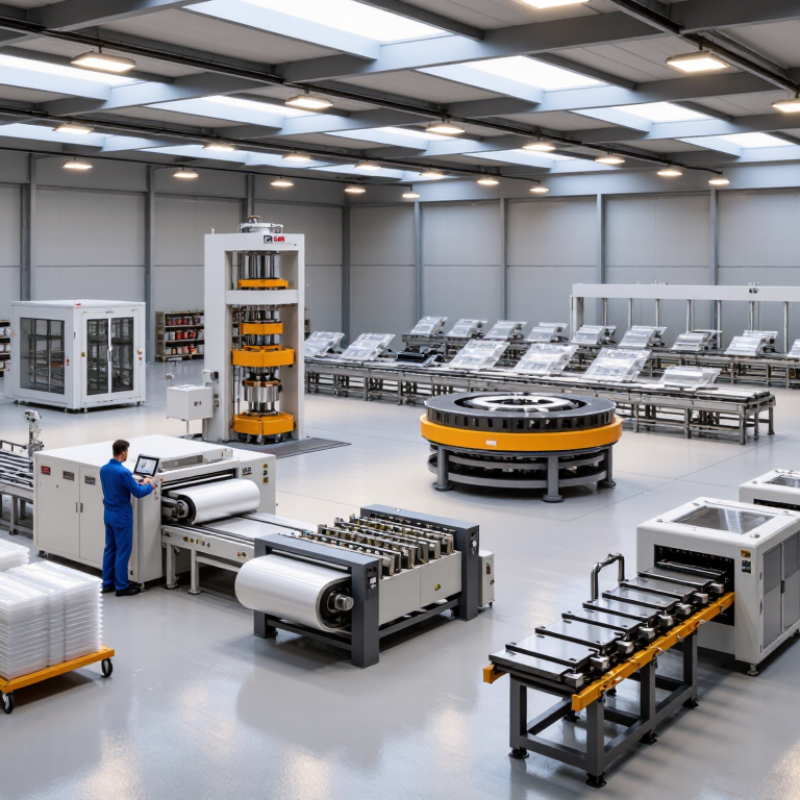
What Are the Top 10 Types of Thermoforming Machines?

Vacuum and Pressure Formers: 0.2–0.8 MPa Pressure and 120–200°C Heating

What Are the Top 10 Types of Thermoforming Machines?

Vacuum and pressure formers remain two essential machine types among the top ten. Vacuum forming removes air beneath a heated sheet. Pressure forming adds compressed air above it.

The working pressure usually ranges from 0.2 to 0.8 MPa, or about 2–8 bar.

Heating commonly reaches 120–200°C, depending on the polymer, sheet thickness, and mold design.

Grand View Research’s 2024 Thermoforming Plastics Market report identifies packaging as a major demand area, especially for lightweight polymer products. Technical guidance from the Society of Plastics Engineers also stresses accurate sheet-temperature control.

Heater settings are not equal to sheet temperature. A 160°C display may hide cooler corners or overheated edges. That mistake can cause webbing, uneven walls, or weak corners.

Pressure forming usually creates sharper details, while vacuum forming offers simpler tooling and lower operating complexity.

Neither method wins every application.

Tips:

Measure the sheet directly with infrared equipment, then confirm readings carefully. Keep molds near the intended forming temperature. Start near 0.3 MPa and increase pressure gradually.

A 0.8 MPa setting may be unnecessary for shallow parts. Operators should record cycle time, heating zones, pressure, and reject rates.

Real production often differs from handbook data. That gap deserves review.

Plug-Assist and Twin-Sheet Machines: 0.5–6 mm Sheet Processing

Among the top 10 thermoforming machine types, plug-assist and twin-sheet systems serve demanding sheet applications from 0.5 to 6 mm. This range is broad. It covers thin packaging-grade sheets and rigid technical panels. A 2024 Grand View Research report valued the global thermoforming plastics market at more than USD 14 billion in 2023, reflecting steady demand for efficient forming equipment.

Plug-assist machines use a controlled pre-stretch before vacuum or pressure forming. The plug improves wall distribution around deep cavities, sharp corners, and narrow openings. For 0.5–2 mm sheets, accurate heating zones matter greatly. Small temperature differences can create thin spots. For sheets above 3 mm, cooling time and plug geometry become more influential. The Plastics Industry Association reports that process efficiency and material reduction remain major priorities in plastics manufacturing. That sounds simple, but operators often adjust temperature before checking plug speed.

Twin-sheet machines heat two sheets separately, then form and join them into a hollow structure. They can produce ducts, pallets, tanks, covers, and lightweight panels. A 2023 Freedonia Group study identified transportation, packaging, and industrial products as important thermoformed plastics markets. Twin-sheet forming can reduce assembly steps, but alignment errors may create weak seams. The 0.5–6 mm specification can also mislead. Not every machine handles the full range equally well. Tool design, sheet stiffness, heating capacity, and cooling control still decide the practical limit. Scrap data should be reviewed after every major tooling change.

What Are the Top 10 Types of Thermoforming Machines? - Plug-Assist and Twin-Sheet Machines: 0.5–6 mm Sheet Processing

Comparative overview of commonly used thermoforming machine configurations. Sheet-thickness ranges are typical operating ranges and may vary according to material, mold design, heating system, forming area, and automation level.

No. Machine Type Typical Sheet Thickness Forming Principle Common Materials Typical Applications Main Advantages and Considerations
1 Vacuum Thermoforming Machine 0.5–6 mm Vacuum pressure draws a heated sheet against a single-sided mold. Atmospheric pressure provides most of the forming force. ABS HIPS PETG PVC PP Trays, covers, liners, packaging inserts, equipment housings, and display components. Simple tooling and relatively low capital cost. Suitable for many shapes, but wall-thickness distribution and fine detail are more limited than with pressure forming.
2 Pressure Thermoforming Machine 0.5–6 mm Compressed air is added above the heated sheet while vacuum is applied through the mold, producing higher differential pressure than vacuum forming alone. ABS HIPS PC PETG PMMA Automotive interior parts, appliance panels, technical housings, instrument bezels, and cosmetic surfaces. Improved definition, sharper corners, and better surface reproduction. The machine and tooling are generally more complex and require controlled air pressure.
3 Vacuum Plug-Assist Thermoforming Machine 0.8–6 mm A shaped plug mechanically pre-stretches the heated sheet before vacuum pulls it onto the mold. HIPS ABS PP PETG Deep trays, food containers, packaging, refrigerator liners, and parts requiring improved material distribution. Reduces excessive thinning in deep draws and improves repeatability. Plug material, temperature, speed, and clearance must be carefully matched to the sheet.
4 Pressure Plug-Assist Thermoforming Machine 0.8–6 mm A plug pre-forms the sheet, followed by vacuum and compressed air to create detailed features and more uniform walls. ABS PC PP PETG PMMA Deep technical parts, reusable packaging, medical-device trays, automotive components, and detailed housings. Combines controlled material distribution with high forming detail. It offers strong process capability but requires precise sequencing and more sophisticated tooling.
5 Twin-Sheet Thermoforming Machine 1.5–6 mm per sheet Two heated sheets are formed separately and joined around their edges or selected areas during one cycle, creating a hollow or double-wall part. HDPE PP ABS HIPS PVC Pallets, ducts, tanks, air channels, luggage shells, double-wall panels, and lightweight structural components. Produces integrated hollow sections without secondary assembly and can incorporate fittings or cores. Requires accurate sheet alignment, heating balance, and sealing control.
6 Drape-Forming Machine 2–6 mm A heated sheet is draped over or into a mold, usually with vacuum assistance, while gravity and controlled movement help establish the shape. ABS PC PMMA PVC Composite laminates Large panels, aircraft and vehicle interiors, signage, enclosures, and architectural components. Well suited to large parts and relatively gentle forming. Cycle times can be longer, and deep or highly detailed features may require additional forming methods.
7 Matched-Mold Thermoforming Machine 1–6 mm Heated plastic is shaped between matched male and female molds, allowing mechanical pressure to define both major surfaces. ABS PMMA PC PVC PP Precision covers, structural shells, technical housings, and parts requiring controlled external and internal geometry. Provides good dimensional control and repeatable detail on both sides. Tooling is more expensive and mold alignment is critical.
8 Cut-in-Place Thermoforming Machine 0.5–4 mm The formed part is trimmed directly in the forming station or immediately after forming, reducing handling between forming and cutting. HIPS PET PP PVC PLA High-volume food containers, pharmaceutical blister components, lids, cups, and thin-gauge packaging. Supports high throughput, accurate trim registration, and reduced material handling. Tooling must withstand repeated forming and cutting loads.
9 Roll-Fed Thermoforming Machine 0.5–2.5 mm Plastic web is supplied from a roll, indexed through heating and forming stations, then trimmed and discharged automatically. PET PS PP PLA PVC Disposable food packaging, medical trays, blister packs, cups, lids, and high-volume retail packaging. Excellent for continuous production and consistent cycle control. It is less suitable for thick, large, or low-volume parts and requires stable web feeding.
10 Sheet-Fed Thermoforming Machine 1–6 mm Pre-cut sheets are loaded individually or automatically, heated, formed, cooled, and trimmed as separate blanks. ABS HDPE PP PC PMMA Large covers, vehicle parts, industrial housings, refrigerator liners, signage, and short-to-medium production runs. Handles thicker and larger sheets than many roll-fed systems and allows flexible blank sizes. Loading, nesting, and trim management influence productivity.

Note: The listed thickness ranges are general industry-oriented guidelines rather than universal machine specifications. Actual capability depends on sheet dimensions, polymer grade, forming temperature, draw ratio, mold construction, heating zones, and machine configuration.

Inline and Roll-Fed Systems: 10–60 Cycles per Minute for High Throughput

What Are the Top 10 Types of Thermoforming Machines?

Inline and roll-fed thermoforming machines often define high-throughput packaging production. Their typical operating range is 10–60 cycles per minute, depending on material, mold size, and forming depth. Inline systems combine heating, forming, trimming, and stacking in one continuous line. Roll-fed systems reduce manual sheet loading and maintain steadier material flow. This matters when thin plastic film must reach the forming station without wrinkles.

The ten common machine types include inline, roll-fed, sheet-fed, rotary, shuttle, vacuum, pressure, plug-assist, twin-sheet, and multi-station thermoformers. Inline and multi-station designs usually support faster output.

Vacuum forming suits simpler shapes, while pressure forming creates sharper details. Plug-assist forming improves wall thickness distribution in deeper containers.

Small detail, big consequence.

A poorly balanced plug can create thin corners and weak seals.

According to Grand View Research, the global thermoforming plastics market was valued at about USD 14.1 billion in 2023. Its report projects continued growth through 2030, supported by food, medical, and consumer packaging demand. MarketsandMarkets also forecasts steady expansion for thermoformed plastics during 2024–2029.

These figures support investment in automated equipment, but they do not guarantee 60 cycles per minute. Actual performance depends on polymer grade, cooling time, mold design, and trim efficiency.

Operators often discover that advertised speed requires ideal conditions.

That deserves a closer look.

Cut-Sheet and Rotary Machines: Flexible Runs and 4–12 Station Layouts

Thermoforming machines come in several forms, including cut-sheet, rotary, roll-fed, inline, vacuum, pressure, twin-sheet, plug-assist, blister, and clamshell systems. Each design suits different production demands. Cut-sheet machines process pre-cut plastic sheets, making them practical for short runs, prototypes, and frequent material changes. Operators can adjust sheet size, heating zones, and mould settings without rebuilding an entire line. This flexibility matters when products change often.

Rotary machines use a rotating platform with multiple working stations. Typical layouts contain four to twelve stations for heating, forming, cooling, trimming, and stacking. A four-station machine may suit moderate output and simpler tooling. An eight- or twelve-station layout can improve throughput when every station remains balanced. However, more stations also increase maintenance points and setup discipline.

Faster is not always better.

In plant trials, I would compare cycle time, wall thickness, trim accuracy, and loading effort. Those details reveal problems that sales figures often hide. Cut-sheet systems may create more manual handling. Rotary systems may demand tighter tooling alignment. Both can produce reliable parts when temperature control and mould ventilation receive regular checks. Material thickness also changes the result. A setting that works for thin packaging may fail on a deeper technical tray. Even experienced teams sometimes overestimate output because changeover time is ignored. That is worth reviewing before selecting a 4–12 station layout.

Clamshell and Drape Formers: Match Part Depth, Draw Ratio, and Output

Among the ten main thermoforming machine types, clamshell and drape formers demand different design thinking. Clamshell systems suit shallow or moderately deep parts with clean, repeatable walls. Drape formers suit deeper contours, curved housings, and parts needing gentler material flow. The wrong choice can leave thin corners, webbing, or uneven cooling.

Start with part depth and draw ratio. A practical draw ratio compares vertical depth with the opening width. For example, a 60-millimeter cavity across a 120-millimeter opening gives a 0.5 ratio. That may fit a clamshell process, depending on material, radius, and plug assistance. Deeper parts usually benefit from drape forming, especially when the mold surface includes compound curves. Real trials still matter. Geometry often defeats neat rules.

Grand View Research estimated the global thermoforming market at approximately 15.9 billion US dollars in 2023, with continued growth projected through 2030. PlasticsEurope reported that packaging represented 39.3% of European plastics demand in 2022, reinforcing the importance of cycle time and sheet utilization. For high-volume trays or shells, clamshell equipment can provide faster indexing and consistent output. Drape forming may reduce stress on large surfaces, but heating and cooling can take longer. I would not select machinery from output claims alone. A pilot run should measure wall thickness, scrap percentage, cycle stability, and actual parts per hour. Industry forecasts guide investment; they do not replace floor-level evidence.