
Posts

Why Choose an Investment Casting Foundry?

Why Choose an Investment Casting Foundry?

Why choose an Investment Casting Foundry when machining and fabrication remain familiar options? The answer begins with design freedom, dimensional control, and material performance. Investment casting can produce thin walls, internal passages, fine surface details, and complex shapes with limited assembly. That matters when a component resembles a small turbine blade, medical instrument, or lightweight aerospace bracket.

Industry reports support this demand. Grand View Research identifies investment casting as a growing global market, driven by aerospace, automotive, energy, and medical applications. Fortune Business Insights also reports continued market expansion, although published forecasts differ in size and timing. That difference deserves attention. Market data is useful, but it should not replace a project-specific feasibility review.

A qualified Investment Casting Foundry connects engineering choices with controlled production. Experienced teams review wax pattern design, ceramic shell strength, alloy behavior, shrinkage allowances, heat treatment, and inspection requirements. They may use vacuum casting, rapid prototyping, coordinate measuring machines, X-ray inspection, or computed tomography for critical parts. Standards from ASTM International and quality systems such as ISO 9001 help establish repeatable procedures. Aerospace programs may also require AS9100 or Nadcap approval, depending on the customer and process.

The practical benefit is clear.

One mold can replace several assembled pieces. Fewer joints can reduce leakage risks, weight, and secondary operations. Still, investment casting is not automatically the best choice. Very large parts, simple geometries, or low-volume prototypes may favor other methods. A reliable foundry should explain those limitations openly, not promise everything.

The strongest choice combines verified certifications, traceable materials, transparent sampling plans, and evidence from comparable projects. Ask for inspection records, process capability data, and corrective-action examples. Those details reveal whether a supplier offers genuine manufacturing experience or only attractive sales language.
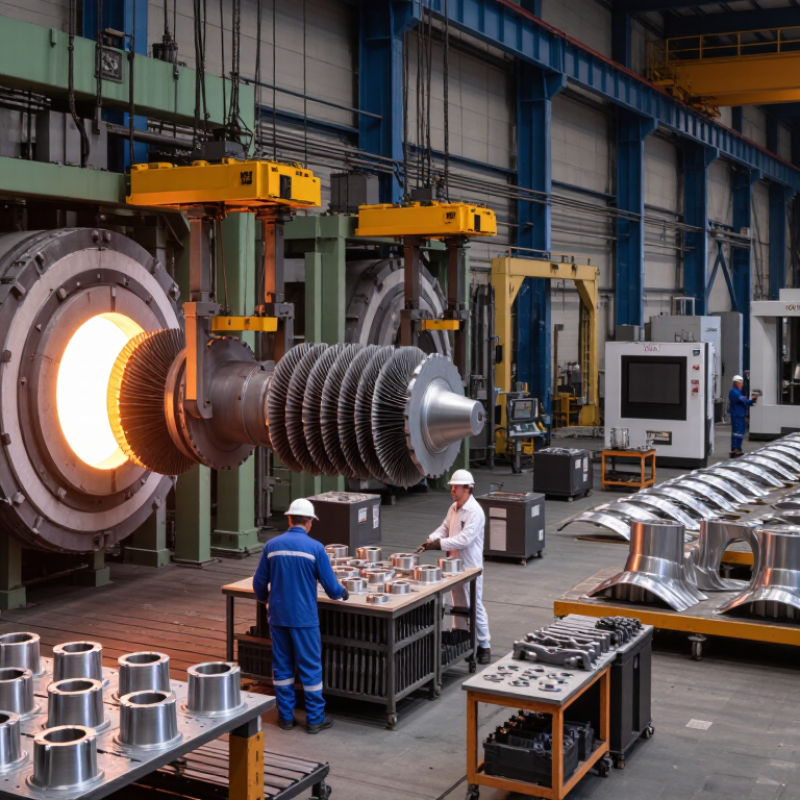
Why Choose an Investment Casting Foundry?

Understanding the Investment Casting Process

Investment casting begins with a precise wax pattern. Workers assemble patterns into a tree, then apply ceramic slurry and fine stucco. Each layer must dry before another is added. Moisture, dust, or uneven drying can create shell cracks later. The completed shell enters a furnace, where the wax drains away and the ceramic gains strength. Molten alloy then fills the hollow cavity. After cooling, technicians remove the shell, cut gates, and inspect each component.

A 2024 industrial market analysis estimates the global investment casting market at roughly 17 billion dollars. That growth reflects demand for complex, lightweight parts with fewer machining steps. Small features, internal passages, and thin walls are possible. Typical dimensional capability may approach ±0.1 millimeter on suitable small features, but geometry and alloy can change the result. Do not treat that figure as automatic. Experienced engineers review shrinkage, draft, wall thickness, and ceramic behavior before tooling approval. Radiographic or penetrant testing may follow, using procedures covered by recognized ASTM standards. The process is highly controlled, yet not flawless. Wax distortion still happens. Ceramic shells still fail. A careful foundry records pouring temperature, shell moisture, alloy chemistry, and inspection results for every batch.

Why Choose an Investment Casting Foundry?

Understanding the Investment Casting Process Through Typical Operating Temperatures

Investment casting uses several controlled thermal stages. The ranges below represent typical process temperatures: wax preparation, ceramic-shell drying, steam dewaxing, shell firing, and molten-steel pouring. Actual settings vary according to alloy, shell system, equipment, and casting geometry.

Evaluating the Advantages of a Specialized Foundry

A specialized investment casting foundry offers more than access to molds. It combines wax pattern control, ceramic shell development, alloy knowledge, and controlled pouring in one production system. This integration matters when parts contain thin walls, internal passages, or complex curves. The World Foundry Organization’s 2023 census reported more than 100 million tonnes of castings worldwide. That scale highlights a practical issue: repeatable process control separates capable suppliers from merely available capacity.

A focused foundry can record shell temperature, wax dimensions, melt chemistry, and inspection results for each batch. These records support traceability and faster root-cause analysis.

Deloitte’s 2023 Smart Manufacturing and Operations Survey found that 86% of manufacturers expect smart manufacturing to become a major competitiveness factor within five years.

A specialized foundry should therefore combine skilled judgment with digital monitoring. Experience still matters. Sensors do not explain every defect. A small process change can create a large dimensional shift, and even established procedures need review.

Tips: Ask for sample inspection reports, alloy certificates, process-capability data, and evidence of corrective actions. Visit the production floor if possible. Look closely at shell storage, furnace maintenance, and measurement practices. Do not judge a foundry only by its equipment list. In my experience, a clean record is valuable, but an honest explanation of a past failure may be more revealing. Perfect claims deserve careful questions.

Comparing Material, Design, and Production Capabilities

Why Choose an Investment Casting Foundry?

Material capability shapes every casting decision. A qualified foundry should handle stainless steel, carbon steel, aluminum, and heat-resistant alloys. Each material behaves differently during filling, cooling, and heat treatment. Stainless steel may need careful control of shell temperature and pouring conditions. Aluminum demands different thermal management. Ask for test data, not broad promises. Useful evidence includes chemical analysis, hardness results, and tensile reports.

Design capability matters just as much. Investment casting can reproduce curved passages, fine ribs, and compact housings with limited machining. However, thin sections can cool unevenly and create distortion. Experienced engineers review wall thickness, ceramic core placement, gate locations, and shrinkage allowances before tooling begins. A clear 3D model helps, but it cannot replace practical casting judgment. Small radii may look efficient on screen and fail during production.

Production capability proves whether the process is dependable. Look for controlled wax injection, consistent shell building, documented heat treatment, and dimensional inspection. A serious foundry should support prototypes, pilot runs, and repeat orders without changing critical methods casually. Traceability should follow each batch from raw material to final inspection. Some defects will still appear. The important question is how quickly the team finds, records, and corrects them. That response often reveals more than a polished capability list.

Assessing Quality Control and Industry Compliance

An investment casting foundry should prove quality through controlled evidence, not polished promises. Its inspection plan should cover wax patterns, ceramic shells, melting, pouring, heat treatment, and final machining. I look for traceable heat numbers, calibrated gauges, furnace charts, and signed inspection records. Small details matter. A missing temperature record can weaken an otherwise excellent part.

The ISO Survey 2022 recorded 1,265,216 ISO 9001 certificates worldwide. Certification shows a managed system, but it does not guarantee defect-free castings. Ask how the foundry handles nonconforming parts, corrective actions, and supplier changes. For aerospace-related work, Nadcap accreditation can indicate disciplined special-process controls, including heat treatment and nondestructive testing. However, accreditation is not a substitute for reviewing actual process capability.

Useful evidence includes dimensional reports, radiography results, chemical analysis, and first-article inspection records. ASTM standards can define material and test methods, while customer specifications determine acceptance limits. A serious foundry should explain both clearly. Not every problem is visible. Internal shrinkage may survive a basic visual check and appear only under radiographic inspection.

I would also examine recent audit findings, not only certificates. This is uncomfortable, but important. A perfect record may simply reflect selective reporting. The strongest partner shares limitations, tracks recurring defects, and shows measurable improvement. Ask for realistic capability data, such as Cpk values, rather than broad claims about “high quality.” Controls must survive production pressure. That is where compliance becomes real.

Selecting the Right Investment Casting Foundry for Your Project

Why Choose an Investment Casting Foundry?

Selecting the Right Investment Casting Foundry for Your Project

Selecting an investment casting foundry should begin with process fit, not the lowest quotation. A capable foundry reviews your drawing, alloy, surface requirements, and production volume before promising results. It should explain wax pattern design, ceramic shell construction, pouring conditions, heat treatment, and finishing methods in clear language.

Ask how the foundry controls each stage. Request sample inspection reports, material certificates, dimensional records, and traceability documents. A coordinate measuring machine can verify critical dimensions, while visual inspection may reveal shell inclusions or surface defects. Experienced engineers should also suggest practical design changes, such as stronger radii or improved gates, without weakening the part’s function.

Communication matters during sampling. Can the team report a deviation honestly? Can it provide corrective action with evidence? These answers often reveal more than a polished sales presentation. No foundry is perfect. Even a careful process may require a second wax trial or revised machining allowance. That is not automatically a failure.

A reliable partner welcomes technical questions and documents decisions. Visit the facility when possible. Observe cleanliness, furnace control, inspection areas, and operator discipline. The right choice may take longer than expected. Rushing it can create inconsistent parts, delayed assemblies, and expensive rework.

Why Choose an Investment Casting Foundry? - Selecting the Right Investment Casting Foundry for Your Project

A practical comparison framework based on common investment-casting requirements and industry benchmarks

Selection Criterion Typical Benchmark Priority What to Verify Before Approval
Material Capability Carbon steel, stainless steel, tool steel, nickel-based alloys, cobalt alloys, aluminum alloys and copper alloys High Confirm that the foundry routinely melts the required alloy, follows the applicable material specification and can provide heat-lot traceability and chemical-analysis reports.
Dimensional Accuracy Common investment-casting tolerance grades are approximately ISO 8062 CT4 to CT7, depending on geometry, alloy and casting size High Request capability data from comparable parts rather than relying only on a general tolerance statement. Verify datum strategy, inspection methods and allowances for machining or finishing.
Surface Finish As-cast surface roughness is often approximately 3.2–6.3 µm Ra, with results affected by shell material, geometry and finishing operations High Ask for sample inspection records and define whether the requirement applies before or after blasting, tumbling, grinding, polishing or machining.
Part Size and Weight Range Investment casting is generally suited to small and medium components, from very small precision parts to castings weighing several tens of kilograms High Check the foundry’s actual furnace capacity, flask dimensions, handling limits and proven experience with the part’s minimum wall thickness, length and weight.
Complex Geometry Suitable for thin walls, curved passages, integrated features, undercuts and near-net-shape components that may require fewer machining operations High Review wax-tooling design rules, ceramic-shell capability, core-making methods and the foundry’s approach to vents, feeders, shrinkage and difficult-to-fill sections.
Prototype and Tooling Support Options may include machined tooling, modular tooling, silicone or polymer tooling for development, and production tooling for repeat volumes Medium Compare tooling ownership, revision policy, expected tool life, maintenance responsibility, design-for-casting support and the ability to transition from prototype to production.
Production Volume Fit Well suited to prototypes, low-to-medium production runs and repeat production where near-net shape offsets tooling and process costs High Evaluate batch size, furnace utilization, wax-tree efficiency, mold-reuse limitations and the supplier’s ability to maintain consistent quality across repeated lots.
Quality Management A robust system commonly includes documented process control, nonconformance management, calibration and full batch traceability High Request the quality manual or relevant certification evidence, control plans, first-article procedures, corrective-action records and sample inspection reports.
Inspection and Testing Possible controls include dimensional inspection, visual inspection, chemical analysis, hardness testing, dye-penetrant testing, radiography and metallography High Match inspection scope to the application’s risk level. Confirm whether testing is performed in-house or by qualified external laboratories and define acceptance criteria in advance.
Porosity and Internal Integrity Soundness depends on alloy, gating, feeding, shell design, melt control and solidification conditions; critical parts may require radiographic or other volumetric inspection High Discuss known defect risks, process simulation where appropriate, repair restrictions, inspection levels and documentation for internal discontinuities.
Lead-Time Planning A typical sequence includes design review, tooling, wax injection, shell building, dewaxing, casting, finishing, inspection and shipping Medium Obtain a stage-by-stage schedule with tooling lead time, sample approval milestones, production capacity, contingency planning and realistic dates for repeat orders.
Total Cost Cost is influenced by alloy price, part weight, tooling, wax-tree yield, shell cycles, labor, inspection, machining, finishing and order volume High Compare total delivered cost rather than piece price alone. Request separate quotations for tooling, casting, secondary operations, inspection, packaging and transportation.
Secondary Operations Available services may include heat treatment, shot blasting, tumbling, grinding, CNC machining, passivation and surface coating Variable A consolidated supply chain can reduce handling and logistics, but verify process qualifications, subcontractor controls, dimensional responsibility and final inspection ownership.
Application and Compliance Requirements vary for aerospace, medical, energy, automotive, food-processing and general industrial applications High Confirm that the foundry understands the applicable regulatory, documentation, cleanliness, material, marking and record-retention requirements for the intended end use.
Communication and Engineering Support Effective projects typically use early design-for-manufacturing review, clear drawings, revision control and documented technical approvals Medium Assess response time, technical depth, escalation procedures, language compatibility, drawing-review discipline and the ability to communicate risks before production begins.

Note: The benchmarks are general industry guidelines. Actual capability depends on alloy, part geometry, casting size, tooling design, equipment, inspection requirements and the foundry’s validated process controls.