Posts
China Top Plastic Molding Manufacturers How to Choose?
Choosing among China’s top plastic molding manufacturers requires more than comparing prices on a supplier website. A reliable decision begins with evidence from the factory floor: mold design capability, material control, process stability, inspection records, and delivery performance. Buyers should request production samples, not only polished photographs. A clear sample can reveal flash, sink marks, weld lines, uneven texture, or poor parting-line control.
John Bozzelli, a respected scientific molding educator, teaches a practical principle: “If you cannot measure it, you cannot improve it.” This idea matters when evaluating a plastic molding partner. Ask how the manufacturer records injection pressure, melt temperature, cooling time, and dimensional results. Confirm whether technicians use CMM equipment, process monitoring, and documented corrective actions. Certifications can help, but certificates alone do not prove daily discipline.
The best supplier should understand your product, not merely operate an injection machine. Review its experience with your resin, tolerance requirements, surface finish, and expected annual volume. Discuss mold maintenance, spare parts, engineering changes, packaging, and communication before signing an agreement. Visit the facility when possible. Look for organized material storage, labeled production areas, maintained machines, and workers who can explain the process clearly.
Cost still matters. However, the lowest quotation may hide weak tooling steel, limited inspection, or expensive rework. That assumption deserves scrutiny. A manufacturer with strong engineering support may reduce the total cost over several production cycles. No supplier is perfect, and even a capable factory can miss a deadline or discover a design issue. The practical goal is not perfection. It is transparent evidence, controlled risk, and steady improvement.
Define Plastic Molding Types, Materials, and China’s Manufacturing Scope
China Top Plastic Molding Manufacturers: How to Choose?
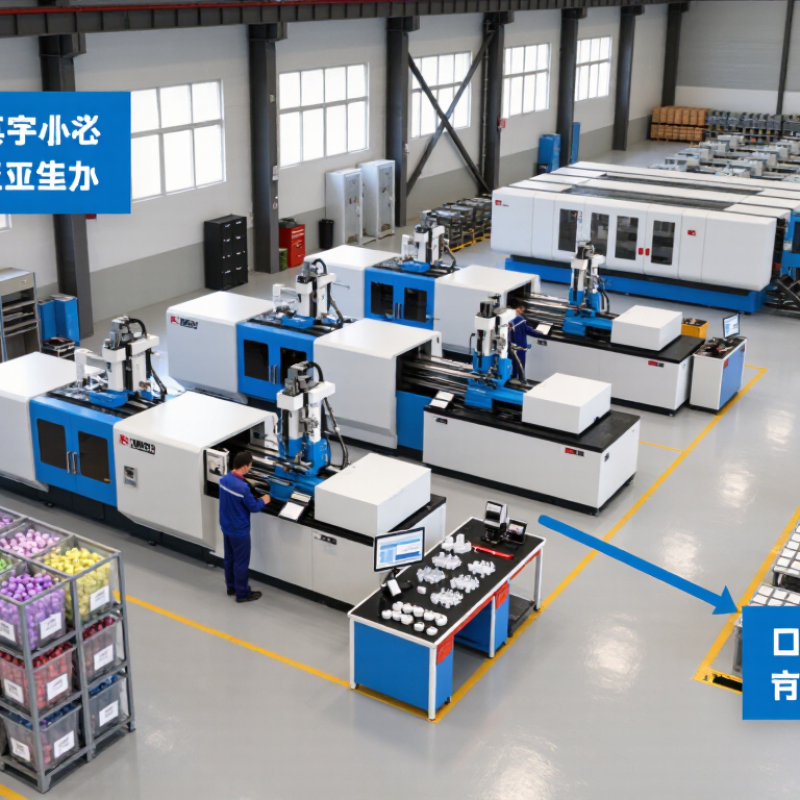
Choosing a Chinese plastic molding manufacturer starts with process definition, not a polished factory tour.
Injection molding suits high-volume parts with consistent dimensions. Blow molding fits hollow containers. Compression molding handles thermosets and fiber-reinforced components. Rotational molding supports large, hollow products with lower tooling pressure. Thermoforming remains practical for thin sheets and packaging structures.
Material choice changes every production decision. Common thermoplastics include ABS, PP, PA, PC, and POM. Engineers should review shrinkage, heat resistance, moisture absorption, and chemical exposure. PlasticsEurope reported global plastics production at about 400 million tonnes in 2022. China represented roughly 32% of that output. The scale is significant, but scale alone proves little. Request resin certificates, batch traceability, and documented drying conditions.
China’s manufacturing scope often covers mold design, CNC machining, sampling, mass production, assembly, and inspection. Grand View Research estimated the global injection molded plastics market at approximately USD 270 billion in 2023. A capable supplier should provide mold-flow analysis, dimensional reports, and process capability data.
Ask how they control flash, warpage, weld lines, and cycle-time variation. Visit the tooling area if possible. Photos can hide practical weaknesses. A low quotation may exclude maintenance, validation, or secondary operations.
I have seen specifications remain unclear. That mistake becomes expensive after steel is cut. Suppliers should also explain tolerances in plain language and admit where their process cannot reliably meet them.
Verify ISO 9001, ISO 13485, and IATF 16949 Quality Certifications
Choosing a Chinese plastic molding manufacturer requires more than comparing prices and machine lists. Quality certification offers a practical starting point. Ask for current ISO 9001, ISO 13485, or IATF 16949 certificates, depending on your product. ISO 9001 shows a controlled quality management system. ISO 13485 matters for medical device molding. IATF 16949 indicates automotive quality discipline. However, a certificate alone does not prove every production line performs well.
Check the certificate number, issuing body, validity dates, and certified site address. The scope should mention relevant molding, assembly, inspection, or tooling activities. A common mistake is accepting a certificate for another facility. Request the latest audit record or certificate copy through a secure channel. Then compare it with the certification body’s public register. During a factory visit, observe material labels, first article records, calibration tags, and nonconforming part controls. These details reveal whether procedures are actually used.
Tips: Ask for a live video audit when travel is difficult. Interview the quality manager about corrective actions, not just pass rates. Request sample inspection reports and traceability records. Verify how the factory handles engineering changes. A supplier may hold all three certifications, but its process can still need improvement. I would also test a small pilot order before approving mass production. Paperwork can look complete. Production evidence is harder to fake.
China Top Plastic Molding Manufacturers: How to Choose?
Verify ISO 9001, ISO 13485, and IATF 16949 Quality Certifications
The chart compares the publication years of three widely used quality-management standards. ISO 9001:2015 focuses on general quality management, ISO 13485:2016 is designed for medical-device quality systems, and IATF 16949:2016 targets automotive quality requirements. When evaluating a plastic molding manufacturer, verify the certificate number, validity period, certified site, scope of certification, and accredited certification body.
Compare Mold Tolerances from ±0.01 mm to Standard Production Ranges
China Top Plastic Molding Manufacturers How to Choose?
A mold tolerance of ±0.01 mm sounds impressive, but it is not automatically necessary. For precision connectors, optical parts, or tight sliding features, this range may protect assembly performance. However, thin walls, uneven cooling, and plastic shrinkage can reduce real accuracy after molding. A steel insert may measure perfectly, while the finished part moves several hundredths of a millimeter.
Ask how the manufacturer defines tolerance. Is it measured on the mold, the first article, or parts from continuous production? Reliable suppliers should explain their inspection method, measurement temperature, sampling plan, and equipment. A coordinate measuring machine, calibrated gauges, and documented inspection reports provide stronger evidence than a simple promise. Request capability data, such as Cp and Cpk, for critical dimensions. Small detail.
Standard production tolerances often fit general housings, covers, and brackets at roughly ±0.05 to ±0.20 mm, depending on size, resin, and geometry. Tighter requirements increase machining, trial, inspection, and maintenance costs. They may also extend delivery time. One common mistake is specifying ±0.01 mm everywhere. It can create unnecessary expense without improving product function. Review each critical dimension with an engineer, then connect the tolerance to assembly clearance, sealing, or movement. A careful manufacturer should challenge unrealistic drawings, not merely accept them. Even experienced teams occasionally miss material behavior during early trials; transparent correction is more valuable than confident wording.
Evaluate Mold Life, From 100,000 to Over 1,000,000 Production Cycles
China Top Plastic Molding Manufacturers: How to Choose?
Mold life should match your real production plan, not an impressive quotation. A basic aluminum or soft-steel mold may survive around 100,000 cycles. Hardened steel molds can exceed 1,000,000 cycles with correct maintenance. The difference depends on resin abrasiveness, injection pressure, cooling design, and part geometry. Glass-filled materials can wear gates and cavities quickly. Thin ribs may also create stress around inserts. Ask for a documented cycle estimate, not a vague promise.
Tips: Request sample parts, steel certificates, polishing records, and maintenance instructions. Confirm how cycle life was tested. Ask whether the estimate includes repairs, insert replacement, and planned cleaning. A serious manufacturer should explain these limits clearly. Inspecting a mold trial can reveal flash, uneven filling, ejector marks, or unstable dimensions. These details matter more than surface appearance.
From practical evaluations, I would also check the mold’s cooling balance and spare-part strategy. A mold may reach 1,000,000 cycles, but poor cooling can reduce production speed and increase rejection. That is an overlooked cost. I have seen buyers choose the cheapest tooling, then pay more through downtime and repeated adjustments. Still, cycle figures are never perfect forecasts. Material changes, operator habits, and maintenance quality can alter performance. Request inspection reports after trial production, and keep the communication records.
Assess Costs, Lead Times, DFM Support, and Export Compliance Data
China Top Plastic Molding Manufacturers: How to Choose?
Cost comparisons should include more than the quoted mold price. Request a line-by-line breakdown covering steel grade, cavity count, polishing, sampling, packaging, and freight. Confirm whether tax, inspection, and tooling maintenance are included. A low quote can hide expensive revisions later. Ask for recent project examples with similar resin, wall thickness, and annual volume. Practical experience matters more than polished promises.
Lead time should show separate stages: DFM review, steel preparation, machining, trial shots, corrections, and final approval. Ask for dated milestones, not “fast delivery.” Good suppliers provide DFM feedback before cutting steel. They should flag thin walls, sharp corners, sink marks, weld lines, and difficult ejection areas. Review the proposed changes with your engineer. One rushed approval can create months of trouble.
Export compliance deserves equal attention. Request commercial invoices, packing lists, material declarations, origin details, and accurate HS classification support. Check whether the supplier can provide test reports for the destination market. Confirm carton labels, pallet dimensions, and shipping documents before production starts. Keep records. Small errors can delay customs clearance. Estimates still change when resin availability, tooling corrections, or port schedules shift. That is normal, but unexplained changes are not. A capable manufacturer communicates problems early, documents revisions, and accepts responsibility for measurable deliverables.
China Top Plastic Molding Manufacturers How to Choose? - Assess Costs, Lead Times, DFM Support, and Export Compliance Data
The figures below are practical industry benchmarks for screening Chinese plastic injection-molding suppliers. Actual values depend on part geometry, resin, tooling steel, tolerance, annual volume, mold-cavity count, finishing, testing, and shipping terms.
| Evaluation Dimension | Practical Benchmark | What a Strong Supplier Should Provide | Evidence to Request | Selection Guidance |
|---|---|---|---|---|
| Mold Design and DFM Review | Initial DFM feedback commonly within 2–5 working days after receiving complete 2D and 3D data. | Gate, runner, draft angle, wall thickness, sink-mark, weld-line, ejection, and shrinkage analysis. | Redacted DFM reports, mold-flow screenshots, review checklist, and revision history. | Prefer documented engineering workflow Reject suppliers that quote without identifying molding risks. |
| Tooling Cost | Prototype or simple single-cavity tools may start in the low thousands of USD; production tools can range from several thousand to tens of thousands of USD. | A line-item quotation covering steel, cavities, slides, lifters, hot runner, surface texture, sampling, modifications, and spare parts. | Tooling specification, steel certificate, mold layout, payment milestones, and ownership terms. | Compare scope, not only price A low quote may exclude inserts, texture, testing, or correction rounds. |
| Part Price and Cost Transparency | Unit price should be separated into resin, cycle time, labor, machine rate, secondary operations, packaging, and logistics where applicable. | Volume-based pricing at multiple annual quantities and a clear statement of assumptions. | Cost breakdown, resin quotation basis, packaging specification, and sample invoice. | Use total landed cost Evaluate tooling amortization, scrap, freight, duties, and inspection costs. |
| Prototype Lead Time | Typical soft-tool or 3D-printed prototype planning is approximately 1–3 weeks, depending on process and complexity. | Defined sample quantity, inspection scope, material availability, and approval gates. | Project schedule showing design freeze, tool release, first trial, inspection, and sample dispatch. | Require milestone dates Do not treat a shipping date as the same as a first-article approval date. |
| Production Tool Lead Time | A conventional production mold often requires approximately 4–10 weeks after design approval; complex tooling may take longer. | Capacity planning for CNC, EDM, polishing, texturing, mold assembly, and trial molding. | Gantt chart, machine-capacity plan, trial-shot records, and tool-maintenance schedule. | Check schedule realism Confirm whether weekends, texture, hot-runner delivery, and customer approval are included. |
| Mass-Production Lead Time | After tooling approval, regular production is often planned at approximately 2–6 weeks, subject to order quantity and material availability. | Capacity reservation, production-control plan, safety-stock proposal, and escalation procedure. | Capacity report, purchase-order acknowledgment, production schedule, and on-time-delivery history. | Measure on-time delivery Ask for performance data based on confirmed dates, not informal estimates. |
| Material Control | Resin identification should include manufacturer, grade, color, lot number, and applicable regulatory status. | Approved-material list, incoming inspection, drying parameters, batch traceability, and controlled regrind policy. | Material certificates, certificates of analysis, SDS, lot records, and retained samples. | Require traceability For safety-critical parts, prohibit unapproved resin substitution or uncontrolled regrind. |
| Quality Management System | ISO 9001 is a common baseline; automotive programs may require IATF 16949, while medical programs may require ISO 13485 depending on scope. | Controlled work instructions, nonconformance process, corrective action, calibration, and change control. | Current certificate, certification scope, audit report, calibration records, and sample inspection plan. | Verify certificate scope A certificate is useful only when the covered site and activities match the project. |
| Dimensional Inspection | Inspection should be based on customer drawings, GD&T requirements, sampling plans, and agreed critical dimensions. | CMM or vision measurement where appropriate, calibrated gauges, first-article inspection, and capability tracking. | FAI report, CMM report, gauge list, calibration certificates, and control plan. | Define acceptance criteria early Agree tolerances, sample size, inspection method, and report format before tooling. |
| Surface Finish and Cosmetic Control | SPI, VDI, texture codes, gloss targets, color tolerances, and visual limit samples should be specified before production. | Approved master sample, cosmetic defect standard, lighting conditions, and controlled finishing subcontractors. | Texture plate, color chip, gloss measurement, limit samples, and cosmetic inspection checklist. | Avoid subjective approval Written visual standards reduce disputes over flow marks, weld lines, flash, and scratches. |
| Export Documentation | A standard export file may include commercial invoice, packing list, bill of lading or airway bill, and export declaration information. | Consistent product description, quantity, net/gross weight, country of origin, Incoterms 2020, and consignee information. | Redacted export document set, carton-marking example, HS-code discussion, and customs-broker contact. | Align documents before shipment The importer remains responsible for confirming destination-country import requirements. |
| Product Compliance | RoHS and REACH obligations may apply to electrical, consumer, or chemical-related products; requirements depend on destination and product category. | Material declarations, restricted-substance controls, supplier declarations, and test reports from competent laboratories when required. | RoHS/REACH declarations, test reports, SDS, conflict-minerals statement where relevant, and change-notification procedure. | Assess the finished product Do not rely only on a generic resin certificate when additives, coatings, or assembly materials are used. |
| Packaging and Shipment Protection | Packaging should be validated for stacking, moisture, abrasion, shock, and long-distance ocean or air transport. | Defined carton dimensions, pallet specification, desiccant policy, protective film, labeling, and drop-test or transit-test approach. | Packaging drawing, carton test record, packing photos, pallet treatment documentation, and shipping marks. | Calculate landed cost Compare EXW, FOB, CIF, or DDP only after confirming what services, duties, and risks each term includes. |
| Payment and Commercial Risk | Common arrangements may use staged payments for tooling and a balance after approved samples or before shipment. | Written tooling ownership, warranty period, mold-storage policy, refund or remedy terms, and change-order procedure. | Signed quotation, purchase agreement, tooling contract, warranty terms, and bank-account verification. | Control upfront exposure Use milestone payments and independent pre-shipment inspection for high-value orders. |
| After-Sales and Tool Maintenance | A responsible supplier should define response time, corrective-action timing, spare-part availability, and preventive-maintenance intervals. | Root-cause analysis, replacement-part plan, mold-history records, and engineering-change management. | Warranty policy, maintenance log, 8D example, spare-parts list, and escalation contacts. | Evaluate lifecycle support The lowest initial quote is not economical if the supplier cannot maintain the mold or resolve recurring defects. |
Recommended decision method: score each supplier from 1 to 5 for DFM capability, total cost, schedule reliability, quality systems, material traceability, export documentation, compliance evidence, communication, and after-sales support. Confirm all project-specific legal and regulatory requirements with the importer, qualified testing laboratories, and customs professionals before shipment.
Related Posts
-
2026 Top Precision Plastics Manufacturers for Global Buyers
-

How to Choose the Right Plastic Injection Molding Process?
-
How to Understand the Injection Molding Process for Buyers?
-

Top Tips for Successful Plastic Injection Molding Process?
-
10 Plastic Injection Buying Tips for Global Buyers?
-
10 Best Injection Molding Companies for Global Buyers