
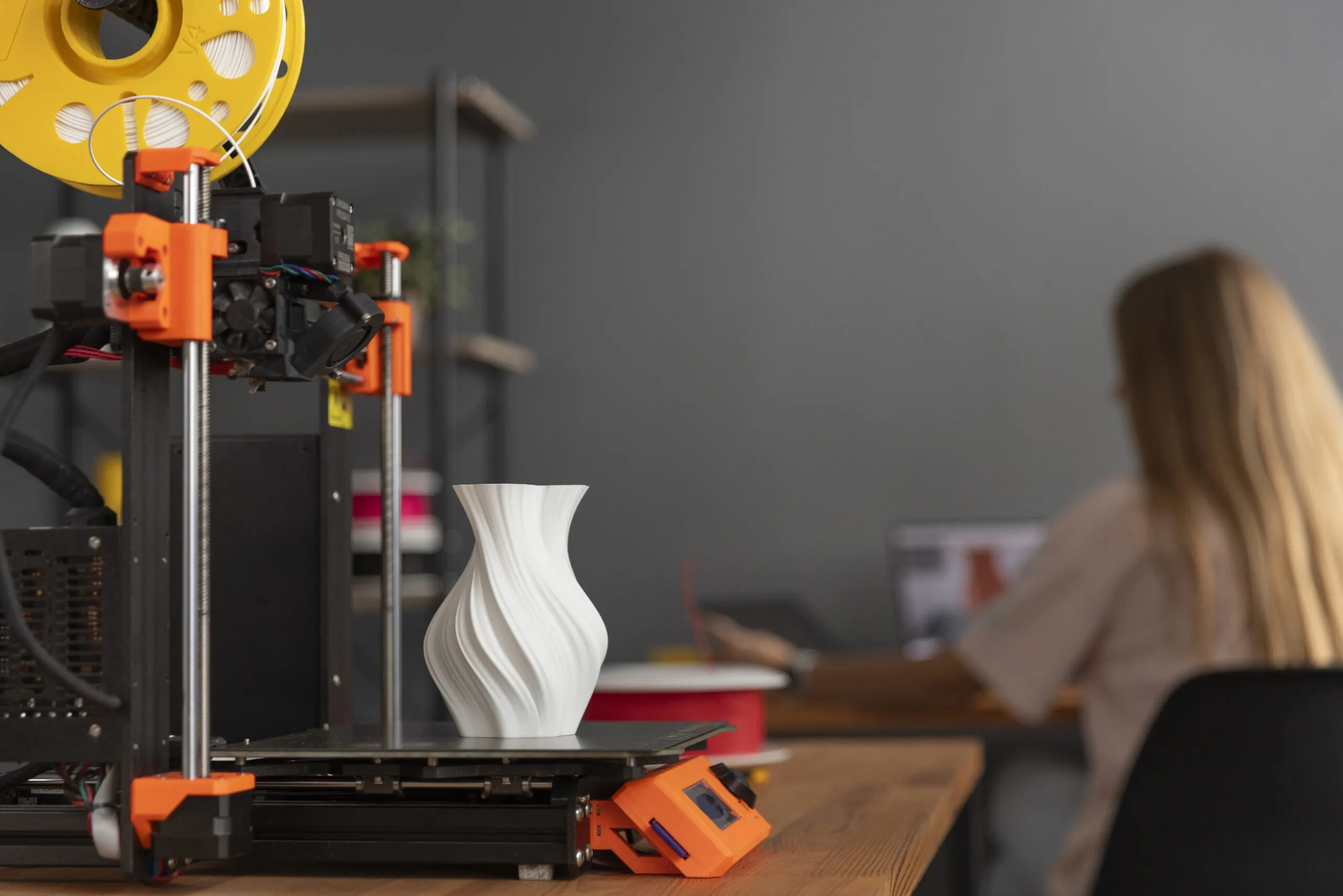
In today’s advancing manufacturing landscape, companies are faced with key decisions on how they are going to produce their plastic parts (injection molding or 3D printing). Whatever manufacturing method you choose, the outcome will have some distinct features and advantages, but the manufacturing process selection can impact productivity, costs, and the quality of the product.
At Welch Plastics, a reputable plastic manufacturer located in Las Vegas, NV, we know how to give a great custom fabrication experience in all manner of business and industrial markets. In this guide, I want to help you understand injection molding and 3D printing and help you understand the differences between both processes to determine which process is best for what you are trying to manufacture.
What is Injection Molding?
Injection molding is a process that is very well known in plastic manufacturing. Injection molding is the process of injecting molten plastic into a steel or aluminum mold. The plastic will cool and solidify to form the shape of the mold cavity.
Injection molding is very common due to its reliability and consistency in producing plastic components manufactured to high levels of durability and the capability to produce a large number of pieces to meet production demands. While injection fill is just the beginning of the injection molding process, its unique and versatile variety of applications includes automotive components, medical devices, and various consumer goods category products. Injection molding remains a fundamental process in producing plastic parts.
What is 3D Printing?
3D printing, or additive manufacturing, builds objects layer by layer from a digital file. It provides great design flexibility and is seeing increased use for functional prototyping, custom and bespoke products, and low-run production.
FDM (Fused Deposition Modeling), SLA (Stereolithography), and SLS (Selective Laser Sintering) or variations on these are the most commonly used processes (what your 3D printer uses), depending on the material requirements and application.
Speed and Scale
Injection Molding
- Best for high volume production
- Can produce volumes after the first mold is created
- Repeatable production of thousands-even millions-of the same part
3D Printing
- Best for low volume or prototyping
- Longer amounts of time to produce per unit, especially for more complex parts
- Great for one-off production, not the best for producing hundreds or thousands of parts
Winner: Injection molding for scalability and speed of production in mass production.
Material Range
Injection Molding
- Supports most thermoplastic materials, including ABS, polypropylene, polycarbonate, nylon, etc.
- Additives can be added for color, strength, whatever you can imagine!
3D Printing
- The great material range and options are getting better, but still a fraction of injection molding.
- Some engineering-grade plastics, but at a premium price.
Winner: Injection molding for material versatility and performance.
Design Complexity
Injection Molding
- Better with geometrically simple shapes or moderately complex parts.
- Complex parts require complex molds and are time-consuming and costly to design and fabricate.
3D Printing
- Excellent for intricate internal geometries, undercuts, joints, and lattice structures.
- No molds required, ideal for unique or inherently complex components.
Winner: 3D printing is best for parts with high design complexity and the ability to iterate quickly.
Cost Comparison
Injection Molding
- High up-front cost to be able to have molds built ($5K – $100k+ depending on complexity).
- After mold construction, the pull per part cost is extremely low.
- The best option for high production quantities.
3D Printing
- No tooling cost.
- Per part cost is higher (especially in volume) than injection molding.
- Better economic scenario for low production quantities or one-offs.
Verdict: Use injection molding for all high-volume projects and 3D printing for low-volume production or prototypes.
Quality & Finish
Injection Molding
- Very high surface finish quality and dimensional accuracy.
- Can achieve very tight tolerances and good aesthetics through mold design, polishability.
3D Printing
- Surface finish can be subjective based on the choice of printing.
- Most will require some array of post-processing (i.e., sanding, coating, curing).
Verdict: Injection molding for quality and consistency of the final part.
Environmental Considerations
Injection Molding
- Less waste per unit of parts being produced.
- Tooling will typically last longer and is a more sustainable option for higher production quantities.
3D Printing
- More waste per unit with support structures and failed prints.
- Some technologies on the market now have recyclable filament, but are still less successful on a unit-per-unit basis in comparison to injection molding.
Verdict: Injection molding, primarily when looking at sustainability for higher production quantities.
Best Use Cases for Injection Molding:
- High volume production runs
- Commercial-grade consumer products
- Automotive and aerospace-related parts
- Very tightly tolerated medical devices
- Custom fabrication at high volumes
Best Use Cases for 3D Printing:
- Rapid prototyping and testing
- Have unique geometries and custom parts with many intricacies
- Small production volumes or on-demand production
- Unique designs that generally do not need tooling costs
- Testing to validate the design before committing to full-scale injection mold production.
Which Manufacturing Method Should You Choose?
That said, injection molding is basically the gold standard for high-volume, low-cost, quality-produced plastic parts when you have a good manufacturing intent. So it provides a great option for scaling up, and scaling up gives you ultimately, the opportunity to choose repeatable, long-term, and cost-effective options for your business.
With that said, yes, it is a great option for providing rapid prototyping, custom components, and production complexity over units; there will always be a temptation to use 3D printing instead. Consider it a tool and an adjunct capability alongside your typical injection molding process.
In summary, the final application will always be based on the criteria you set at the onset of your project, but by further specifying your project goal, deadline, funding, and, importantly, design.
Your Partner in Custom Plastic Manufacturing in Las Vegas, NV
Being a plastic manufacturer in Las Vegas and also acting as consultants, we can help you sift and sort through to decide the right manufacturing method. We work with an experienced team, utilizing modern technology, and with decades of manufacturing experience, precision, and consistent, reliable parts fabrication. So, whether you are after custom fabrication, prototyping, or high volume production including plastic injection molding, we would love to partner with you on your project!!
From our quoting stage, you will feel great embarking on partnering with our talented team! Please feel free to reach out with your project details and request a free quote. Let us bring your ideas to reality with the utmost standards of plastic manufacturing!
Key Takeaways
- Injection molding will always have its place in high-volume production, lower cost per part, and highest quality surface finish.
- 3D printing will always have its place with prototyping, complex shapes, and low volume.
- Both methods of production will always have a place in the next phases of modern thinking around plastic injection molding.
- Welch Plastics can help you secure the right method for your project and will deliver unrivaled custom plastic fabrication no matter the scale, in Las Vegas and beyond.
