Posts
What Are the Best Precision Plastics Manufacturers in China?
Choosing the best precision plastics manufacturers in China requires more than comparing factory prices. It requires evidence of process control, material expertise, traceability, and consistent delivery. A polished sample can hide unstable production.
The global injection molded plastics market was valued at approximately USD 262.5 billion in 2023, according to Grand View Research. The report also expects continued growth through 2030. China remains a major manufacturing hub, supported by mature tooling networks, advanced automation, and extensive polymer supply chains. However, scale does not automatically mean precision. Buyers must examine inspection records, mold maintenance, tolerance management, and production experience.
Repeatability matters most.
John Bozzelli, founder of Injection Molding Solutions and a recognized scientific molding consultant, has repeatedly emphasized that “a robust process is a repeatable process.” This principle provides a practical way to assess precision plastics suppliers. Look for manufacturers using validated molding parameters, CMM inspection, real-time monitoring, and documented corrective actions. ISO 9001 certification is useful, but it should not replace factory-level verification. Medical and automotive projects may also require ISO 13485 or IATF 16949 systems.
This guide compares leading Chinese manufacturers through capability, quality evidence, communication, and application experience. It also considers less visible risks, including inconsistent resin drying, unclear tolerances, and weak engineering feedback. No supplier is perfect. Even an experienced factory can struggle with a difficult resin or complex micro-feature. That is why responsible selection depends on audited evidence, not impressive brochures.
Defining Precision Plastics: ±0.01 mm Tolerance, Materials, and Processes
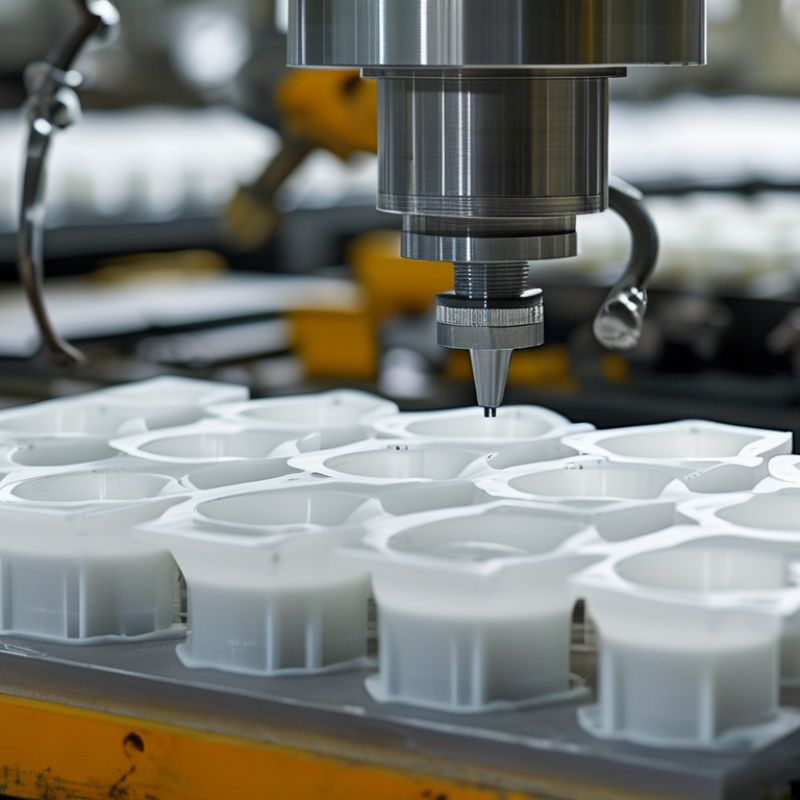
Precision plastics means more than a small number on a drawing. A ±0.01 mm tolerance describes a controlled dimensional limit, not a guarantee for every feature. ISO 20457 states that plastics tolerances depend on nominal size, material, process, and quality grade. Chinese manufacturers should therefore identify critical dimensions, datum references, and inspection methods before quoting. A 20-micrometre deviation can affect a miniature gear, seal groove, or optical housing.
Material selection changes the result. PEEK and LCP offer high temperature stability, while POM supports low-friction moving parts. Glass-filled nylon improves stiffness but may increase warpage and tool wear. Injection molding suits repeatable volumes, yet micro-molding demands precise gates, drying controls, and mold-temperature monitoring. CNC machining can hold tight dimensions on prototypes, but cycle time rises quickly. It is unforgiving.
Industry scale also matters. The OECD Global Plastics Outlook reports 353 million tonnes of plastic waste generated in 2019, with annual waste potentially reaching 1,014 million tonnes by 2060. PlasticsEurope’s Plastics—The Fast Facts 2024 reports global plastics production of about 414 million tonnes in 2023. These figures reinforce the need for efficient material use and stable process control. When evaluating Chinese suppliers, request capability studies, Cpk data, calibrated CMM records, and sample parts from production tooling. ISO 9001 certification helps, but it does not prove ±0.01 mm capability. Tool wear, shrinkage, and measurement temperature still require review. Some specifications may be unnecessarily tight. That deserves honest discussion.
Mapping China’s Manufacturing Base: Injection Molding, CNC, and Cleanrooms
What Are the Best Precision Plastics Manufacturers in China?
China’s precision plastics base is broad, but capability differs sharply by process and location. The China Plastics Processing Industry Association reported approximately 74.9 million tonnes of plastic products output in 2023. This scale supports deep specialization in injection molding, tooling, and engineering polymers.
Injection molding remains the practical starting point for repeatable plastic components. Buyers should examine mold-flow analysis, cavity balance, process capability data, and dimensional inspection records. A capable factory will connect resin drying, molding parameters, and inspection results. Ask for Cpk data on critical dimensions, not only attractive sample parts.
CNC machining adds flexibility for prototypes, metal inserts, and low-volume polymer components. The best production route depends on geometry, tolerance, volume, and material behavior.
Cleanroom manufacturing requires stricter evidence. ISO 14644-1 classifies cleanrooms by airborne particle concentration, while ISO 14644-2 requires ongoing monitoring plans. A cleanroom claim means little without particle records, pressure logs, gowning controls, and contamination procedures. Site audits should also review humidity control and operator movement. Small details matter.
Industry databases and supplier reports often emphasize machinery counts, yet equipment alone cannot prove stability. A newer machine may still produce inconsistent parts. I have seen specifications look excellent until measurement systems reveal repeatability gaps. That weakness deserves attention. Manufacturers handling medical, optical, or microfluidic components should provide material traceability, calibrated equipment records, and documented corrective actions. No factory is ideal for every tolerance, resin, or cleanroom requirement.
Evaluating Manufacturers by ISO 9001, ISO 13485, and IATF 16949
What Are the Best Precision Plastics Manufacturers in China?
Evaluating a precision plastics manufacturer requires more than checking machine lists. ISO 9001 shows whether quality procedures are controlled across purchasing, production, inspection, and delivery. Ask for the current certificate and verify its scope. It should cover the processes you actually need.
ISO 13485 matters for medical components because risk control, traceability, and process validation receive deeper attention. Review batch records, material identification, and corrective action reports. For automotive projects, IATF 16949 indicates stronger expectations for defect prevention, process capability, and supplier management. Practical evidence includes control plans, measurement studies, PPAP experience, and documented reaction procedures. A certificate alone can mislead. I have seen capable teams lose consistency when maintenance records were incomplete.
Tips: Request sample inspection data, not only polished presentations. Check how operators handle a dimensional failure. Visit the production floor if possible. Look for calibrated gauges, clean storage areas, labeled resin, and visible work instructions.
Experienced buyers should compare audit findings with daily manufacturing behavior. A supplier may hold ISO 9001 but lack mature validation for complex medical tooling. Another may understand IATF documentation but struggle with tight cosmetic requirements. Ask how they manage mold wear, humidity, shrinkage, and engineering changes. The answer should include records and responsible owners. It may not be perfect. That honesty can be more useful than confident promises. Review communication speed, escalation habits, and technical judgment before approving a long-term program.
Comparing Capacity Through Class 100,000 Cleanrooms and Lead Times
What Are the Best Precision Plastics Manufacturers in China?
Comparing Capacity Through Class 100,000 Cleanrooms and Lead Times
A Class 100,000 cleanroom, broadly comparable to ISO 8, supports controlled molding and assembly. It does not automatically prove high manufacturing quality. During supplier evaluations, inspect air-change records, pressure logs, particle monitoring, and gowning procedures. Ask whether the room supports the entire process or only final assembly.
Capacity also depends on machine availability, mold maintenance, resin control, and inspection equipment. A supplier may operate a large cleanroom but have limited production space. Check the number of molding machines, their clamping ranges, and shift patterns. Request recent output data for parts with similar tolerances. Numbers matter.
Lead times require closer review. A realistic quotation should separate design review, mold fabrication, first-article sampling, validation, and mass production. Standard tooling may take several weeks, while complex molds need longer trials. Material availability can add unexpected delays. Confirm buffer stock, backup equipment, and approval procedures before placing an order.
Shorter is not always better. A rushed sample may hide warpage, flash, or unstable dimensions. I would rather see a clear timeline than an impressive promise. Still, suppliers sometimes provide vague schedules, and buyers may accept them too quickly. That is a weakness worth correcting. Reliable manufacturers explain capacity limits, report deviations early, and connect cleanroom controls with measurable inspection results.
What Are the Best Precision Plastics Manufacturers in China?
Comparing production capacity through Class 100,000 cleanrooms and typical lead times
This non-company-specific benchmark compares common precision injection-molding capacity tiers. Class 100,000 cleanrooms correspond to ISO 8, with a maximum concentration of 3,520,000 particles of ≥0.5 μm per cubic meter. Actual lead times vary according to tooling complexity, resin selection, validation requirements, and order volume.
Selecting Suppliers Using PPAP, Cpk ≥1.33, Traceability, and Cost
China’s precision plastics sector produced approximately 74.9 million tonnes of plastic products in 2023, according to industry association statistics. Scale alone does not identify a dependable supplier. Request a PPAP package before approving production. It should include process flow, FMEA, control plans, measurement results, material certificates, and approved samples. PPAP reveals whether a factory controls variation or simply presents polished samples.
Cpk ≥1.33 is a useful screening threshold for critical dimensions, but only with a stable process and representative data. Ask for raw capability studies, sample size, specification limits, and gauge repeatability results. A single excellent batch proves little. Numbers can mislead. Verify cavity-level results, especially for multi-cavity molds, where one cavity may drift quietly. The PPAP Fourth Edition framework supports this evidence-based approval approach.
Traceability should connect each part to resin batch, mold cavity, machine, operator, inspection record, and production timestamp. A practical audit should test this chain using one randomly selected carton. Cost analysis must include tooling maintenance, scrap, inspection, packaging, logistics, and engineering changes—not only the quoted piece price. ISO 9001:2015 emphasizes controlled processes and documented evidence, yet paperwork can still hide weak shop-floor discipline. I would request a live line review and a small pilot order. That extra step costs time, but it can expose unstable molding conditions before they become expensive field failures.
| Supplier Code | Primary Capability | Typical Materials | Dimensional Tolerance | PPAP Readiness | Average Cpk | Lot Traceability | Quality-System Evidence | Typical Lead Time | Cost Index | Overall Assessment |
|---|---|---|---|---|---|---|---|---|---|---|
| CN-P01 | High-precision injection molding | PA, POM, PC, PEEK | ±0.025 mm | Complete PPAP | 1.67 | Resin lot, machine, mold, operator, and inspection record | ISO 9001; documented control plan and MSA records | 4–6 weeks | 108 | Best for critical parts |
| CN-P02 | Medical and laboratory plastic components | PP, PC, POM, medical-grade compounds | ±0.030 mm | Complete PPAP | 1.54 | Material certificate, cavity, batch, inspection, and packaging records | ISO 9001; ISO 13485 manufacturing controls | 5–8 weeks | 121 | Best for regulated applications |
| CN-P03 | Automotive interior and functional parts | ABS, PP, PA66, PC/ABS | ±0.040 mm | Complete PPAP | 1.48 | Barcode-based lot and process history | ISO 9001; IATF 16949 process structure | 5–7 weeks | 103 | Strong value for volume programs |
| CN-P04 | Micro molding and miniature components | POM, LCP, PPS, PEEK | ±0.015 mm | Complete PPAP | 1.76 | Full cavity-level traceability with digital inspection history | ISO 9001; documented SPC and gauge calibration system | 6–9 weeks | 132 | Best precision performance |
| CN-P05 | Multi-cavity consumer and industrial parts | ABS, PP, TPE, PC | ±0.050 mm | Partial PPAP | 1.39 | Material and production-lot records; limited cavity tracking | ISO 9001; standard inspection plans | 3–5 weeks | 92 | Best for cost-sensitive programs |
| CN-P06 | Overmolding and insert molding | PA, TPE, TPU, PC/ABS | ±0.040 mm | Complete PPAP | 1.45 | Insert batch, resin lot, process parameters, and final inspection | ISO 9001; documented work instructions and control plans | 4–7 weeks | 110 | Balanced capability |
| CN-P07 | Engineering prototypes and low-volume production | ABS, PC, PA, POM, resin blends | ±0.060 mm | Partial PPAP | 1.34 | Job number, material batch, and inspection report | ISO 9001; basic process documentation | 2–4 weeks | 98 | Suitable for launch and pilot builds |
| CN-P08 | Large molded housings and structural enclosures | PP, ABS, PC/ABS, glass-filled PA | ±0.070 mm | Partial PPAP | 1.36 | Production batch and raw-material traceability | ISO 9001; incoming and final inspection controls | 4–6 weeks | 89 | Strong cost position |
| CN-P09 | Optical and appearance-critical molded parts | PC, PMMA, optical-grade polymers | ±0.030 mm | Complete PPAP | 1.52 | Resin, mold cavity, visual standard, and inspection data | ISO 9001; controlled clean-area and appearance standards | 5–8 weeks | 118 | Best for appearance-sensitive parts |
| CN-P10 | Precision gears, clips, and mechanical components | POM, PA, PPS, reinforced polymers | ±0.025 mm | Complete PPAP | 1.59 | Material, cavity, tooling revision, and measurement records | ISO 9001; SPC, calibration, and corrective-action system | 4–7 weeks | 112 | Recommended for repeatable mechanical parts |
| Cost Index reference: 100 represents the median quoted cost within this benchmark; a lower value indicates a lower relative piece price. Cpk values are process-capability indicators measured against specified critical dimensions, with 1.33 commonly used as the minimum acceptance threshold for stable production. Lead times exclude international transportation and customer approval delays. | ||||||||||
Related Posts
-
2025 Top 5 Colored Acrylic Sheets for Stunning Home Decor and DIY Projects
-

Why Choose Injection Molding Services in Las Vegas?
-

Top 10 Best Plastic Panels for Your Home and Garden?
-

How to Choose the Best Cast Acrylic for Your Projects?
-

What are the Best Uses of Acrylic Plastic in 2026?
-

China Top Plexiglass Sheets Cut to Size for Your Needs?