How to Get Plastic Sheet Cut to Size
Ordering plastic sheet cut to size sounds simple. The hard part is defining “the right size” before the first cut. A few millimeters can affect a panel’s fit, mounting holes, or edge alignment. Material matters, too: acrylic, polycarbonate, and PVC differ in strength, flexibility, and finishing needs.
The scale of the plastics industry puts these small choices in context. Plastics Europe’s Plastics – the Fast Facts 2023 reports 400.3 million tonnes of global plastics production in 2022. That figure covers plastics broadly, not sheet products alone, so it should not be mistaken for sheet-market demand. Still, it shows why clear specifications matter across a diverse materials sector. A useful order lists the plastic type, thickness, finished width and length, quantity, and any holes or cut-outs. Include units, and check whether measurements refer to the finished part or the raw sheet. Simple details. They prevent avoidable confusion. Ask the supplier about achievable tolerances and edge finish; cutting method and material thickness can affect the result. For a visible panel, request a sample or confirm how the edges will look. For a close-fitting part, measure the opening in more than one place. It may not be perfectly square. This guide explains how to prepare dimensions, choose a suitable sheet, and review a quote before ordering, so your plastic sheet cut to size is more likely to fit its real purpose.
Define the Plastic Sheet’s Purpose and Required Dimensions
Before ordering a plastic sheet cut to size, define its job and final dimensions. Will it support a load, protect a surface, or fit inside a frame? A clear panel for a dusty workshop needs different thickness and impact resistance than a lightweight display insert. Note exposure to sunlight, heat, moisture, and cleaning chemicals. Small details matter.
Measure the opening at several points; frames are not always square. Record the usable width and height, sheet thickness, edge finish, and any holes or notches. Leave room for expansion where temperatures change, and ask the cutter about achievable tolerances and kerf. PlasticsEurope’s 2023 report, Plastics—The Fast Facts, estimates global plastics production at 400.3 million tonnes in 2022. That scale reflects many applications, not one universal sheet specification. A practical choice still depends on the actual conditions. I sometimes see people measure only once; it saves seconds, but can waste a whole panel.
Tips: Use a tape measure for a rough check, then verify with a steel rule. Sketch the panel and label every edge. Confirm whether dimensions describe the finished piece or the cut path. Be precise, but allow for real-world fit.
How to Get Plastic Sheet Cut to Size - Define the Plastic Sheet’s Purpose and Required Dimensions
The sizes below are practical planning examples, not standard stock sizes. Confirm material suitability, available sheet sizes, cutting method, and achievable tolerances with your supplier before ordering.
| Purpose |
Example Material |
Example Finished Dimensions |
Example Thickness |
Details to Confirm Before Cutting |
| Protective cover for a small display or control panel |
Clear acrylic (PMMA) |
300 × 200 mm (11.8 × 7.9 in) |
3 mm (0.12 in) |
Whether the panel needs drilled mounting holes, rounded corners, or polished edges. |
| Impact-resistant guard or machine shield |
Clear polycarbonate (PC) |
600 × 400 mm (23.6 × 15.7 in) |
6 mm (0.24 in) |
Required impact performance, mounting method, edge finish, and any relevant safety requirements. |
| Wear surface for a workshop or utility area |
High-density polyethylene (HDPE) |
500 × 300 mm (19.7 × 11.8 in) |
10 mm (0.39 in) |
Expected load, support beneath the sheet, exposure to chemicals, and whether the surface needs texture. |
| Light-diffusing panel for a sign or display |
Opal or translucent acrylic (PMMA) |
450 × 300 mm (17.7 × 11.8 in) |
3 mm (0.12 in) |
Required light transmission, lighting arrangement, edge treatment, and mounting clearance. |
| Interior liner for a storage or utility cabinet |
Polypropylene (PP) |
700 × 400 mm (27.6 × 15.7 in) |
4 mm (0.16 in) |
Operating temperature, chemical exposure, support spacing, and whether the panel must be flexible. |
| Small window insert for an indoor project |
Clear acrylic (PMMA) |
250 × 180 mm (9.8 × 7.1 in) |
4 mm (0.16 in) |
Opening dimensions, expansion clearance, fixing method, and whether a glass-like edge finish is needed. |
Choose a Plastic Type and Sheet Thickness
How to Get Plastic Sheet Cut to Size
Choose the resin before entering dimensions. Acrylic is clear and keeps a polished edge, but it can crack under impact. Polycarbonate handles impacts better and suits guards or machine covers. HDPE resists moisture and many chemicals, though it is less rigid. CAMPUS plastics database listings put typical densities near 1.18 g/cm³ for acrylic, 1.20 for polycarbonate, and 0.95 for HDPE. These figures help estimate weight, not strength. PlasticsEurope’s Plastics – the Fast Facts 2023 reported 400.3 million tonnes of global plastic production in 2022. That broad market makes material-specific data essential. Check the exact grade and its technical data sheet.
Thickness depends on span, load, support, and how much flex you can accept. A thin panel may bow across a wide opening, even when its edges fit perfectly. For a plate of the same material and shape, bending stiffness rises roughly with thickness cubed; doubling thickness can make it about eight times stiffer. This is a useful estimate, not a design guarantee. For load-bearing parts, review the application and consult appropriate test data. ASTM D638, for example, specifies a method for measuring tensile properties.
Tips: Measure the opening in several places. Specify the material, thickness, finished dimensions, and edge finish. Allow for movement if temperatures change. A snug fit can still be wrong. Consider testing one small piece before ordering a full sheet.
Measure the Area and Specify Cut Sizes
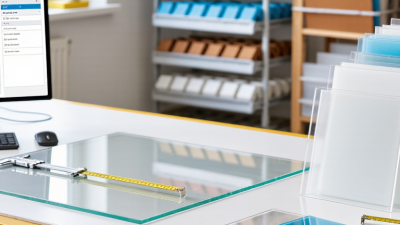
Measure the finished opening, not just the old sheet. Check the width and height at several points, since frames can be slightly out of square. Record the smallest usable measurements and note where each one was taken. A tape measure can flex on a long span, so ask someone to hold the far end or use a straightedge as a reference. Small errors matter.
Write every cut size clearly, with width and height labeled. Use one unit throughout, such as millimetres or inches, and specify the required thickness separately. If the sheet must fit inside a frame, confirm whether the fabricator needs the exact opening size or a smaller finished size. Do not guess the clearance. Plastic can expand with temperature, and the right allowance depends on the material, sheet size, and installation. Check the supplier’s guidance.
A quick sketch helps. Mark corners, holes, notches, and which face should point outward. Include dimensions from fixed edges, rather than describing a feature as “near the corner.” That sounds clear until someone has to cut it. It is easy to rush this part; a tidy drawing can still contain a bad measurement. Review the figures against the actual space before ordering, and ask the cutter to flag any dimension that seems inconsistent.
Select a Cutting Method or Plastic Supplier
How to Get Plastic Sheet Cut to Size
Choosing a cutting method depends on the plastic, sheet thickness, edge finish, and required tolerance. A CNC router works well for detailed shapes and thicker sheets, while a fine-tooth saw can suit straight cuts on many materials. Laser cutting may leave a polished edge on some plastics, but heat can distort others. Confirm the method is compatible with your exact material.
Small details matter.
A narrow cut can still leave burrs, chips, or a slightly rough edge.
When selecting a plastic supplier, ask what cutting equipment they use and what tolerances they can reliably hold. Share a dimensioned drawing, including hole locations, corner radii, and whether measurements are finished dimensions. Also ask how sheets are protected during cutting and packing. A useful supplier will clarify material grade and explain any limits before taking the order.
Ask before ordering.
It is tempting to choose the lowest quote, but an unclear edge specification can lead to extra finishing work. Requesting a small sample or a test cut can help you judge the result, though it may add time. Tell the supplier where the part will be used; a display panel and a fitted machine cover may need very different finishes.
Check the Finished Pieces and Refine the Edges
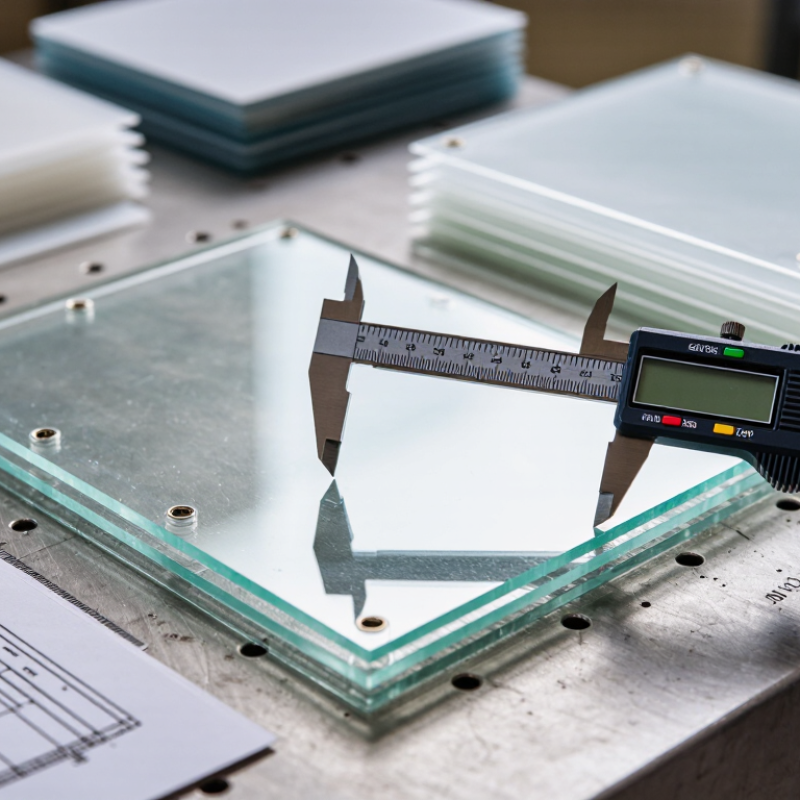
After cutting, lay each plastic sheet on a flat, clean bench. Check its length and width with a steel rule or caliper, and compare both diagonals to spot a skewed cut. Look closely. A small chip can hide beneath protective film, so inspect both faces under bright, angled light. PlasticsEurope’s Plastics—The Fast Facts 2024 reports global plastics production reached 413.8 million tonnes in 2023. That scale makes repeatable checks valuable, though production volume alone says nothing about an individual piece’s accuracy. ASTM D5947 provides recognized methods for measuring dimensions of solid plastic specimens; use a consistent measuring method and record any agreed tolerances.
Feel the edge. A burr may snag a cloth or prevent a panel from sitting flush. Remove light roughness with a fine abrasive block, moving evenly and keeping the sheet supported. For acrylic, avoid pressing hard: heat and stress can worsen small cracks. Wipe away dust, then inspect corners and holes again. One common oversight is sanding an edge before confirming the cut dimensions; that can slightly change the final size. It happens. If a piece still rocks on the bench or shows a cloudy, chipped edge, mark it for rework rather than forcing it into place. Keep the protective film on during handling when possible, but lift it at the edges to check for trapped debris.
How to Get Plastic Sheet Cut to Size: Check the Finished Pieces and Refine the Edges
Example inspection readings for five panels with target dimensions of 300 × 200 mm. Compare each finished piece with its target, then remove visible burrs with a suitable deburring tool and recheck the edges.