Posts
Best Plastic Injection Molding Companies in China?
Choosing among the best plastic injection molding companies in China takes more than comparing unit prices. A low quote can hide expensive tooling changes, unclear inspection plans, or long communication gaps. Details matter. A useful principle associated with molding expert John Bozzelli is, “Injection molding is a science, not an art.” Buyers should look for suppliers who can explain how they control process variables, not just promise consistent parts.
This guide explores how to assess Chinese manufacturers by tooling capability, material knowledge, production scale, quality procedures, and export experience. Ask for evidence that matches your project: a dimensional inspection report, sample parts, resin traceability details, and a clear plan for handling defects. For a molded housing, even a small mismatch around a snap-fit can affect assembly. For a medical or automotive component, documentation and validation needs may be very different. No single company is best for every application.
Price still matters, of course. But comparing quotes is useful only when scope, resin grade, tooling ownership, and inspection requirements are aligned. A factory tour or video call can reveal how organized the shop floor feels, though it cannot replace verified records. And a polished website proves very little. This overview is a starting point, not a substitute for supplier checks. The right partner should answer technical questions plainly, identify risks early, and admit when a requirement needs clarification. That last part is easy to overlook.
Overview of China’s Plastic Injection Molding Industry
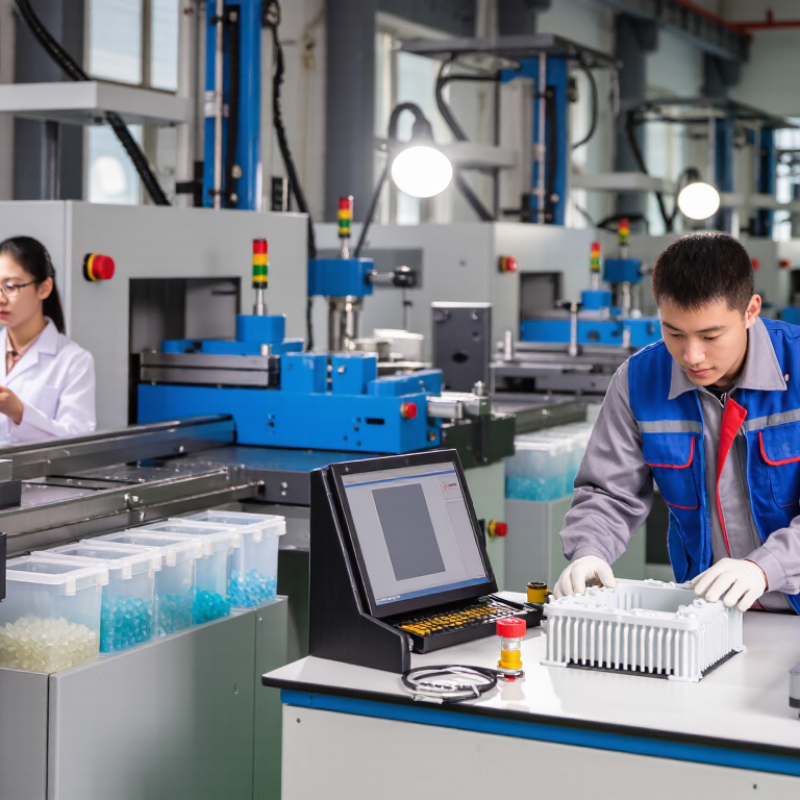
China’s plastic injection molding industry combines mold design, precision machining, resin processing, and assembly under a broad manufacturing supply network. Many suppliers can move from a 3D model to a steel mold and trial parts without changing production partners. This proximity can reduce handoff delays, though schedules still depend on mold complexity and clear specifications.
Factories produce parts for household appliances, electronics, vehicles, and medical equipment. On the shop floor, operators monitor melt temperature, injection pressure, cooling time, and part weight. A small change in cooling can leave a visible sink mark or shift a dimension. Reliable producers document these settings and inspect samples with gauges, calipers, and visual checks. Ask how they control resin drying and mold maintenance, not only their advertised machine capacity.
The picture is not uniformly efficient. Smaller workshops may offer flexible pricing but have limited process records or backup equipment. That matters when orders grow. Buyers should review sample parts, material certificates, inspection plans, and communication practices before approving a tool. A factory visit can reveal practical details, such as labeled resin bins and a clean toolroom, but tidy floors alone prove little. China’s scale is an advantage, not a substitute for careful supplier qualification.
China’s reported plastic products output rose from 76.03 million tonnes in 2020 to 80.04 million tonnes in 2021, then declined before recovering to 77.07 million tonnes in 2024. These figures cover plastic products across multiple manufacturing processes; they are industry context, not injection-molding output alone. Source: National Bureau of Statistics of China.
Criteria for Evaluating Injection Molding Companies
Choosing an injection molding supplier in China requires more than comparing quoted prices.
Start with process capability. Ask which resin grades, part sizes, and tolerances the factory routinely handles. Request recent inspection records for parts similar to yours, not just a polished sales sample. Check whether the shop uses calibrated gauges and records results by production lot. Small details matter. A thin flash line near a snap-fit, for example, can turn assembly into rework. Ask how design reviews address gate location, cooling, and likely warpage before the mold is built.
Assess equipment and people together. Machine tonnage alone says little; confirm that shot size and clamp force suit your part. Ask who maintains the molds and how often preventive checks occur. Find out what happens when a cavity drifts out of tolerance. Review material drying, color changes, and traceability during a site visit or live video walkthrough. Clear drawings, written change control, and realistic lead times help prevent surprises. No supplier is flawless. An audit can still miss a weak shift handoff, so request a small pilot run and inspect parts across multiple cycles before approving volume production. The first quote is only a starting point.
Profiles of Leading Plastic Injection Molding Companies in China
Profiles of leading plastic injection molding companies in China should compare shop-floor capability, not just machine counts. Grand View Research estimated the global injection-molded plastics market at USD 387.5 billion in 2023, with a projected 4.7% annual growth rate through 2030. That scale makes supplier selection consequential. A high-volume molder may specialize in automotive or household parts, using automated cells and in-line inspection. A precision-focused supplier may instead handle tight tolerances, complex tooling, and smaller production runs. Details matter.
A useful profile describes mold design support, resin traceability, sample approval, and change control. Ask how operators manage a short shot or a scratched cavity, not only what equipment appears in the brochure. An export-oriented supplier may offer clear documentation and structured project updates, while a local production partner may respond faster to tooling changes. These are tendencies, not guarantees. No profile is perfect. Grand View Research’s figures describe the wider market, not any individual factory, so buyers should verify claims through audits, sample parts, and production records. A polished website can still leave important questions unanswered.
| Capability Profile | Typical Project Focus | Common Machine Range | Materials Often Processed | Relevant Processes | Useful Evaluation Criteria |
|---|---|---|---|---|---|
| Precision Components | Small, close-tolerance parts for electronics, instruments, and consumer products. | Often small-to-medium presses; machine size should be matched to the part, mold, and resin. | ABS, PC, PA, POM, PP, and engineering-grade resins, subject to design and application requirements. | Scientific molding, insert molding, multi-cavity molding, and dimensional inspection where specified. | Ask for capability studies, measurement methods, tolerance agreement, process controls, and samples from production tooling. |
| Automotive and Industrial Parts | Functional components, housings, clips, and larger interior or industrial parts. | Medium-to-large presses; required clamping force depends on projected part area, material, and mold design. | PP, PA, PBT, PC/ABS, and reinforced grades where the design calls for them. | Insert molding, overmolding, hot-runner tooling, and automated part handling may be available. | Check traceability, change control, validation records, production capacity, and any customer-specific automotive quality requirements. |
| Packaging and High-Volume Products | Caps, closures, containers, and other repeat-production packaging components. | Press size and cavity count vary with product dimensions, cycle time, and mold configuration. | Commonly PP, PE, PET, and other resins selected for the product’s performance and regulatory needs. | Multi-cavity molding, automated take-out, in-mold labeling, and thin-wall molding when suitable. | Review cycle-time evidence, cavity balance, scrap monitoring, food-contact documentation when applicable, and continuity plans. |
| Large-Part Molding | Large housings, equipment covers, furniture components, and other bulky molded parts. | Large-tonnage presses may be required; the necessary capacity is determined by mold and part specifications. | PP, ABS, HDPE, and other thermoplastics selected for stiffness, impact, weather, or chemical requirements. | Large-part injection molding, gas-assisted molding, structural-foam molding, or secondary assembly where offered. | Confirm platen and tie-bar dimensions, mold handling capacity, machine availability, part-weight limits, and trial-mold access. |
| Export-Oriented OEM/ODM | Custom products developed for overseas buyers, from prototype tooling through repeat production. | Equipment range depends on the product portfolio; confirm the actual press list for the intended project. | Material choice is application-specific and should be supported by resin identification and technical documentation. | Tool design and manufacture, injection molding, finishing, assembly, and export packaging may be offered. | Assess engineering communication, mold ownership terms, inspection plans, compliance documentation, lead-time assumptions, and after-sales support. |
| Comparison note: These are general capability profiles, not audited profiles of named companies. Machine ranges, materials, certifications, and services vary by factory and project; verify them directly against current equipment lists, certificates, samples, and written quotations. | |||||
Key Manufacturing Capabilities and Industries Served
Best Plastic Injection Molding Companies in China?
Key Manufacturing Capabilities and Industries Served
China has a substantial plastics supply base. Plastics Europe’s Plastics – the Fast Facts 2024 report estimates that China accounted for about 32% of global plastics production in 2023. This figure covers plastics broadly, not injection molding alone. This benchmark has limits. Strong manufacturers combine mold-flow analysis, CNC-machined tooling, multi-cavity molds, and documented process controls. Ask to see dimensional inspection records, resin traceability, and samples made with the production tool—not just a polished prototype.
Suppliers serve automotive, electronics, appliances, packaging, and medical-device manufacturing. Each sector has distinct needs: thin-wall filling for packaging, consistent dimensions for electronic enclosures, and validated processes for medical components. Check whether a supplier can explain resin selection, shrinkage allowances, cycle-time targets, and change approvals. A low quote may hide weak tooling assumptions. Scale alone does not guarantee quality.
Tips: Share your CAD model, expected volume, resin, and critical dimensions when requesting a quote. Ask for a first-article inspection report and a small pilot run. Confirm the factory’s press capacity and quality records. Paper claims are not enough. Clear drawings matter; vague gate-location or cosmetic requirements can still cause avoidable rework.
How to Select a Suitable Chinese Molding Partner
China’s manufacturing scale offers many molding options, but scale alone does not prove a supplier can meet your specifications. PlasticsEurope’s Plastics—The Fast Facts 2023 report estimates China produced 32% of global plastics in 2022. That figure describes material production, not mold quality or delivery reliability. Grand View Research valued the global injection-molded plastics market at $278.3 billion in 2023, underscoring the sector’s breadth.
Start with the part, not the quotation. Share the resin grade, annual volume, tolerance requirements, and expected tool life. Ask how the supplier checks mold steel, cooling channels, and shot capacity against your design. Review sample inspection reports and confirm who approves engineering changes. During a factory review, look for labeled resin, recorded machine settings, and organized measurement tools. Details matter.
Compare quotes line by line, including tooling, sampling, maintenance, and freight. A low unit price can conceal costly assumptions about scrap rates or mold repairs. Request a pilot run and inspect parts from different points in the run, not just one polished sample. Communication can still be uneven; test it with a real technical question before committing. That takes time.
Related Posts
-
What Are the Best Injection Molding Companies in China?
-
10 Plastic Injection Buying Tips for Global Buyers?
-
8 Tips for Choosing Injection Molding in Las Vegas Suppliers
-
What Types of Plastic Parts Are Best for Global Sourcing?
-
Top 10 Types of Plastic Parts Global Buyers Need?
-

2026 How to Find the Best Injection Molding in Las Vegas?