Posts

10 Tips for Buying Plastic Parts

Buying plastic parts is not just a matter of comparing prices or choosing a resin by name. A component that looks sturdy on a screen may warp after molding, crack around a screw boss, or fail when exposed to heat. Small details matter. Wall thickness, tolerances, surface finish, expected production volume, and the part’s working environment all affect cost and performance. A clear buying process helps you ask better questions before approving a sample or placing a larger order.

John Beaumont, an injection-molding specialist and author of Runner and Gating Design Handbook, has written extensively about mold design and process considerations. A practical paraphrase of the principles in his work—not a verbatim quotation—is: “A reliable molded part depends on matching the design, material, and molding process.” That idea is useful when comparing suppliers. Ask how they control dimensions, inspect samples, and handle design changes. Request material data and clarify whether quoted prices include tooling, packaging, and shipping. Get the details in writing.

This guide’s 10 tips cover specification, material selection, supplier evaluation, sampling, quality checks, and total cost. Look closely at a physical sample. Does a thin edge feel brittle? Are there visible sink marks near thick sections? These clues can prompt useful follow-up questions, though they cannot replace proper testing. Even a careful checklist has limits; production conditions may reveal problems that a prototype never showed. Make room for that uncertainty, and confirm critical requirements before committing.
10 Tips for Buying Plastic Parts

Define the Part’s Purpose, Function, and Operating Conditions

Before comparing plastic materials or requesting quotes, define what the part must do. Is it a flexible seal, a load-bearing bracket, or a protective cover? The answer affects material choice, wall thickness, and shape. Write down the part’s main function and the cost of failure. A cracked clip may stop assembly; a warped cover may only look poor. That difference matters.

Describe the operating conditions with real details. Note expected loads, temperature range, exposure time, moisture, cleaning agents, sunlight, and vibration. A part used near a warm motor faces different demands from one stored indoors. Include how often it will be bent, snapped, or assembled. Small repeated stresses can cause failure even when a part survives a quick hand test. Test a prototype in conditions that resemble actual use.

Fit and assembly deserve equal attention. Record mating-part dimensions, available clearance, fastener locations, and whether the plastic will touch metal or another material. Tolerances that seem reasonable on a drawing may become troublesome after molding shrinkage or temperature changes. It is easy to over-specify. Revisit assumptions as the design develops; early operating estimates are often incomplete. A short test log can reveal details that memory misses.

Choose the Right Plastic Material and Manufacturing Process

Choosing a plastic material and manufacturing process together can prevent costly redesigns. Start with the part’s job, not a familiar resin name. What will it touch? Record expected loads, operating temperature, moisture, cleaning chemicals, and sunlight exposure. A brittle material may crack around a screw boss, while a flexible one may bend under a steady load. Polypropylene can suit lightweight parts exposed to some chemicals, but it is not right for every temperature or stiffness requirement. Don’t guess. Ask for the material’s technical data and check that its test conditions resemble real use.

Production volume and geometry help narrow the process. Injection molding can produce many consistent parts, but tooling costs and design constraints matter. CNC machining may make sense for prototypes or short runs, though material waste can be higher. Thermoforming suits certain thin-walled shapes; additive manufacturing can help test fit and function before committing to tooling. Keep wall thickness reasonably uniform, allow for draft where the process needs it, and review ribs, holes, and undercuts with the manufacturer. A sample is useful. Measure it. Test it under realistic conditions, not just on a workbench. Even then, early test results can mislead; document what changed and revisit the choice when the design or production volume shifts.

Check Supplier Experience, Quality Standards, and Certifications

10 Tips for Buying Plastic Parts

Check supplier experience, quality standards, and certifications before discussing price. The ISO Survey 2022 reported 1,265,216 valid ISO 9001 certificates worldwide. That figure shows how widely quality-management systems are used; it does not prove that every part will meet your requirements. Ask how many years the supplier has made similar components, and request examples of comparable materials, tolerances, and production volumes. For an injection-molded housing, review inspection records for dimensions such as wall thickness and mounting-hole spacing. Ask for evidence. Not just logos.

Tip: Request the supplier’s current ISO 9001 certificate and verify its scope and expiry date. Then ask how nonconforming parts are contained, documented, and corrected. If the part has specific performance needs, confirm that the supplier can provide relevant test reports, such as impact or heat-resistance results. Certifications matter, but they are not a substitute for part-level evidence.

Review a sample inspection report and clarify which characteristics are checked on every run. Ask who approves material changes and how revisions reach the production floor. A capable supplier should explain these steps clearly, though a polished presentation alone proves little. I would also ask to see a recent corrective-action example, with confidential details removed. The response can reveal whether the process works beyond the certificate.

Compare Pricing, Minimum Orders, and Production Lead Times

When comparing plastic-part quotes, separate piece price, tooling, setup, inspection, packaging, and freight. A low unit price can hide a large minimum order quantity or expensive color changes. Ask suppliers to quote the same resin grade, dimensions, tolerances, annual volume, and delivery location. Plastics Europe’s Plastics—The Fast Facts 2023 reports global plastics production of 400.3 million tonnes in 2022. That scale does not predict your quote, but it shows why resin type and market timing matter. Request an expiry date for the quote and ask how resin-price changes affect orders. Small details count.

Compare minimum orders against actual use, not optimistic forecasts. For example, a 10,000-piece order may lower unit cost but tie up cash and storage space. Ask for pricing at several quantities, such as 1,000, 5,000, and 10,000 pieces. Check whether the supplier can schedule releases while holding the agreed price. Confirm whether tooling charges are separate, and who owns the mold. Production lead time should include tooling, first-article approval, production, and shipping—not just machine time. ISM’s Manufacturing PMI methodology tracks supplier delivery speeds; its 50-point threshold distinguishes faster from slower deliveries. Treat that as broad context, not a promise for your part. Still, comparing lead times is imperfect. Build in a modest buffer, especially when a mold or custom resin is involved, and ask what could delay the first shipment.

10 Tips for Buying Plastic Parts - Compare Pricing, Minimum Orders, and Production Lead Times

# What to Compare Questions to Ask Useful Comparison Details Why It Matters
1 Part price at multiple quantities Can you quote the same specification at several order quantities? Compare unit prices at your expected first order and likely reorder quantities, such as 100, 1,000, and 10,000 parts where appropriate. Tooling, setup, and material costs are spread across more parts as order volume increases, so the lowest unit price may require a larger purchase.
2 Tooling and setup charges Are mold, fixture, programming, and setup costs itemized separately? Ask whether tooling is a one-time charge, what maintenance is included, and who owns it after payment. A low part price can be offset by significant upfront costs. Clear ownership and maintenance terms help avoid unexpected expenses.
3 Minimum order quantity (MOQ) What is the minimum order for production, and can a smaller pilot run be arranged? Request the MOQ by process and material. For molded parts, the supplier may also set a minimum based on setup time, material use, or production economics. MOQ affects cash flow, storage needs, and the risk of holding parts before demand is proven.
4 Production lead time When does the quoted schedule start, and what milestones are included? Separate sample approval, tooling fabrication, first-article inspection, and mass-production time. Confirm whether the estimate uses calendar days or business days. Lead-time figures are not comparable unless they cover the same stages and start from the same approval point.
5 Manufacturing process Which process is proposed, and is it suitable for the part geometry and quantity? Compare options such as injection molding, CNC machining, thermoforming, or 3D printing against volume, tolerances, finish, and tooling needs. Different processes have different tooling costs, per-part costs, design constraints, and production speeds.
6 Material and grade Is the resin or plastic grade identified, and can it meet the required conditions? Specify material type, color, recycled content if relevant, and requirements such as chemical exposure, temperature, impact resistance, or regulatory compliance. Material substitutions can change strength, appearance, compliance status, price, and processing time.
7 Part specifications and tolerances Are all critical dimensions, tolerances, and inspection points documented? Provide a controlled drawing or 3D model and identify critical-to-function features. Ask how those features will be measured. Unclear specifications can lead to inconsistent quotes, rework, or parts that do not fit the final assembly.
8 Quality checks and samples What inspection records and pre-production samples are included? Confirm first-article approval requirements, sampling frequency, defect handling, and whether measurement reports are supplied. Agreeing on acceptance criteria before production helps detect problems early and reduces disputes over conforming parts.
9 Shipping and packaging Does the quote include packaging, freight, duties, and delivery terms? Compare the total delivered cost, packaging protection, shipment size, and the named delivery location or agreed shipping term. A lower factory quote may not be the lower-cost option after freight, duties, handling, and damage risk are considered.
10 Capacity and repeat orders Can the supplier support forecast changes and repeat production? Ask about available capacity, reorder lead times, material availability, production scheduling, and how long tooling and records will be retained. A dependable reorder plan matters when demand grows or replenishment dates are important to your operations.

Note: Pricing, MOQs, and lead times vary with part design, material, process, order size, tooling requirements, and supplier capacity. Compare written quotes based on the same drawings, specifications, quantities, and delivery terms.

Review Samples, Specifications, and Delivery Requirements

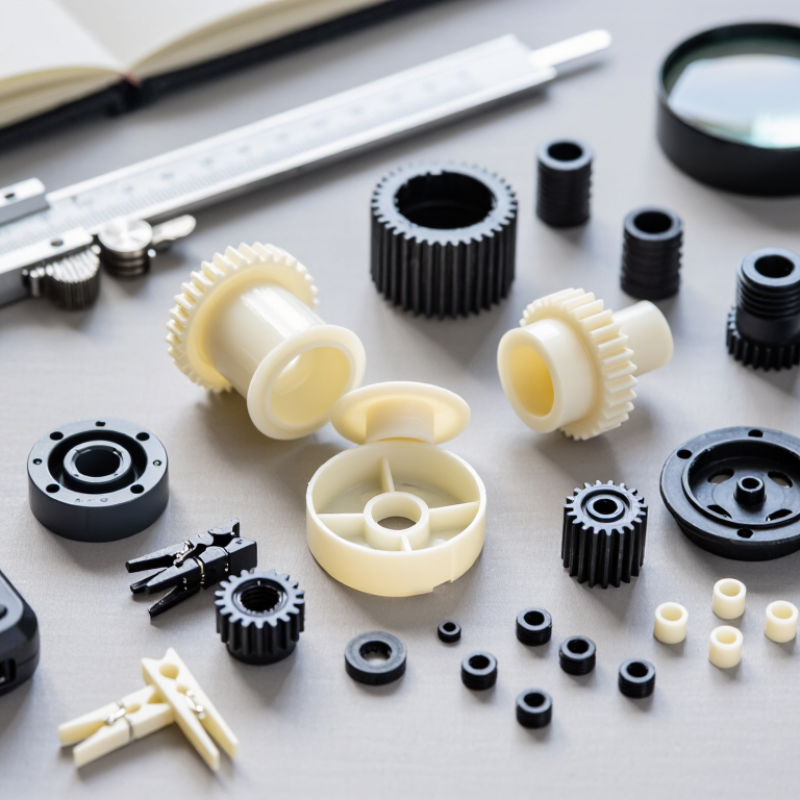
Before approving a plastic part, inspect a physical sample under the conditions it will face. Check how it fits, flexes, and feels after assembly, not just how it looks on a desk. A caliper can reveal whether key dimensions match the drawing, while a simple fit test may expose interference around clips or screw holes. Look closely for sink marks, flash, uneven color, and sharp edges. Small defects matter. Compare samples from more than one production run when consistency is important; one perfect piece proves very little.

Specifications should name the resin, color, finish, critical dimensions, and acceptable tolerances. Add clear drawings and identify which measurements control function. If a requirement is vague, ask for clarification before tooling or production begins. I have seen teams focus on appearance and overlook a modest fit issue; that assumption can become expensive. Delivery planning deserves the same care. Confirm order quantities, production lead time, inspection points, packaging, and shipment dates in writing. Ask how parts will be protected from scratches or deformation in transit, and allow time for sample approval and corrections. A tight schedule can work, but only if its assumptions are visible.

10 Tips for Buying Plastic Parts: Plan Your Review and Delivery

Example injection-molding schedule in calendar days. Lead times vary by part complexity, tooling, order quantity, and shipping method. Confirm each milestone with your supplier.